What I noticed whilst inspecting this camera was that the light seals around the rear had decayed sufficiently to require replacement, and after approximately 50 yrs that seemed to be a reasonable assessment.
Quick video of the light seal removal
This page will cover the light seal removal, it is important that the camera is thoroughly cleaned and all debris removed as this will make mthe replacement of the new light seals so much easier and less cumbersome.
Items required:
Isopropyl or another sufficient cleaner
Cotton buds
Cocktail sticks or plastic modelling knifes
Compressed air can
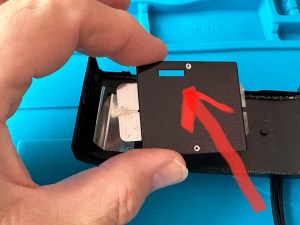
Remove film plate – remember the correct orientation
Remove the film plate on the camera door as this assists when cleaning, easy to do, just be careful when removing to ensure you don’t bend the retaining springs, and ensure it goes back in the correct orientation so that the small hole in the top corresponds with the winder sprocket on the camera body.
Scraping out the old light seal
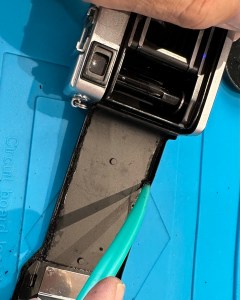
There are 5 seals on this camera. Two on the camera body one top and one bottom, the same again on the rear door and a final one where the door hinges on the camera. Lightly wet these with some isopropyl and let this seep in for a couple of minutes. Using a cocktail stick or a plastic modelling tool (not metal as you will scratch the frame) start to gently remove the old seal and remove any debris away from the camera. Take your time here as it is important to get each channel clean and debris free to ensure the refitting phase goes without issue. Now wet a cotton bud with the isopropyl and run this numerous times along each edge where you have removed the seal to ensure it is really clean.
Using a plastic tool to clear the old light seal
I would suggest you set a good hour aside to ensure you do this job correctly and completely, it really is that important to ensure you get good results.
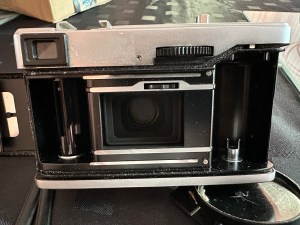
Hinge door light seal- before and after cleaning
When the removal of all seals is complete I’d recommend that you clean again, yep I know it’s boring what I am saying but the cleaning really is that important. When it’s done, get the compressed air can and give a few well aimed blasts of air into the areas you have cleaned making sure you do not direct any debris towards the shutter, please keep this area sheltered or you can create other issues.
The debris left over after a good clean
Once you are happy with the clean up, shut the camera door and leave it alone until you begin to install the new light seal on another occasion. Then we will clean the camera yet again 🤦♂️
So the camera I recently ordered has been delivered and the assessment of the unit has begun. The original post claimed it wasn’t winding, I wasn’t concerned about this as nine times out of ten it’s purely because the batteries are not installed.
The original batteries that came with the unit back in the day were PX640 mercury batteries x2 . These are now outlawed for sale so we have to now look at alternatives to use, this may involve using a converter to achieve the results we require. I have decided to use these converters for this camera.
converters in place and batteries installed
On first inspection I was worried as there looked like some battery acid damage to the terminal on the left (see picture) however with a wipe with some alcohol on a cotton bud it appears to be only age as it cleaned up ok. With these cameras sometimes the damage goes beyond the terminals and requires new wires soldering within the body. I dodged a bullet on this occasion.
You have a choice of batteries now, you can use two LR44 batteries or 675 air batteries. Difference here is all to do with the working battery limits of the camera. It was designed to work at 2.8v with the old Mercury batteries, the LR44s give you 3v that has been noted on some chat groups to require you to make exposure changes as it can overexpose sometimes by one stop.
The other option is to use the 675 batteries that have a lower voltage total of 2.8v however as soon as these batteries are opened they start depleting and have a shorter shelf life as such ( they are meant for hearing aids) however they are much cheaper than the LR44s . The choice is yours, I have gone with the 675s.
Batteries in place the shutter works well as does the winder and the shutter check light, excellent result as in theory the camera is working.
Camera works electrically
Cosmetically the camera needs a clean, the light seal around the film door is old and could do with replacing so I will do this in the coming weeks.
Light seal needs replacing
Overall I’m really pleased with this camera, I just now need to source some 35mm B&W film and put it to a test. I can then develop and scan this at home to see the results. But first I’m going to do the cleaning as stated earlier as well as replacing the light seals. It has also come with an Olympus pen lens cap that I may replace. I will also source a wrist strap to complete the look.
Hopefully this will be a nice little addition to my collection.
I have been after an original Olympus trip for a while now, however the prices are so volatile for them at the moment even the non working ones demand high prices, it’s crazy just how popular they are. So, I’ve had to settle for a camera that was sold alongside the “Trip” a 35 ECR.
Olympus 35 ECR
Asking for a reasonable price, this one flashed up on my phone and I purchased it immediately, I could end up regretting it but fingers crossed 🤞 it will not be too bad. If I’d left it a few minutes longer i believe it would have been snapped up.
I believe the main fault on this unit is a winder issue that is quite well documented on these cameras, and to be honest if that is the only issue then I should be able to rectify this and add it to my collection.
A good clean and assessment of the optics is the first and foremost action to take.
Another problem that sometimes raises its head on these units is with the two little batteries that originally powered the metering, they used to be mercury based 1.35v versions (PX640 x 2) and to add further pain to the problem, they can no longer be manufactured or legally purchased. There are alternatives but they are 1.5v and have been known to cause issues with the metering resulting in film exposure/rating issues, widely documented online. The best option is to purchase a battery convertor that allows you to use a more appropriate lower power pair of hearing aid batteries (Zinc Air 1.45v – 675 battery x 2), much friendlier in the long run as well as being a much cheaper option. However i will use this option only if there is the need to do so. I have a couple on standby if required.
Im really looking forward to running a black and white film through this camera, to develop it myself and see the results.
Come back and see what is found when the camera is assessed on its arrival.
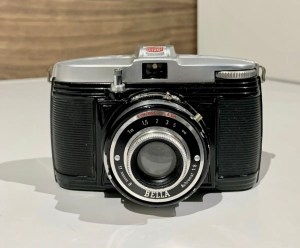
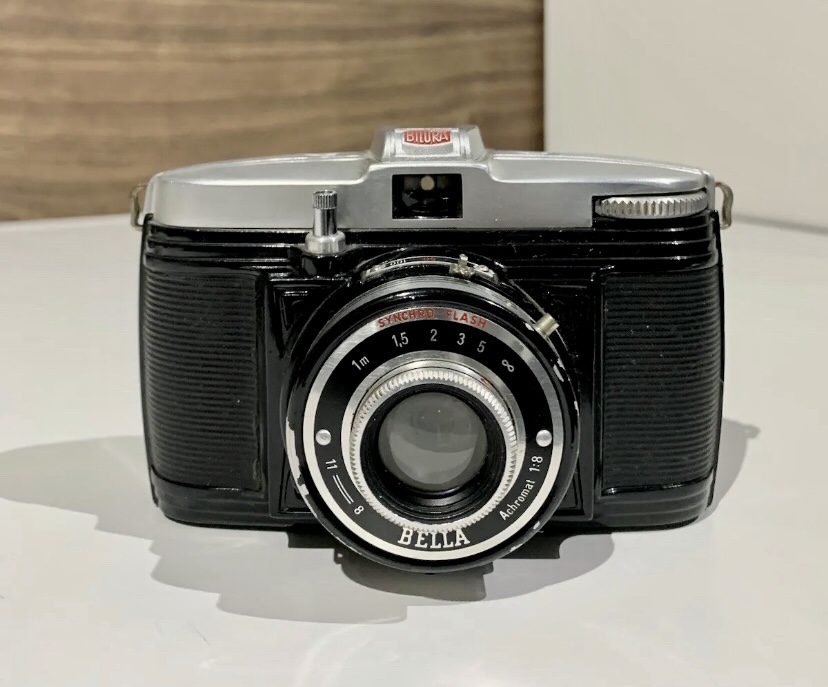
Since starting this blog this is the first camera I have actively obtained for the purpose of repair/refurbishment. I love this little camera, my thoughts are this is a Bella series 1 as later versions had the name on the body not in the hot shoe area as this one does. A low cost point and shoot of its time, I have had dealings with one in the past when I had to remove some film from one in a darkroom when the transport got stuck back in the early 1980s. Now this one is a nice tidy example of the model, and really needs little doing to it so my intention is to get it cleaned up, touch up the paintwork and maybe run a roll of film through it to check the mechanism, i may re cover the camera body, and will then put it in to storage for moving on at a later date.
These little cameras were the instamatics, or Olympus trips of their time, instead of using 35mm film (how they were designed to look) this particular model used 127 roll film that took 4×4 cm exposures, that format of film is still available today but as rare as rocking horse dung. They were made of what is called “pot metal” in theory just alloy based metal in its cheapest form.
I’ll explain what I intend to do with this camera below.
Inspection
Original condition
On inspection the top has some light marking and scuffing that I can attend to with some polishing and a touch of paint, the black covering I may replace and some of the black metalwork will need some retouching. The internals again are fairly good so will just be cleaned on this occasion. The mechanism works ok, I have maybe detected some dragging on it so I will inspect it closer and I will lubricate accordingly if required. I will dismantle down the whole body as much as possible and give it a thorough clean, after all I doubt it has been cleaned that much in its 50+ years of existence.
Chipped paintwork and old covering
In fact I’ve decided to go to town on this one and really mix it up. I’m going to replace the leather with a synthetic leather, cruelty free and vegan friendly. No animals suffered to make this product! and it’s bright coloured.
Here goes…
So to start I’ve pretty much dismantled the camera, the covering was a type of leather, I do know that if it was left on it would probably survive another 50 years as it was stuck to last. I had to scrape this off, sand it down and clean with a special solution to get the remaining adhesive and dirt off. I will need to produce templates to cut out the replacement covering as a result of this process.
The strip down
The plan now is to touch up, buff up, retouch the paintwork again and give a final Polish before I apply the new covering.
Undercoat with a Matt black prior to buff upFilm backing plate. Rust removed and repainted
I’ve now finished all the painting I want to do to this little camera, I have glossed buffed and painted again and the next stage is to apply some new synthetic leather when I’ve decided the one I will be using.
Awaiting the new synthetic leather body
So all I need to do now is take some templates in preparation for when the new synthetic leather arrives.
See my update when the new covering arrives.
Information regarding this camera
The Bella is a line of cheap but attractive and well-built 120, 127 roll filmand 35mm cameras made by Bilora in Germany. The Bellas went through several revisions over the life of the name. The bodies are alloy castings, with added leather-effect covering – in various colour combinations. Each is styled a little more like a 35mm camera than a roll film one. The back is removable for film loading, and most models have a large back catch. The 44 models make twelve 4x4cm images on 127 film; the 46 modelsmake 6x4cm frames on 127, and the 66 models take 6×6 photos on 120 film. The Bella 44-1 was also sold by Ansco, rebadged as the Ansco Lancer. Bilora also used the names Roxa, Bonita and Reporter for Bella variants. Manufacturer: Bilora, Germany Shutter: B, 1/50, 1/100s In production: 1953-1966
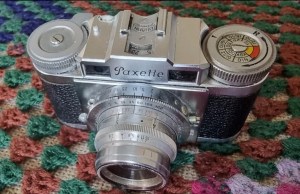
I’ve obtained three new (old) cameras this week to work on. And of the many thousands out there I think I have three lovely examples of good everyday cameras circa 1940-1965.
Halina Paulette, Braun Paxette and an Ensign Ful-Vue
Two of these cameras are 35mm and the Ensign is a 120 film camera. The Ensign needs a refurb and I will dedicate a page to the work that needs to be done on this unit. Fingers crossed the work on the other two cameras will be minimal, hopefully just a clean up however I will assess all cameras when they arrive.
Ensign Ful-Vue 120 film camera
I’ve never had any dealings with these cameras before so I’m kind of looking forward to putting some time in on them.
Halina PauletteBraun Paxette
I think the above two 35mm cameras are little beauties, they have so much character and show the magnificent design ideas of their time. I’m hoping to put film through all three of these cameras that I will develop and scan at home. Fingers crossed as I said earlier that there is not too much wrong with them all.
I’ll update the site with a blog and a small video for each one once work to restore them begins.
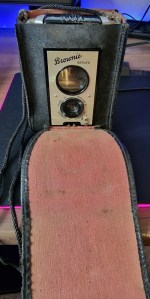
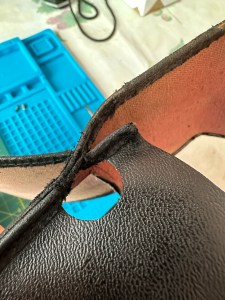
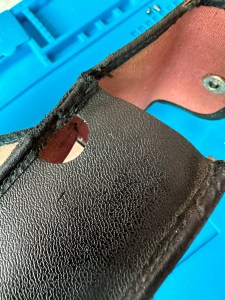
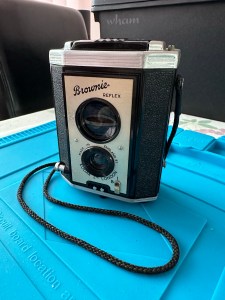
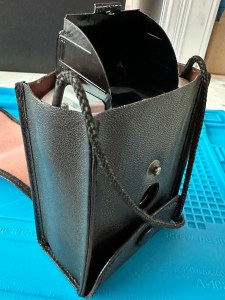
A cracking little example of a unit that was in production between 1946-60. The leather pouch is showing signs of age and wear and tear, it has a small split and needs sewing, seeing it’s age this is to only be expected. I shall attempt to clean the cloth with a light detergent solution to remove the dirt and will then treat the leather to make it supple again, the buttons can be retouched with some black paint.
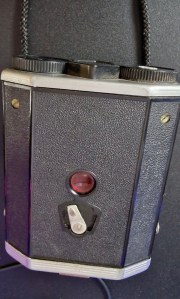
The unit itself just needs a clean inside and out, the hood needs a repaint, the mechanism seems to be good and both exposure settings are operating as they should. The exposure setting switch as well as the two synchro pins show signs of corrosion, I may need to buff these up or again source replacement parts. I may need to source a new strap. On close inspection it seems the mirror is damaged, looks like water damage on the underside but I won’t really know until I get it all dismantled.
Brownie reflex dismantled
Well today I have taken the unit apart, I’m really surprised just how clean the unit is inside after all these years, however there are a few issues. The hood is rusty and restricted in its movement, I have fixed this issue by smoothing out a few small bumps and freeing the spring mechanism with some camera oil, it works well now (see video below) however I still need to rub down and repaint. The lenses have been cleaned, the viewing prism has been cleaned and I am happy with these, the shutter works well so I won’t be touching this.
Brownie reflex mirror damage
The mirror that I mentioned earlier in this piece is not water damaged as first thought, it looks as if the original glue used to fix the mirror has damaged the backing hence the mark you can also see in the video.
Lens hood working and damaged mirror
To repair this I will be using a very thin piece of acrylic mirror that I will cut to size, I’ll show you how I have done this later in the report. The case is to be cleaned and a stitch repair is needed, some small touch ups are required but in general there is not an immense amount to do to get it back to how it used to look.
Lens hood: The lens hood is opened to look into the lens. It was quite pitted, rusted and chipped so I have buffed it down, cleaned it and repainted it. I’m pleased to say it’s a good finish and I’m pleased with it. Job done 👍
Lens hood before and after
Neck strap: this is the original strap or should I say cord. Severely frayed both ends this needed repair, one of the easier tasks to do. I’ve cut the ends off losing about 10cms of cord, the crimps are unusable however the two crimps where the screws attach to the body were salvageable and I rewound the cord back around these and secured this with a pair of pliers.
Cable neck strap pre fixing
Next I sewed the two pieces of cord together to make up for the loss of the original crimps, I then used two lengths of heat shrink tubing to further secure the cord and screw crimps.
Cord sewn, and then heat sealed
I think you’ll agree, nice simple repair, sympathetic to the original and will last a few years longer. Job done 👍
Camera case: in layman’s terms the word knackered should be used. As old as it is, it was quite dirty and the leather was tired and brittle. I’ve only used the suds off of hot water and tablet soap to clean the exterior and interior and this will do as it’s quite delicate anyway. If it doesn’t survive this treatment then I will dismantle the case and use it elsewhere. However the clean up was successful, I’ve now given it some treatment to moisturise it as such and it now looks completely renewed.
Before and after case cleanup
I will leave this overnight for the treatment to be absorbed I’ll then give the case a light buff up.
Leather repair complete. Leather stitching not my favourite pastime
Apart from a couple of stitches that needed putting in I’m happy with the case and will not attempt anything else with it. Job done👍
Mirror: Today the very thin acrylic mirror sheet arrived so I could cut out the new mirror I required to replace the damaged one. It’s exceptionally thin and I have glued it to the original mirror to cover the imperfection. I didn’t fancy seven years bad luck for damaging the mirror whilst trying to remove it.
Before and after mirror replacement
I was really pleased with the outcome here. This is a photo of the view through the new mirror
New mirror viewed through top of camera
I’ve cleaned the lenses as best as I can however the years have left them slightly pitted, no concerns with this though as the viewer is separate from the actual capture lens.
With this I am satisfied the camera has been sympathetically restored, it’s been reassembled packaged in an airtight bag with a silica desiccant sachet and put back into my personal collection
The completed project.
Time to put this little project to bed now. I’ve really enjoyed this one and I think these little old cameras will become my go to’s of the future. I’ve learned a lot and have learnt well from my mistakes along the way. Time to look for the next subject. So, for the last time on this project I get to say…..
Now these small digital units are well known for having faulty battery door mechanisms and this example is no different. The only real way to fix this issue is by obtaining a replacement fascia with the lock mechanism in place or source a temporary fix that will get us by. The lens seems to have an autofocus issue, again this is a common fault with these kind of units. I may dismantle the lens assembly, clean and lubricate. The electronics seem fine, a factory reset may be in order. I’ve used the strap and case from a damaged L22 to further compliment this unit. Recycle that’s the theme.
The camera was received with the information that the auto focus was not working and that the battery door was broken causing the batteries to fall out, also the batteries had to be full for the camera to work. Let’s take each issue one at a time.
The autofocus. This camera has numerous settings and one of those is smart auto that sometimes goes into “panic” and causes the unit to show errors especially as the battery starts to drain due to the camera constantly trying to focus on something that is not there. Move the setting to std autofocus and the camera is not so overwhelmed with information and is more willing to cooperate. Before I did this though I reset back to factory settings, I have then spent over an hour taking pictures of all sizes using all settings with no issues. I’m assuming the issue of autofocus was never really an issue, it’s basically back to basics as in computer terms “turn it off and on again”. After a reset of course.
Pictures good and reset carried out
Battery door. This is a known design issue with these early Coolpix cameras, I don’t know why Nikon didn’t address them back when they were produced. As these were made back in 2010 when digital cameras world wide were at their peak with something like 21 million units being produced, I suspect a recall would have cost a fortune. That said 12 years down the line it explains now why items like this have become disposable and are now ending up wrongly in landfill. The battery door has two points of contact where the door actually locks. One at the very edge of the body is the main culprit and when this goes batteries will fall out. The second catch relates to a small moveable switch in the middle of the door that has to be moved to open the battery compartment. If this alone is broken as is the one on my unit, then the battery’s will stay put temporarily until the user starts moving the camera around and then the door will pop and the batteries will exit the camera. As these catches form part of the front fascia there is really only two options available. Option one: purchase a damaged donor camera, make the repair and use the remainder as parts. Option two: Make a repair that is not particularly aesthetically pleasing but allows further use of a camera that is in all other aspects working perfectly. And we save it from landfill for a while longer keeping to this sites aims of recycling. I’m going to be looking at option two and will expand on what I intend to do later in this piece.
Broken tab middle of battery flap
Battery life. These units were ploughed out en masse before rechargeable batteries had a proved and viable existence. If you use bog standard cheap old batteries on these cameras using autofocus, flash and god knows whatever then prepare to replace those batteries quite frequently. Use batteries that have heavy duty not pound shop specials and here is why. Today I tried two brand new cheap batteries, the camera wouldn’t turn on and all I could hear was a clicking sound. I changed the batteries for two new high output ones and the camera operated fine, rather flummoxed with this I decided to get the multimeter out and have a check, the cheap batteries had a charge of just over one volt, about 30% less than expected and in theory it was dead. The better battery was holding one point five volts so in that respect it was working as it should. Moral of this story is don’t use cheap batteries on items that demand more such as photographic equipment.
Options for securing the battery door
Cheapest options, elastic band, piece of tape does the job, life extended. Hey presto! I have seen many fixes, Velcro tape – it works, small catches fitted as an afterthought- they work, they are all good ideas that extend the life of the product, an item that would normally just be flung in the bin as soon as the issue developed. The important thing here is that there is little value in this product now so don’t go over engineering things and looking at expensive solutions that will yield no long term benefits. Keep it simple and pass the solution on. Try and use items that you have around you, recycle and reuse that’s the purpose of this site.
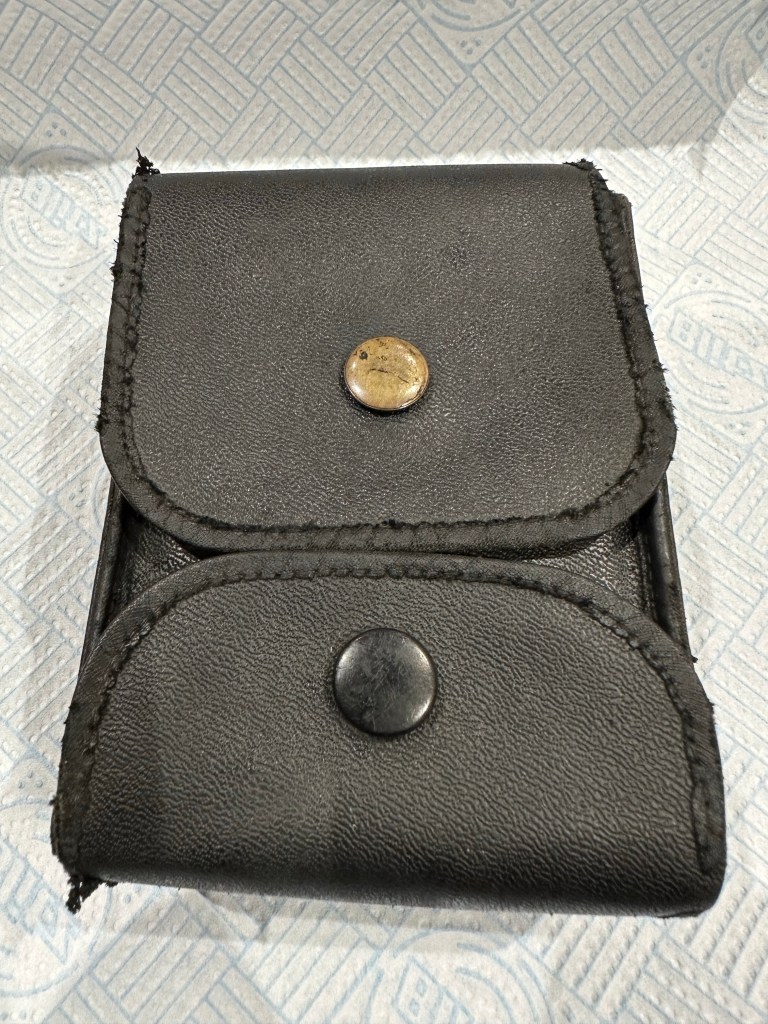
Let’s add a nice strap and pouch from a donor camera
I like the idea of a small 3 inch metal strip and a thumb screw that fastens into the tripod hole. I may well make this up to show you what can be done, I have some plate laying around and a number of screws so that one is a starter for me. I will also look at one of the other examples mentioned above as a comparison. If I ever get around to making this I’ll update this post in the future. For the meantime why use a sledgehammer to crack a walnut, the elastic band option is more than suitable for this camera. I’m passing it onto my nephew, he’s new to photography and whilst he is deciding if he likes photography or not, why not experiment and give this little unit a few extra years of innocent experimentation 👍
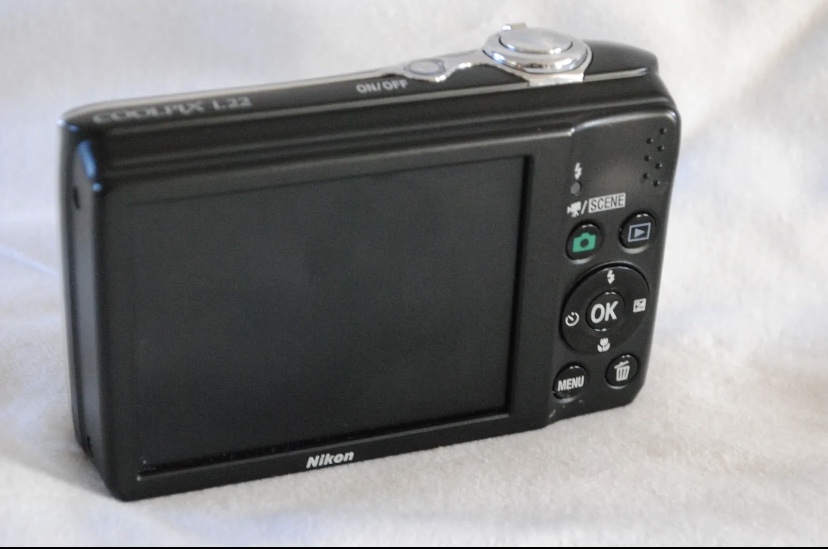
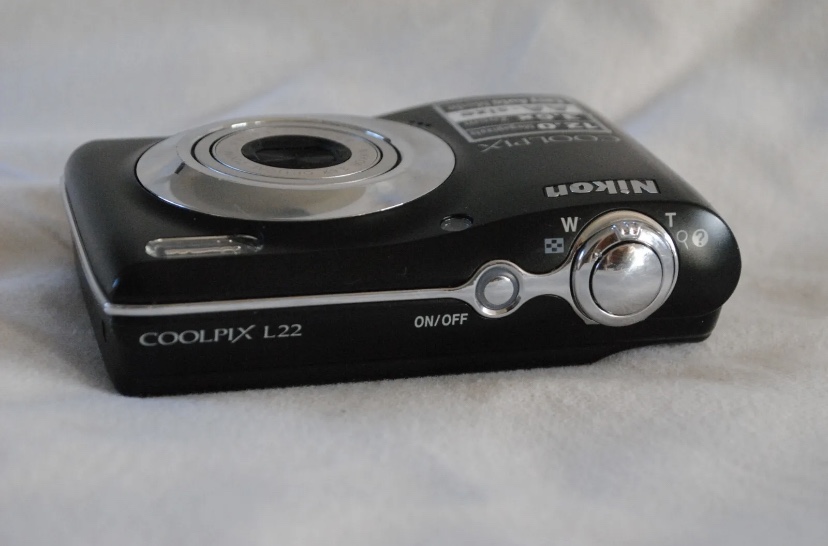
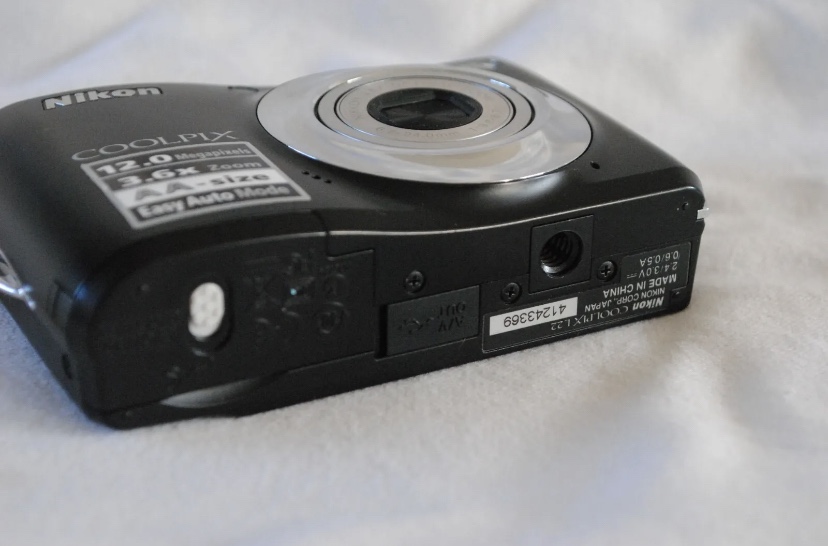
Nikon Coolpix L27Nikon Coolpix L27Nikon Coolpix L27 caseHow the camera looked on arrival
The problem with this camera is that it had a focus issue and currently it is dead electrically. Quite looking forward to getting into this one as it maybe quite a simple fix. That said, it could be that the whole internal circuit needs replacing which will mean the camera could then be added to my ever growing spare parts collection.
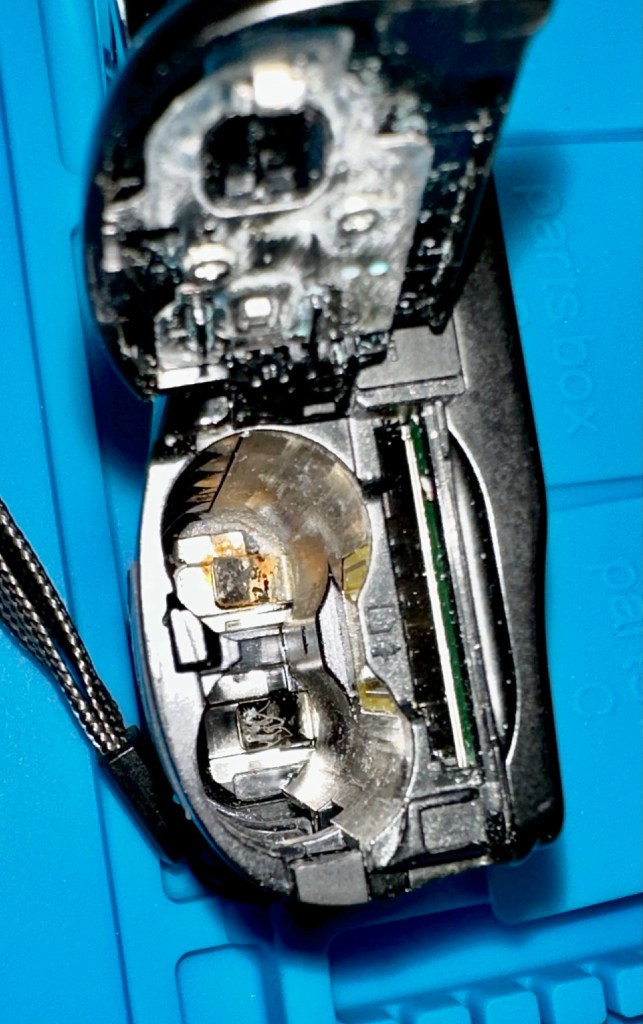
On receipt this camera cosmetically is in excellent condition. Even the normally broken battery door catches are in fine condition on this model. The unit is very dead though and it looks as if a battery has leaked inside causing some corrosion. I suspect some of that leakage may have travelled a little further as it seems the wide/telephoto switch on top feels a little rough when it should be a smoother movement. I’m going to have to get inside this one and have a look around.
Battery leakage evident
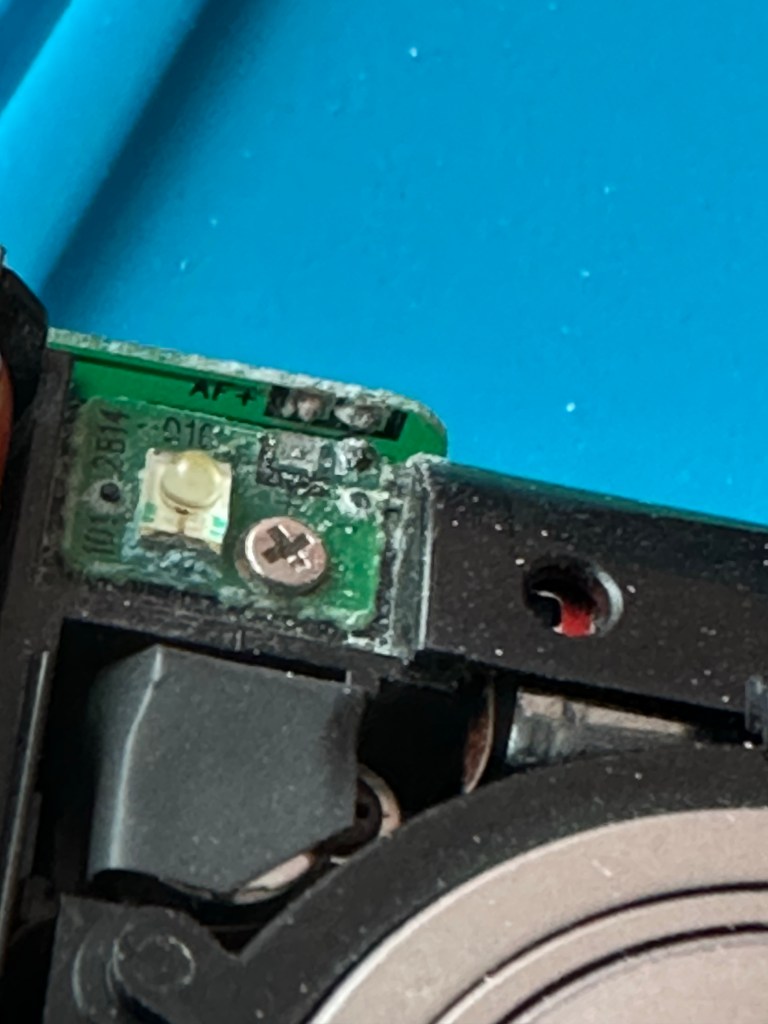
I’m afraid it’s disappointment with this unit. The battery leakage is so severe it has pretty much dissolved a number of components, ruined the board tracking in a number of places and corroded the wide/telephoto switch beyond use. The trusty multimeter confirms that the main circuit board is about as much use as a chocolate fire poker – useless. I’m afraid this unit is resigned to use as a spares donor for another day.
Severe corrosion from batteries evident
As you can see above, the batteries have been allowed to leak causing a catastrophic amount of damage to the circuitry. I have cleaned tested used a specific cleaning solution and scrubbed the circuit to no avail. My friendly multimeter has confirmed the circuit is beyond economical repair.
Wide/Telephoto switch totally corroded
I have stated in earlier posts that there needs to be a greater awareness of the frailties of cheap batteries. There is a particular brand I know of that has adopted the name of a large photographic company I used to work for, and to be blunt their batteries are utter crap. They start to leak very soon after their demise and the acid/alkaline leaks everywhere, they should be avoided at all costs and I very much suspect this specific case is due to such advice being ignored. High use items such as cameras require an adequate battery, please do not cut corners here as it is a false expenditure.
Damage caused by corrosive substances
The saving grace from this unit is that I have a few items that will be put to use at a later date. The body shell with its intact battery locking mechanism will probably earn me more than the whole camera cost originally and that will still leave me more as spare parts. It’s just a shame that cost cutting on the power supply has damaged so much of this unit. I cannot impress on you enough, do not use cheap batteries, you will potentially pay the price of permanent damage if you do.
I have had to seriously clean and decontaminate my work board due to the immense amount of contamination that came from this unit, I’m glad I wore protective gloves whilst attempting to clean this unit.
What I have managed to salvage
I have salvaged a complete body shell with working battery locking door, a lens focusing unit, a rear screen and holder, a number of screws, a flash unit cover and a 330v 100uf photo flash capacitor. As well as a nice leather case.
Unfortunately not every unit is salvageable, however we have parts to assure the next unit may not go to waste. A healthy spares store is always welcome and all I can say is…. Onwards and upwards, bring forward the next repair.
Cameras go back a good few years since the first photograph was taken back in 1826 – 1827 by Nicephore Niepce. Back then he used a bitumen substance on a pewter plate as his light sensitive base for his photo of a rooftop in France, the exposure was somewhere around 8 hours, oh how things have progressed.
I’m putting this piece together to give the reader an idea of just how many cameras were produced between then and now if I can pull sufficient data together. The issue here is that cameras took many forms, from boxes with holes punched into them through to disposable items that were popular throughout the eighties and that are now seeing a resurgence in popularity due to people wanting physical prints rather than trawling through many thousands of images they have stored on their electronic storage devices.
What defines Vintage?
Well that’s a good question. Even good old digital is classified as a vintage if you go back to the 80s and observe what was around then. Camera companies pump out version after version of cameras each one supposedly better than the last, I should imagine almost every family on the planet has an old camera of some sort in their possession, those old Kodak Brownies et al were absolutely everywhere. Truthfully I’d expect anything over 10 years old to be vintage, they are also reducing in popularity now due to the appearance of the smartphone….. as I have said previously, everyone is now a photographer.
Some figures then..
It’s pretty much impossible to compute the really old lines of cameras as there were so many brands and very little in the way of monitoring output, sales of the big brands were immense as we know, the likes of Kodak monopolised the photographic arena for decades and they absolutely flooded the markets world wide.
Digital cameras peaked in sales of 121 Million individual worldwide unit sales in 2010 deemed to be the height of camera demand pre Smartphone arrival on the scene. Since then sales worldwide have decreased to about 8 Million units a year in 2021 and continue to decline, that said there are an awful lot of units out there more than likely stuck at the back of a drawer or hidden away elsewhere within the household.
The big number is this though. According to Visual technology and investor LDV Capital the numbers of cameras around the world will have risen to at least 45 Billion by 2022. Ok, that does include the smart phone and almost 770 Million CCTV cameras as well. Think about that figure for a moment, there are currently 8 billion people on this planet and this figure equates to there being 5.5 cameras available to each and every one of them. A phenomenal number you’ll agree.
So…
The sole purpose of this page to me is just to highlight the amount of cameras out there, I want to do my little bit to repair, recycle and repurpose a small number of them but I also want to point out that there is no shortage of stock….😎































 Foxes Den
You must be logged in to post a comment.