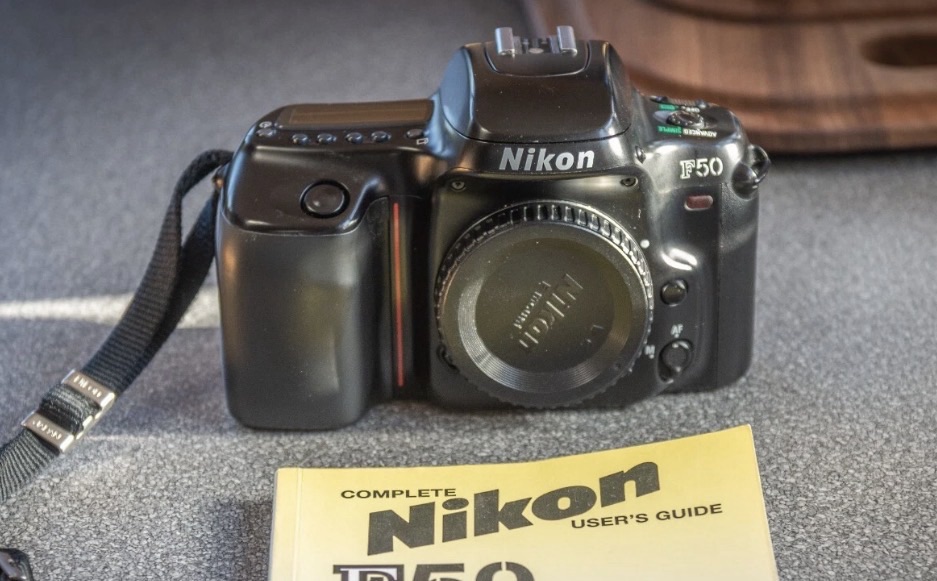
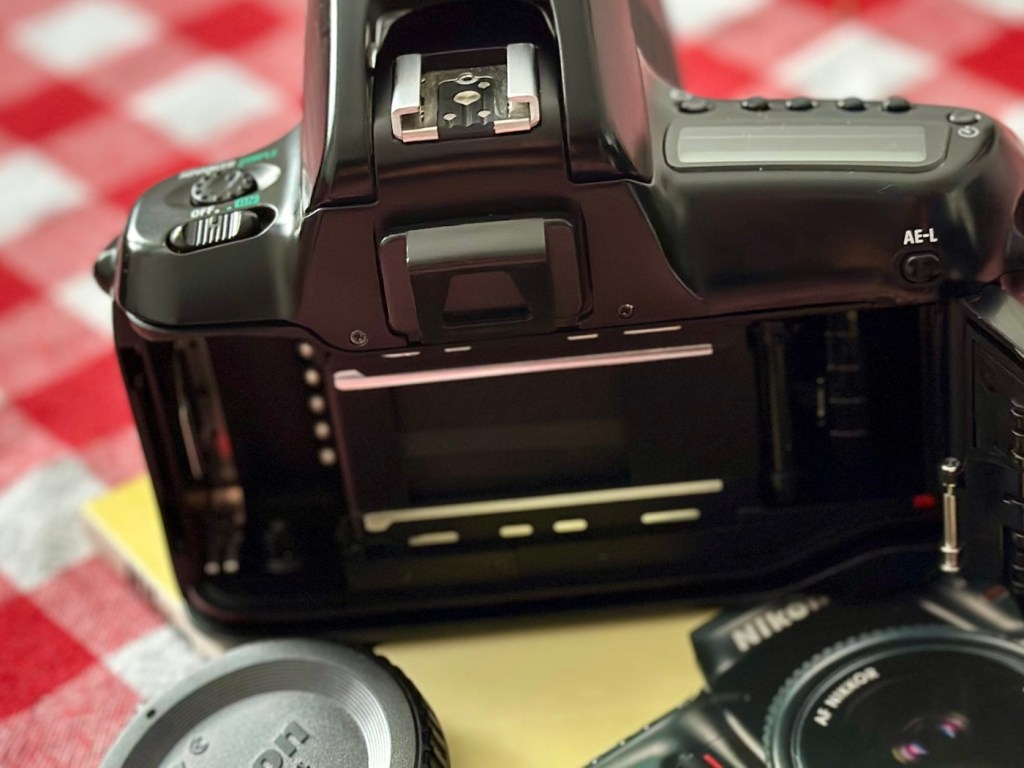
A learning camera for me, with a fault I’ve never dealt with before. Damaged shutter curtain blades. Can I fix it?
What the listing stated:
NIKON F50 UNTESTED FOR SPARES OR REPAIR. SEE IMAGES. THE REAR SHUTTER RIBBON APPEARS TO BE LOOSE – I AM UNFAMILIAR WITH OLD FILM CAMERAS SO THIS COULD BE A QUICK FIX OR NOT AN ISSUE. ALSO HAVE A FRONT BODY CAP AND STRAP – COULD BE A BARGAIN FOR SOMEONE. SOLD AS SEEN. + The “Complete Users’ Guide: Nikon F50/N50” by John Clements is a comprehensive textbook published in 1994 by Newpro UK LTD. This paperback book, with 140 pages, provides detailed information on the Nikon F50/N50 cameras from the 1990s. Written in English, this guide is a valuable resource for photographers looking to enhance their knowledge and skills in using these specific camera models. The author’s expertise and clear instructions make this book a must-have for Nikon enthusiasts.
EBay
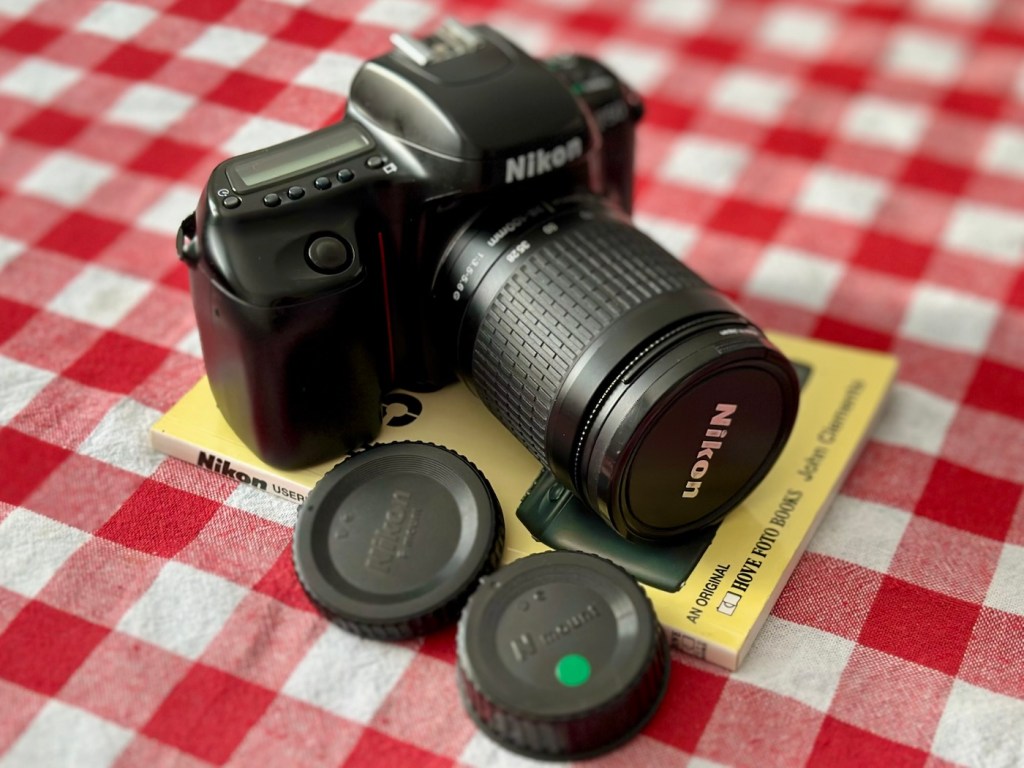
My purchase today
As you may have already gathered, and much to the dislike of my wife, I spend a lot of time trawling the sales for cameras. I don’t particularly look for anything high end, one of my main reasons to purchase is purely for learning purposes. So why not buy a lower end mass produced camera and fix it? That’s what I tend to do. It’s a good way to learn, and if you cause even more irreparable damage it’s no problem, you will still have a selection of usable parts. Damage someone’s pride and joy though and not only do you lose reputation, you would probably be severely out of pocket financially.
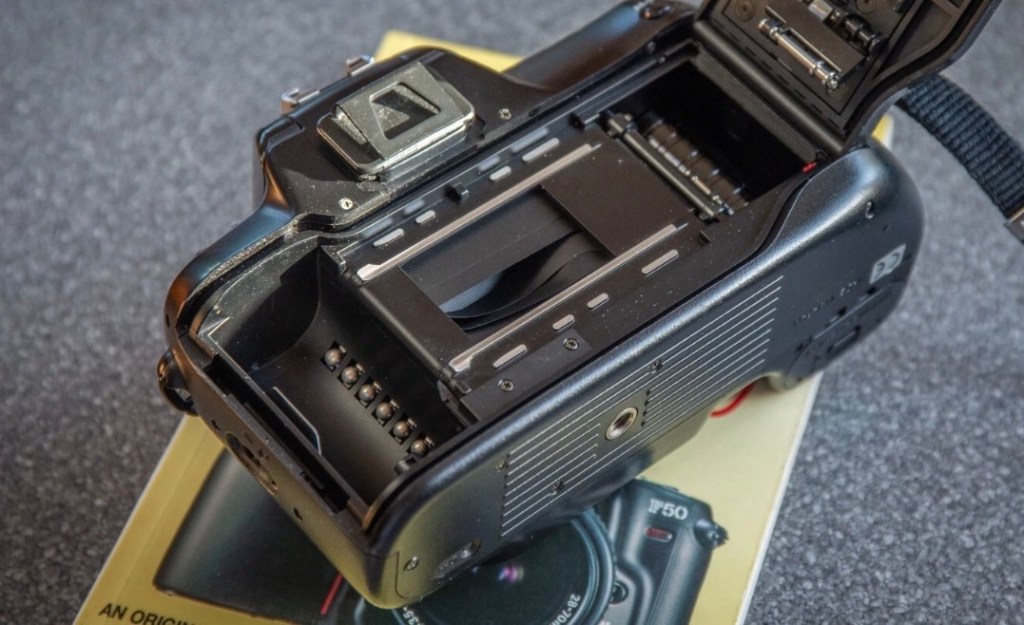
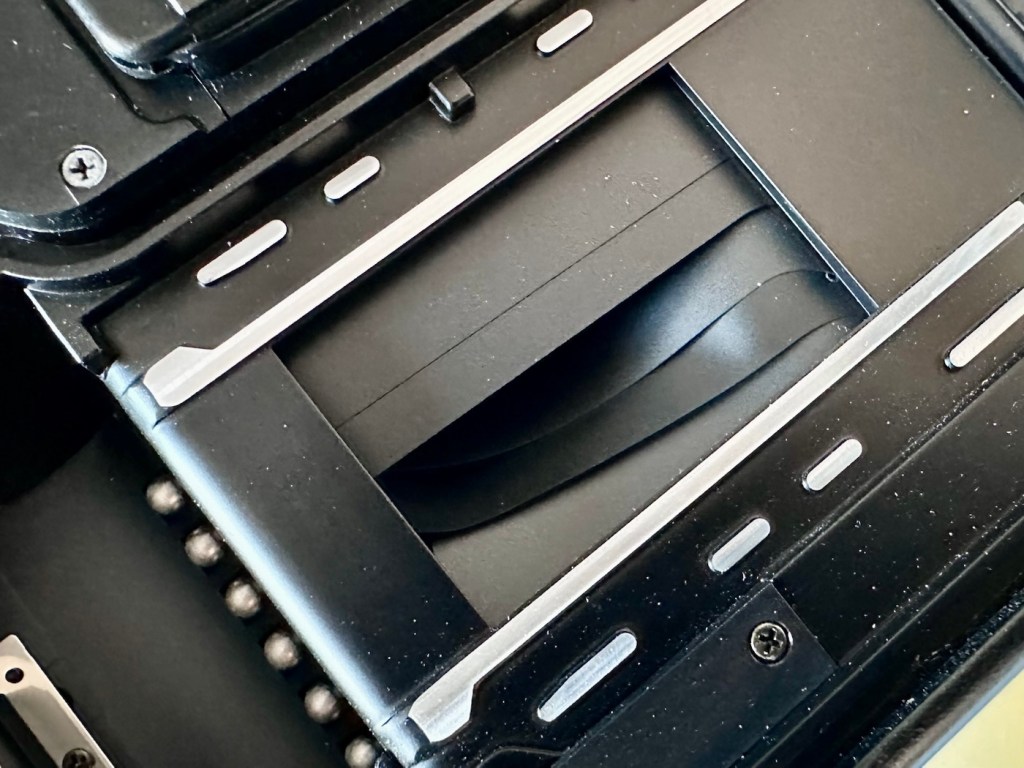
So I look for cameras with issues that I have not yet dealt with, and this camera has such a fault. It’s shutter blades have become detached from the frame in which they are set, it can be fixed if conditions are met, and one of those conditions are that the blades should not be creased. And I have my fingers crossed that this is the case. I’ve never fixed this issue before, so for me this is a learning camera. The bonus for me is that I get a body cap, a strap and an informative 140 page book on how the camera operates. And I paid the sum of £7:77 for this complete package.
Here’s a little info about the Nikon F50:
The F50 (or N50 as it is known in North America) is a 35mm film SLR camera which was introduced by Nikon in 1994.It was aimed at the lower end of the amateur autofocus SLR market.
The F50 features autofocus, TTL light metering and various “programs” (ranging from manual operation to a highly automated point and shoot mode). It could not however meter with non-CPU lenses.
It was replaced by the similarly-priced F60 (also known as the N60) in 1998.
The F50 body was made from polycarbonate and metal, and available in both “champagne silver” and black.
Notable omissions include depth-of-field preview and any form of remote shutter release.
Wikipedia
I’m now awaiting the arrival of the camera so I can carry out an in depth assessment. And prior to its arrival I’m reading up, and seeking advice on how to deal with such an issue as this shutter curtain damage.
Assessment:
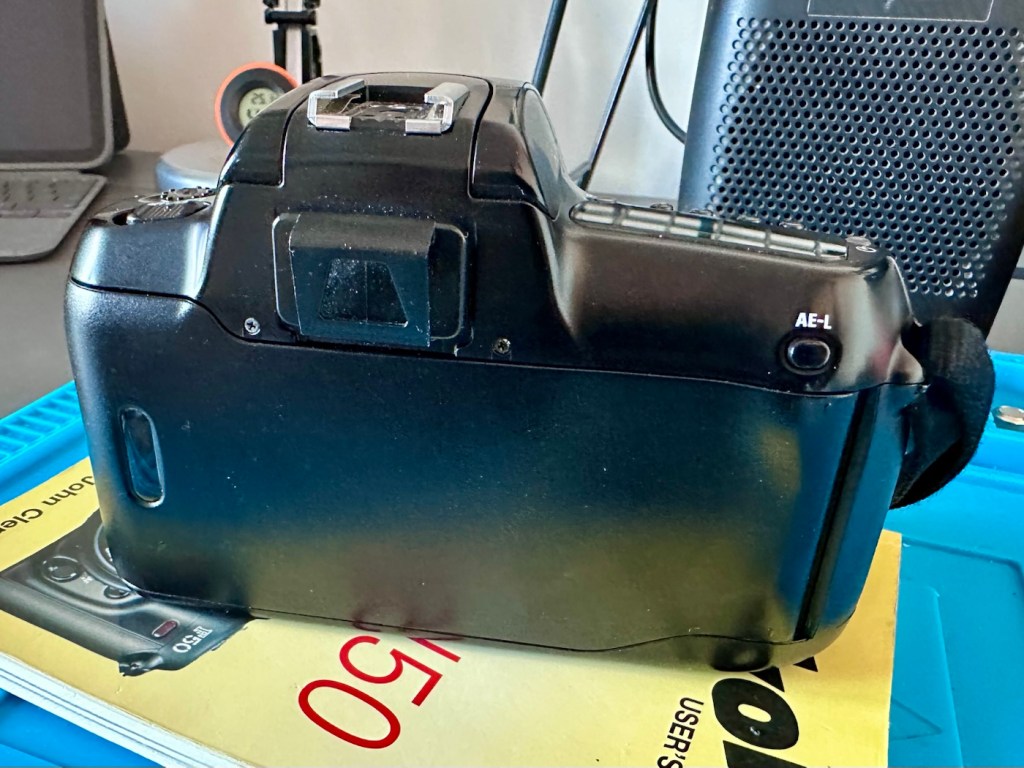
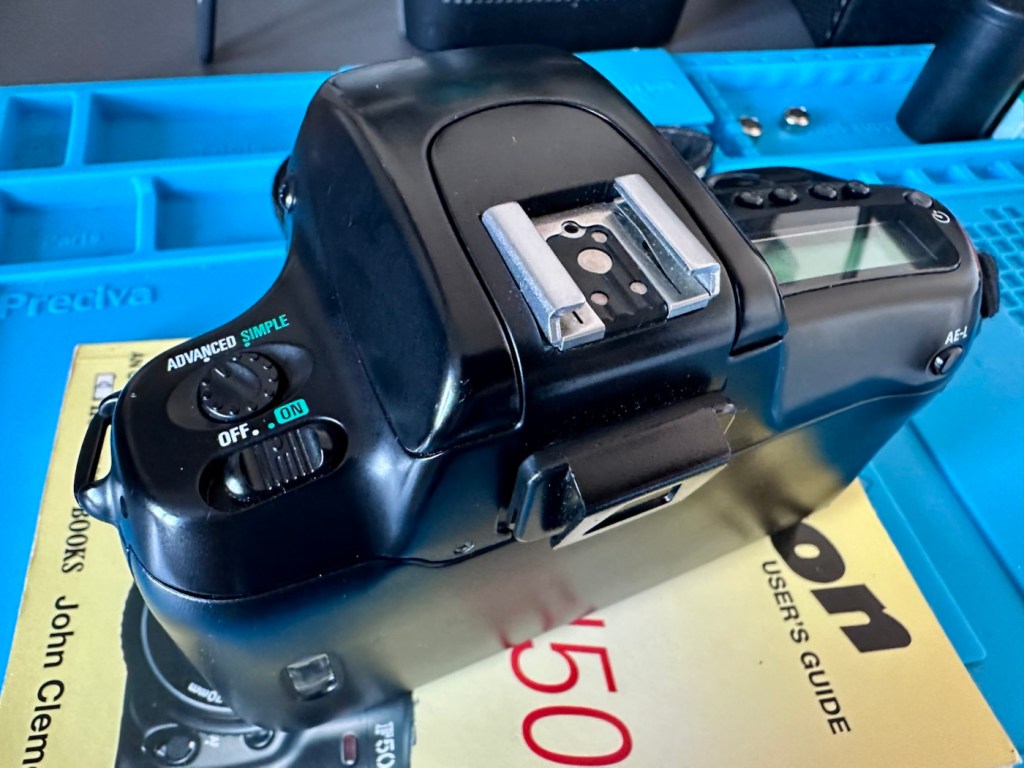
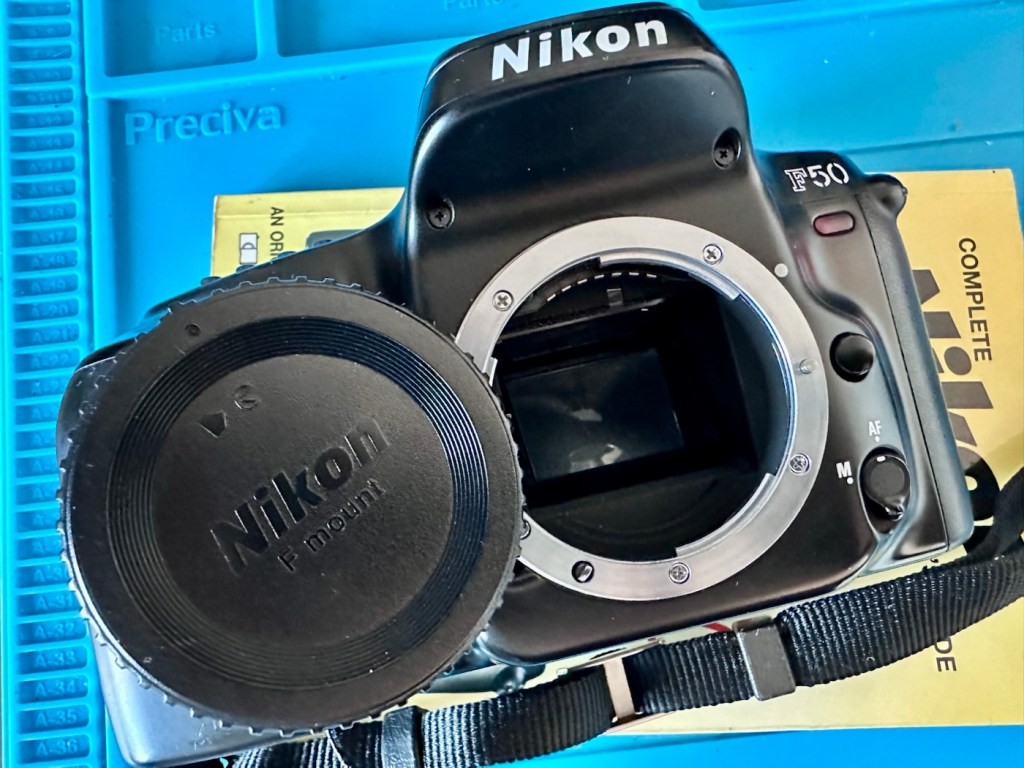
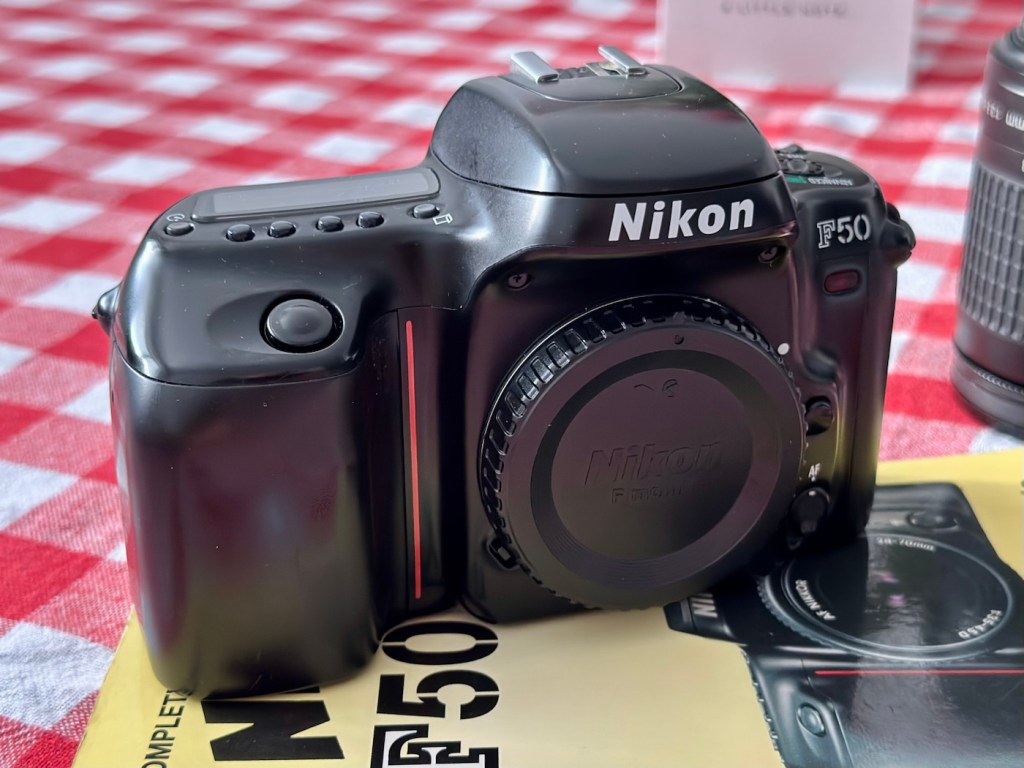
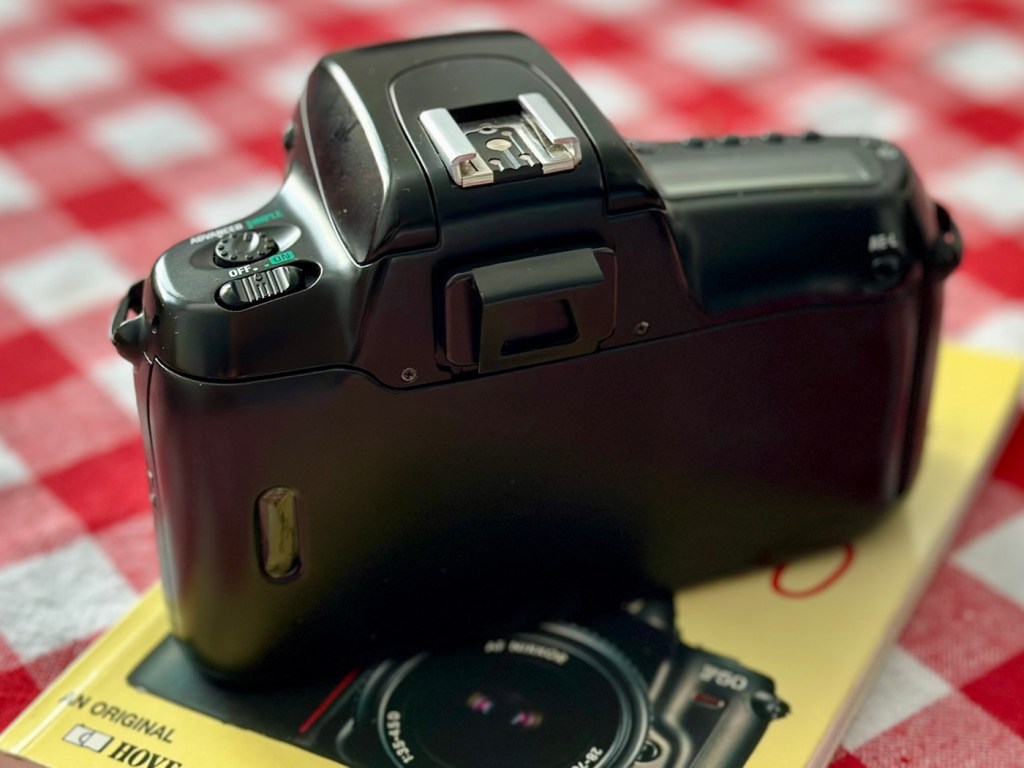
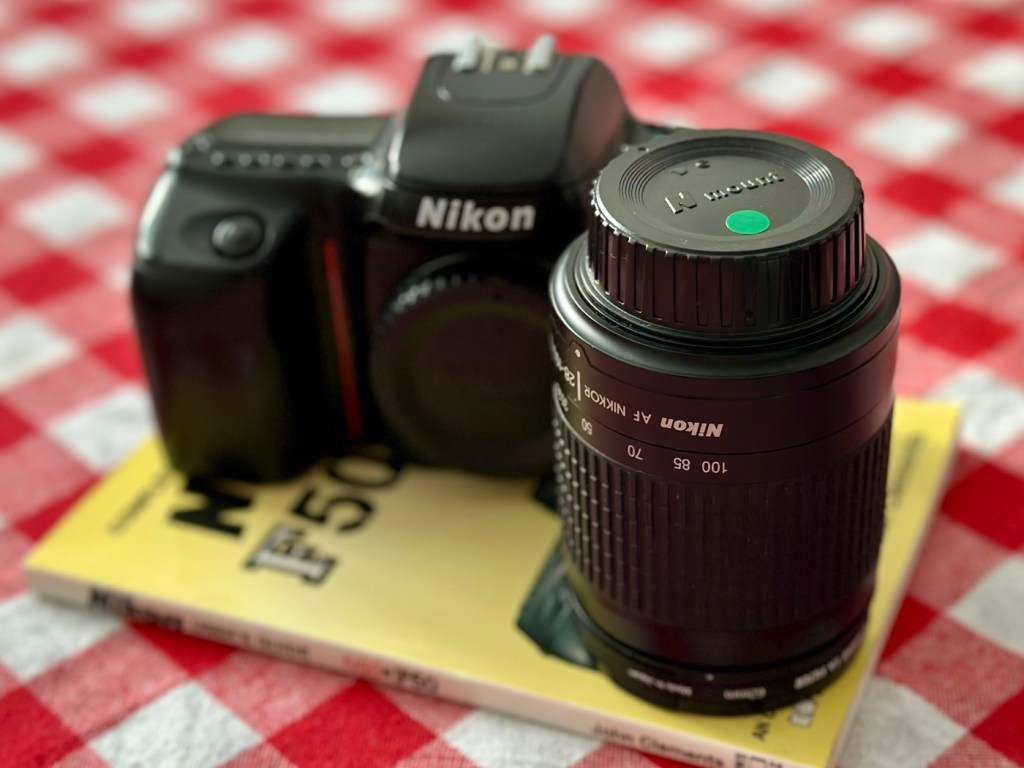
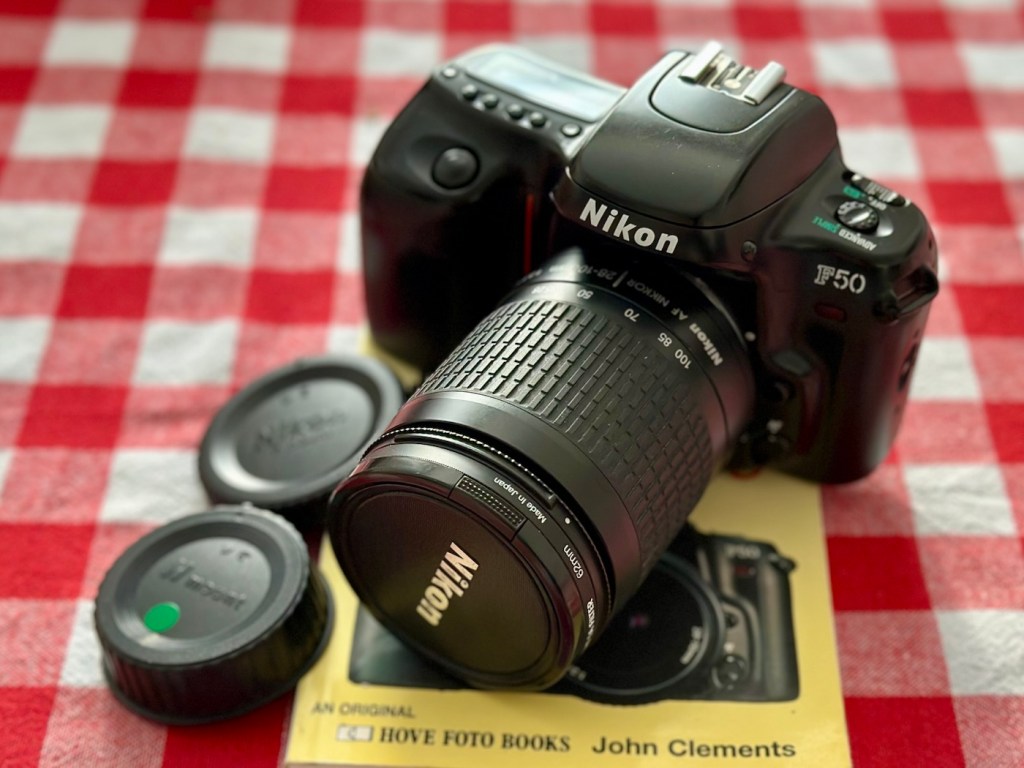
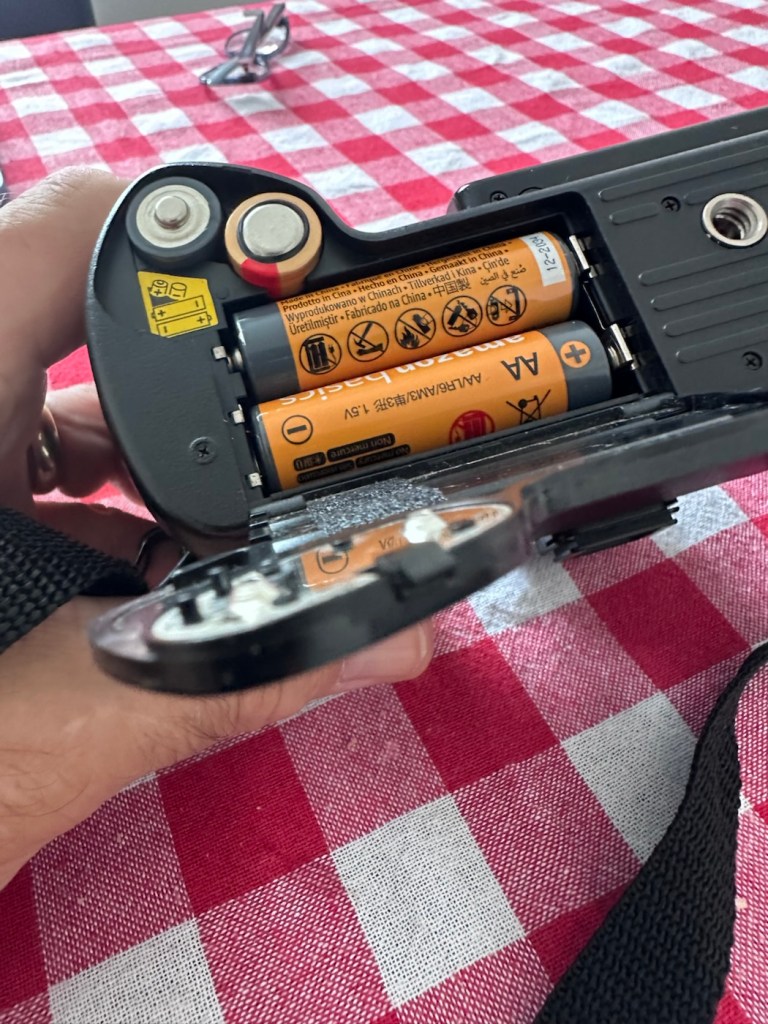
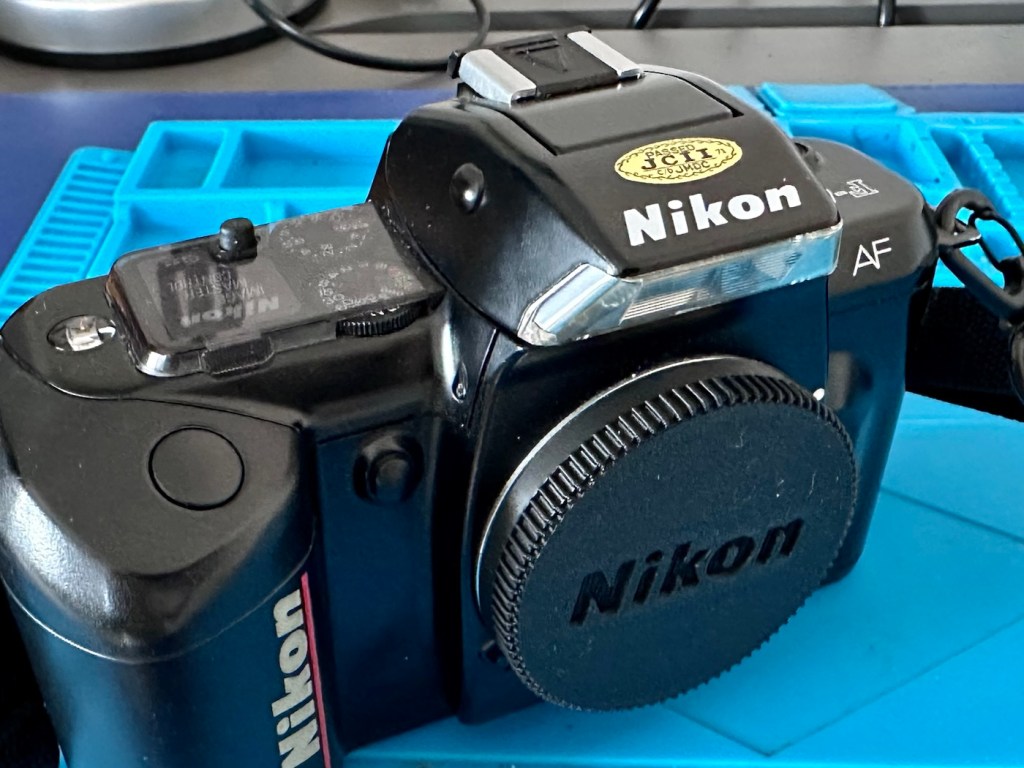
On arrival it is quite clear that prior to its shutter blade damage this camera has been very well looked after. It has no damage, scratches or signs of wear across the entire camera. It has an original Nikon body cap and narrow strap. There is even a DK-5 viewfinder cap that is a rare thing to see on a second hand unit. Battery contacts are clean and contaminant free.
And the users guide that was also received is an absolute gem of information.
The camera I have received
Testing beyond this is not possible at all, as the last thing I want to do is insert a battery and cause further damage. I will have to try to sort the shutter blades before I can test any further.
So let’s get straight on with trying to sort out that mess in the lens barrel.
Repair:
Whilst awaiting the cameras arrival I’ve been seeking advice on how to approach this issue, as this is my first attempt at such a fault. And after a while, looking around I found this video tutorial that first came out in 2014. I have decided to follow the advice within this video.
Fix old cameras – shutter repair
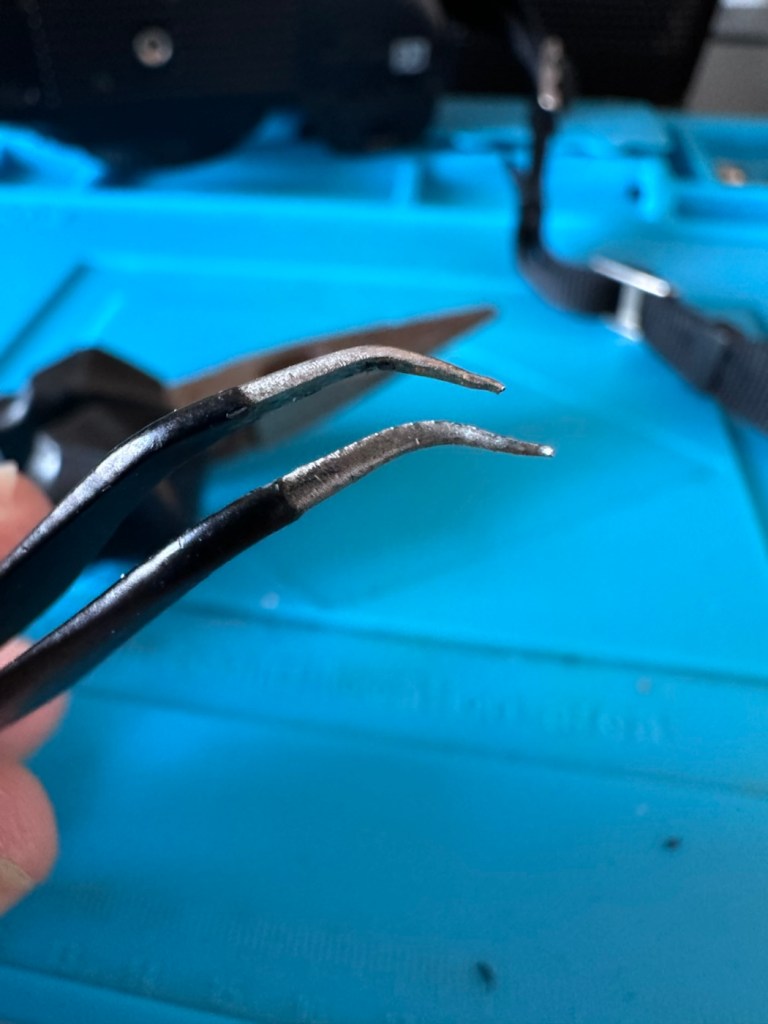
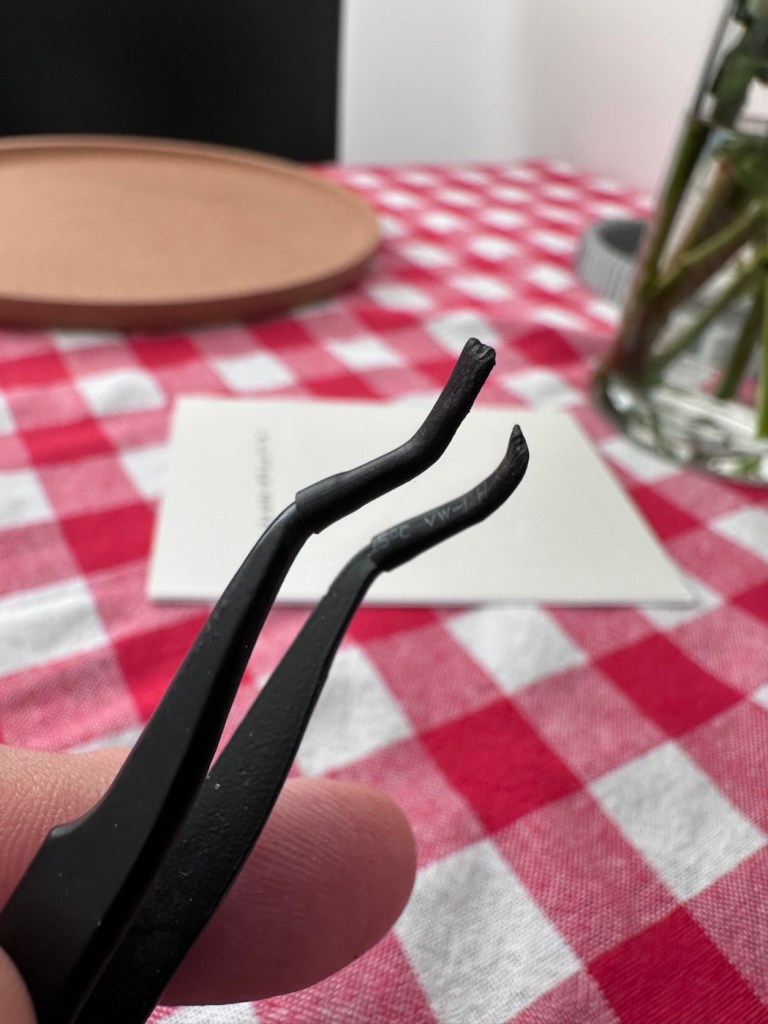
The first thing I have to do is to modify a pair of tweezers that I will be using for this repair. Firstly I have to bend them at an angle.
Bent accordingly
Secondly I have to put some shrink tubing over the points, heat them so they adapt to the outline of the tweezers, and whilst warm just flatten the tips as this will be the surface that handles the blades.
Shrink tubing added and shaped
And to be honest, once I started it took all of less than 20 seconds. Here’s the proof
It worked, and the camera works
You may well be looking and thinking ooh! That looks dodgy, but believe me it works just fine. It’s been severely beaten up and it fell back into place quite easily. It doesn’t look pretty but I have tested the chamber with a very bright light and the front and the rear curtains are working well with each other and there is, or appears to be no light leakage. I will have to run a film through the camera but I am very confident that there will be no further issues.
With the 2CR5 battery in place I have been able to carry out the tests that were not possible earlier, and I’m pleased to report there are no other issues and this shutter blade fault was the only problem. This camera is now working just fine, all settings, buttons, dials and switches are working as they should, as is the self timer.
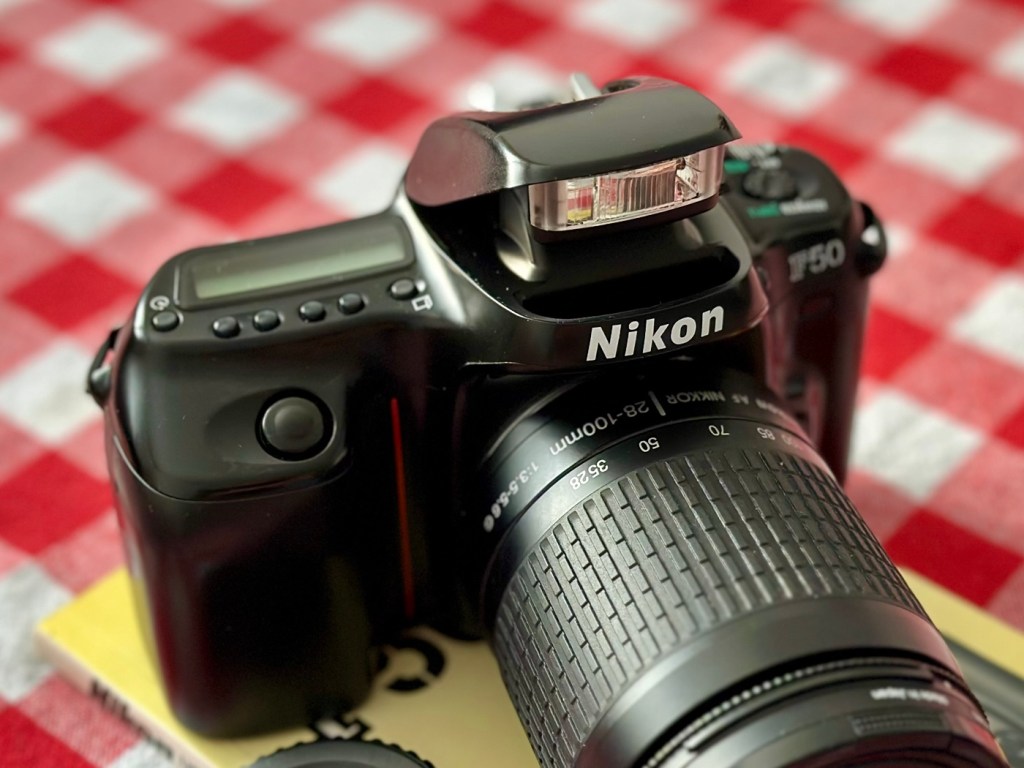
With a lens connected all focus indicators in the viewfinder are good, the flash operates as it should and the info screen is clear and readable.
This camera is good to go.
Result:
In the end this turned out to be a twenty second repair, my first of this type and it went exceptionally well. A camera of this quality for just £7:77GBP with a guide book as well. is exceptional value, and I’m sure someone is going to love and cherish this camera for years to come. I’m going to run a film through it first just out of curiosity, however, I am supremely confident that there are no issues with it.
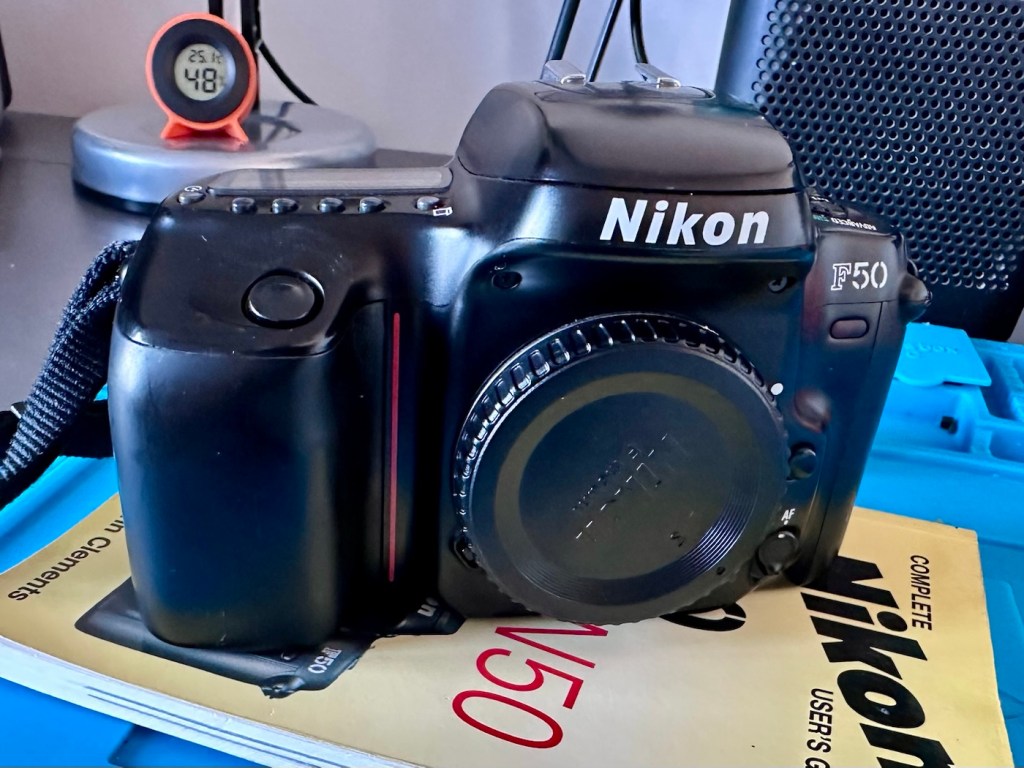
Looking superb, working
Again we have a classic case that shows just how 30 seconds of activity can bring a camera back to life saving it from the scrap heap. And a lovely looking camera it is too. Once I have run a film through I’m going to pass this on, it’s a good beginner’s camera and I’m sure it will get a lot more use, and that’s always a good thing. If Nikon produced in excess of 150,000 of these units, then I wonder how many others have suffered a similar fault and just been tossed into landfill.
Scary thought… though this one has been given a pardon.
Thank you as always for passing by. It is always very much appreciated.
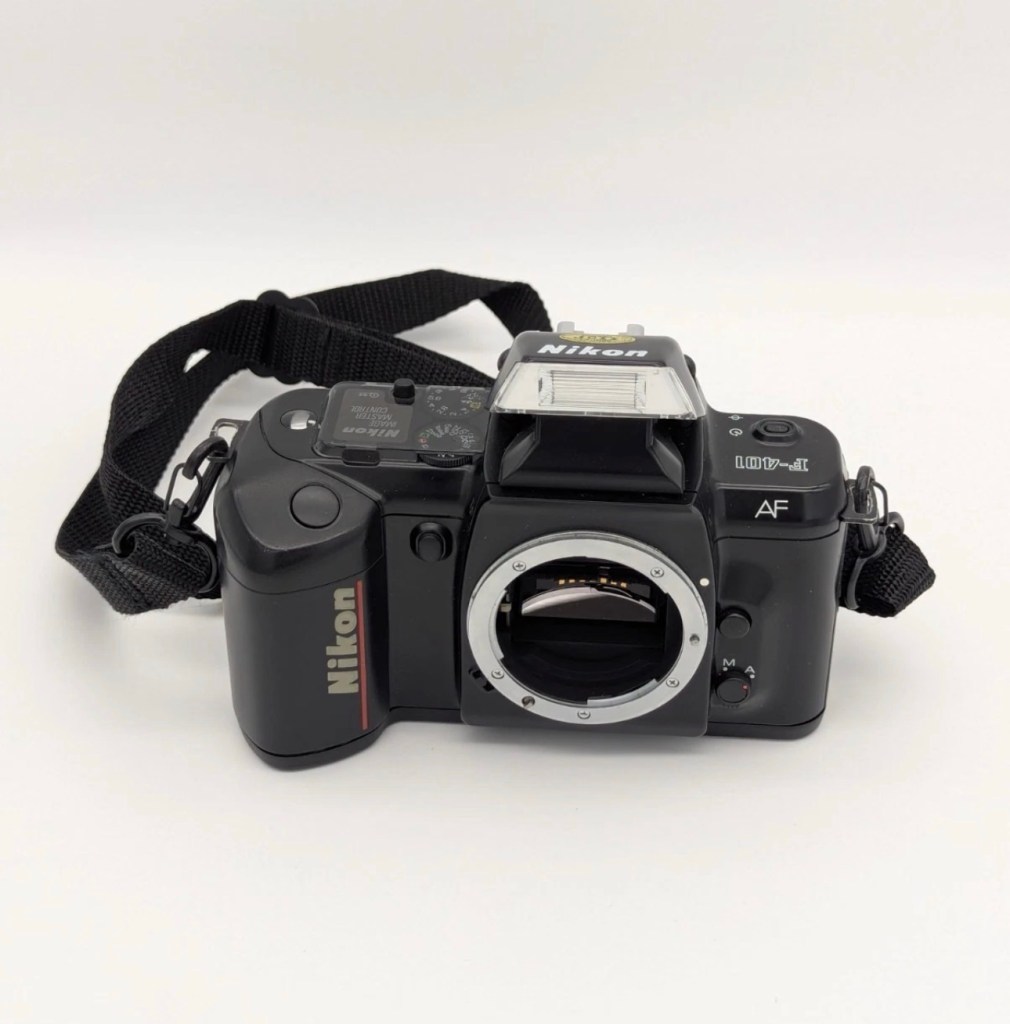
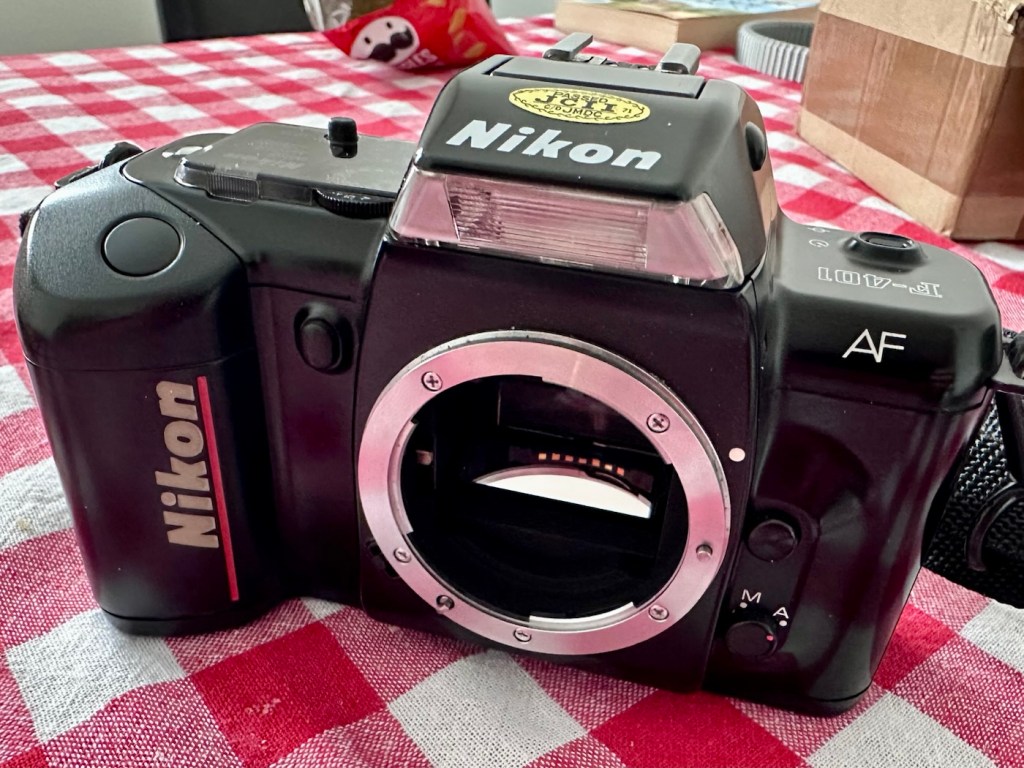
A nice little starter camera from 1987 sold as faulty when actually its operation was just misunderstood. Not so much a fix, just a lesson in why you should read instruction manuals.
What the listing stated:
Nikon F-401 35mm SLR Film Camera Body Only – Spares or Repairs. Unsure why it won’t work, I bought brand new batteries and it doesn’t want to power on. No exterior damage or scratches to suggest it’s been dropped. Battery compartment is nice and clean. Any further queries feel free to ask. Thank you for browsing.
EBay
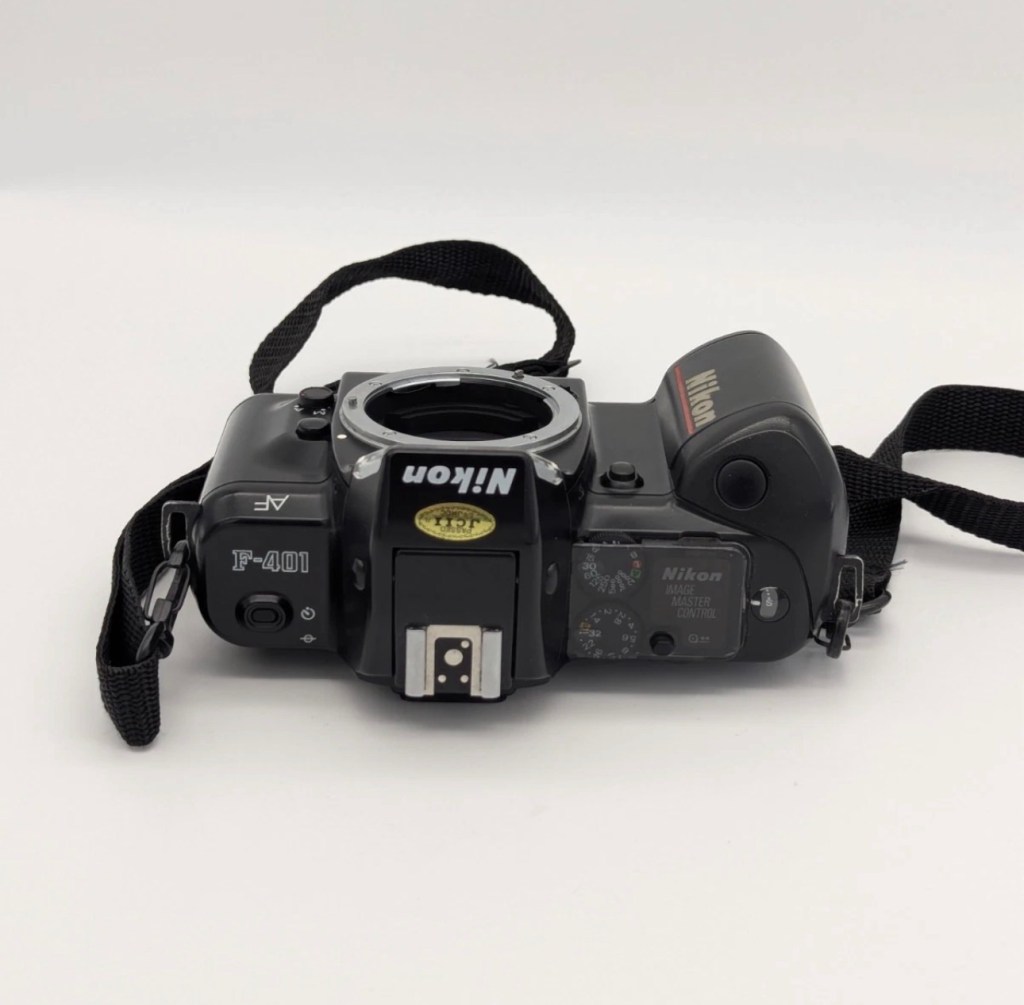
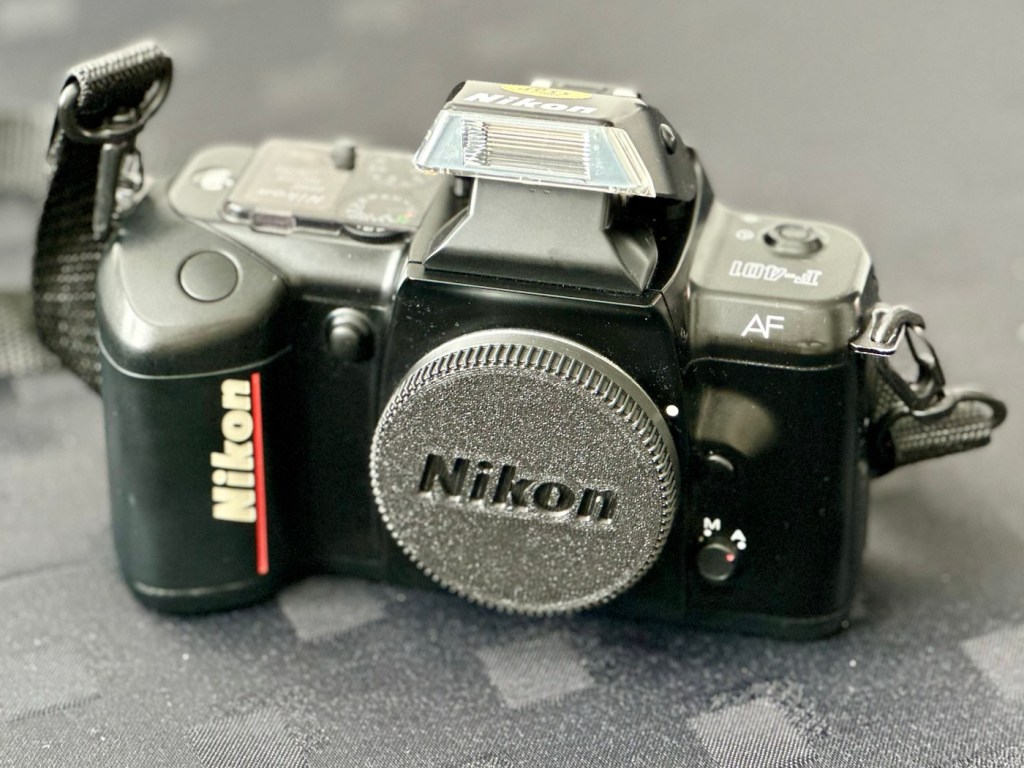
The camera I have purchased
Known pretty much as a dollar camera, it’s a Nikon but aimed at the entry level, and is of a plastic construction. The dollar tag is generally used to say just how cheaply available it is. I paid a bit more than a dollar, I paid £4:00GBP, after knocking the seller down from the £12:00GBP he was originally requesting. Still a bargain I believe, will be a nice little starter camera for someone if I can get it working.
Here’s a little about this camera:
The Nikon F-401 (N4004 in North America) was a beginner’s level, autofocus, 35mm, single-lens reflex (SLR) film camera built by Nikon and introduced in 1987.The camera represented one of Nikon’s first endeavours into consumer-based autofocus, as a follow-up to their first autofocus SLR in 1986, the Nikon F-501 (known as the N2020 in North America). The camera lacked many of the advanced features that more seasoned amateurs and professionals required, but it was a harbinger of the future as it included a pronounced, built-in grip as well as an integrated TTL Flash that is now commonplace on all but the most high-end SLR cameras.
The F-401 introduced the now common-place feature of using a thumbwheel instead of lens aperture ring to adjust the aperture. Furthermore, the camera’s lack of support for AI lenses meant that while all previous Nikon lenses could be mounted to the camera, none supported automatic exposure TTL metering.
An upgraded version the F-401S (also known as the N4004S) was released in April 1989. The F-401X (also known as the N5005) followed in September 1991.
By the 1990s, the F-401 was part of a lineup of autofocus consumer SLRs that included the more expensive Nikon F-601 and Nikon F-801.
Wikipedia
Looking on line at other F-401s that are for sale seems to highlight that power issues are a regular point of failure for these cameras. Let’s await its arrival so we can carry out a full assessment of this unit.
Assessment:
Here’s what has arrived today with the postman
The camera that arrived today
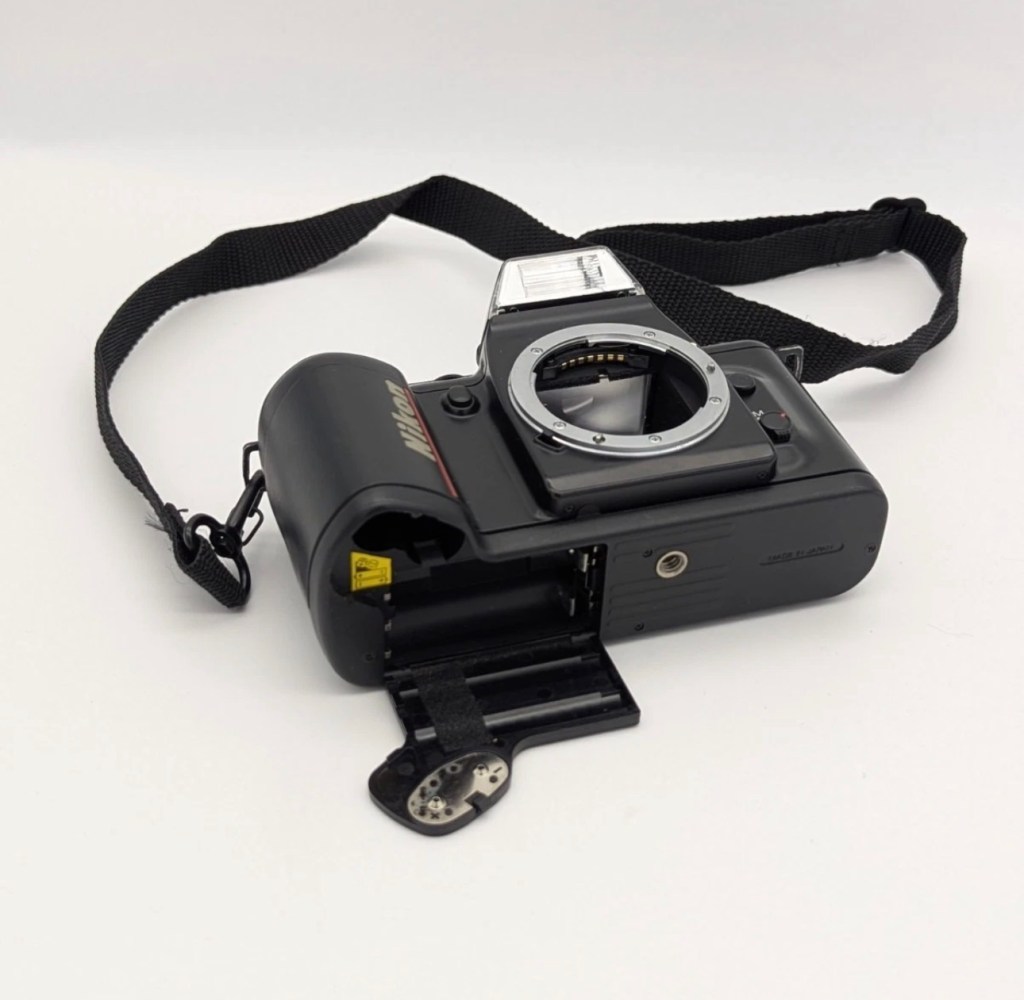
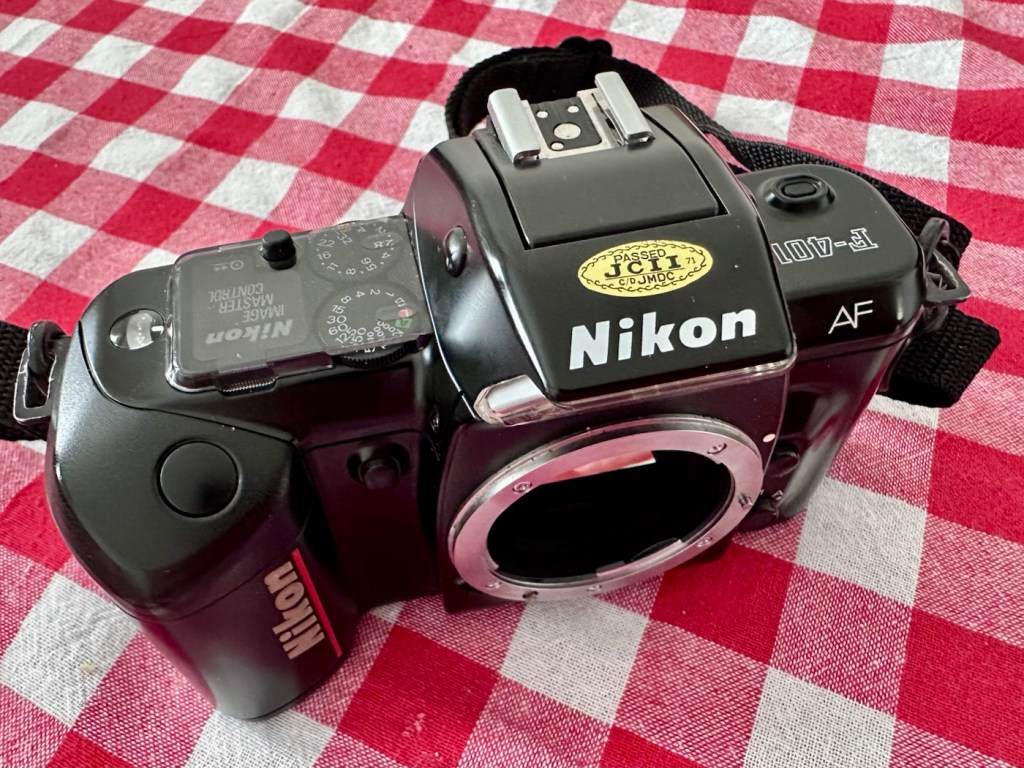
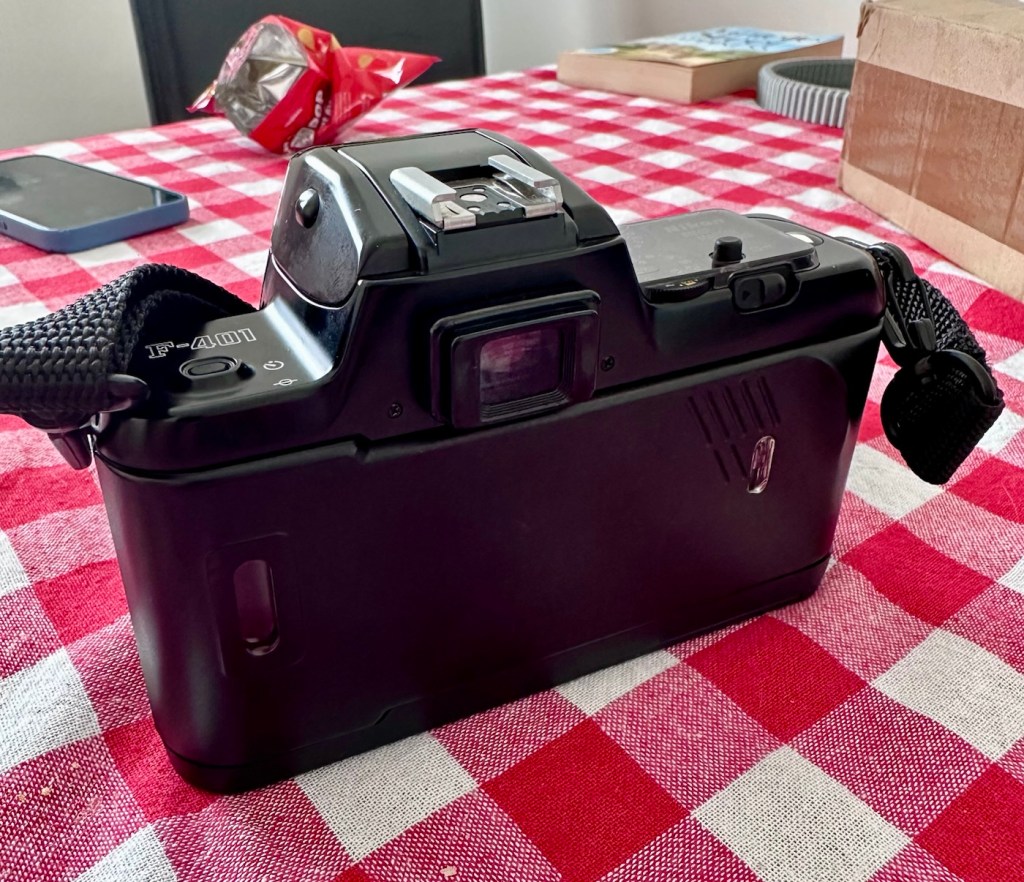
I’ve just sat at the kitchen table looking this camera over, and for £4:00GBP it’s a bargain. It’s very clean despite not having a body cap, there is only a tiny bit of paint damage near one of the strap connectors, apart from that this camera is in a very good (cosmetically) condition. A bit of a clean will take it to another level, however we will look at that once the fix has been done.
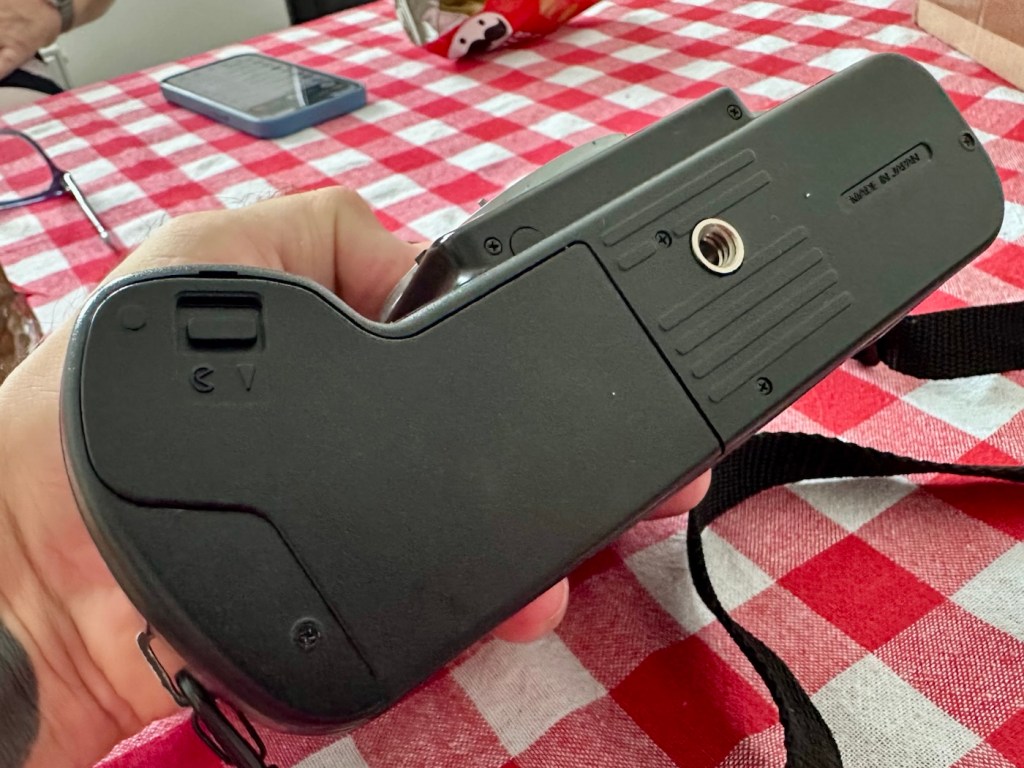
Fresh batteries installed
I have put 4 x AA batteries into the base of the camera and there appears to be no life in the camera. Contacts appear clean, the batteries are good, let’s take a deeper look into what the issue may be.
Repair:
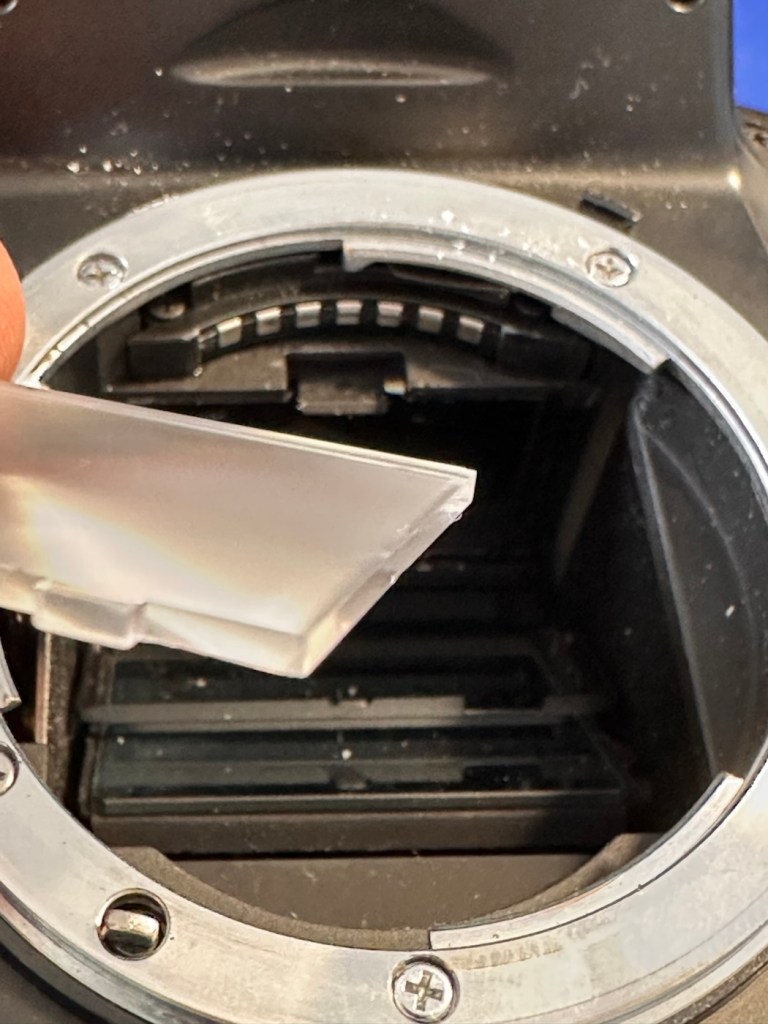
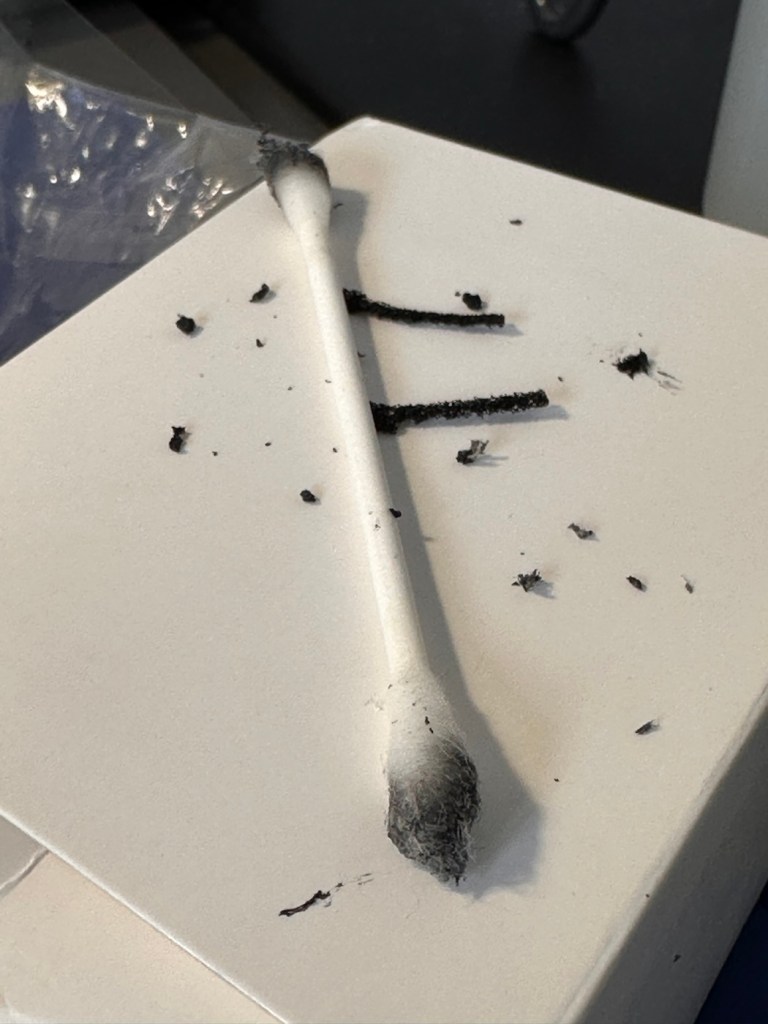
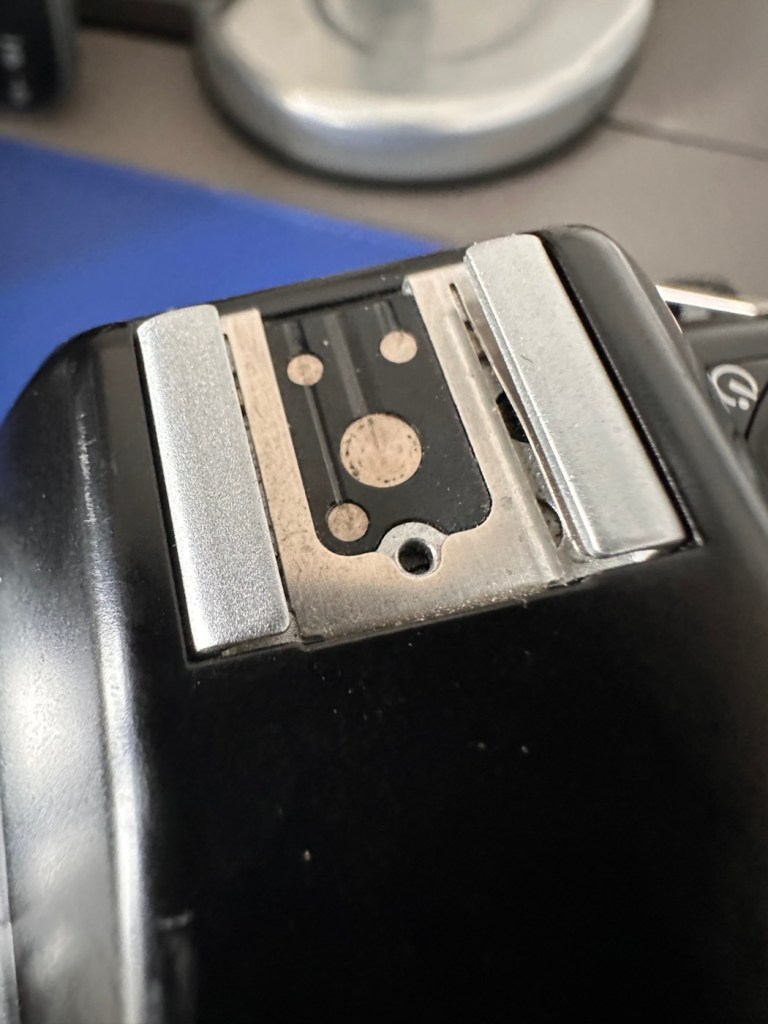
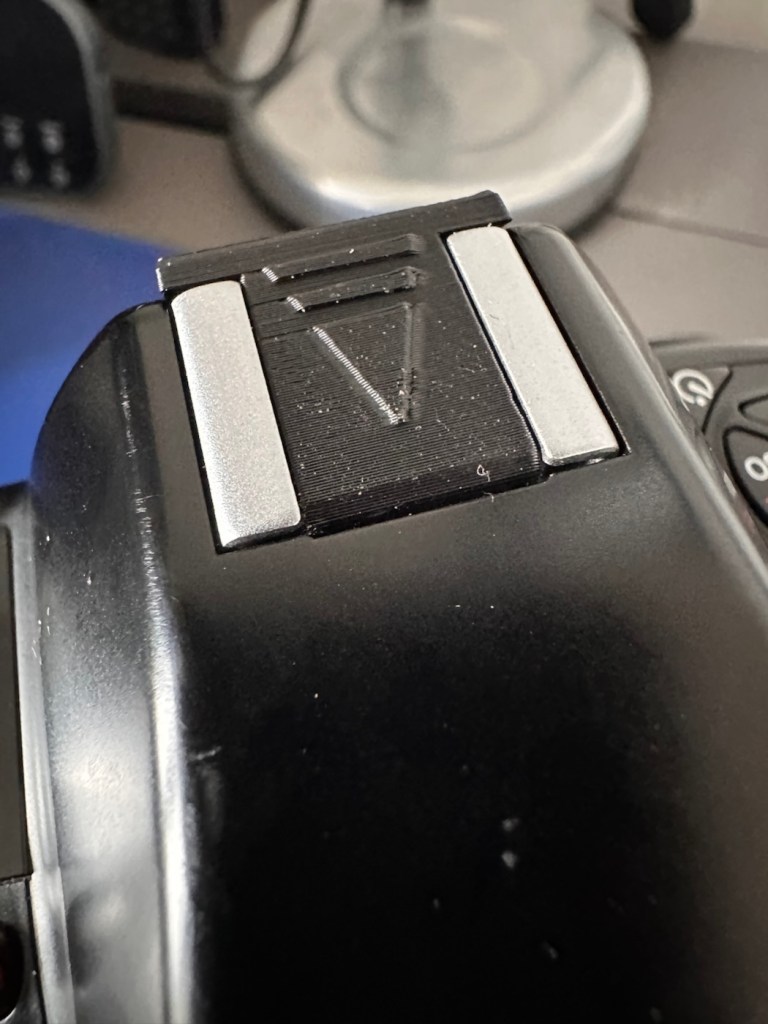
As I always do with any camera I purchase, I like to ensure the lens barrel, mirror and curtain are protected. In this case I will therefore 3D print a suitable body cap, and a hot shoe cover. If I then have to start any in depth cleaning at least I won’t have to worry about any excess debris intruding into this area.
New body cap and hotshoe cover
The next thing I really study with any new camera that I obtain is the instruction manual. If some of the sellers actually did the same then they’d quickly realise, that sometimes there are no issues with the unit, it can really just be down to the quirkiness of the camera and how its controls work. Each camera brand differs slightly, so if you have no experience with a specific brand, it can quickly come across as the camera is not working. In a lot of cameras I deal with this is not the case. Knowledge really is king here.
And I suspect that this very camera may just well be a case of the sellers lack of operational knowledge.
I really feel like a fraud here, there is a button on the rear of the camera directly behind the shutter button. Here there is also a small slide switch. This combination of slide switch and button allows you to rewind the film when finished. The button appeared depressed, and when pushed a number of times along with moving the switch side to side the button then popped up and the camera kicked in to life.
Rewind slide and button. This was stuck down
A little contact cleaner placed behind the slide and down the side of the button ensured a free and easy operation. When the rewind procedure was used at least six times it has worked perfectly without issue.
When the rear of the camera is opened, the exposure counter resets as it should. When it is closed again and the shutter button is depressed, three quick fire actuations occur forwarding the film to its first exposure. All is working well.
Self timer operationalAll indications working
A Nikkor 28-100 lens on the front confirms all indications are working in the viewfinder, and auto focus appears to be just fine. All aspects of operation on the camera have been tested and everything is doing exactly what it should be doing. This camera was never broken. Its operation was just mis-understood.
Result:
£4:00GBP is a very good price to pay for a fully operational camera, even though it was purchased as a faulty item. Every camera i purchase, I always download a .pdf instruction manual file to store on my server. Nine times out of ten a brief read of just the setup information can sort out a myriad of issues, and if the seller had done the same they would have been able to up their sales prices accordingly. I’m not complaining though as I’m able to bag a bargain on many occasions.
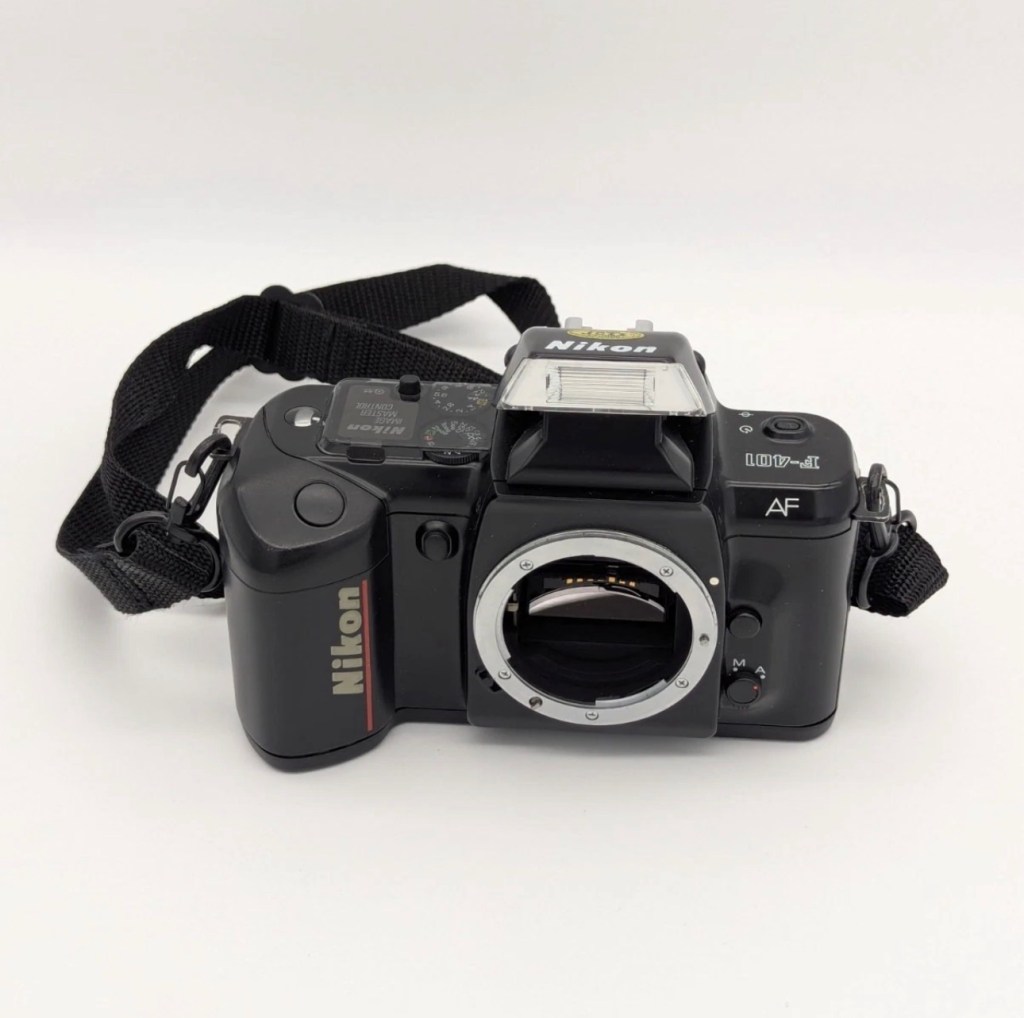
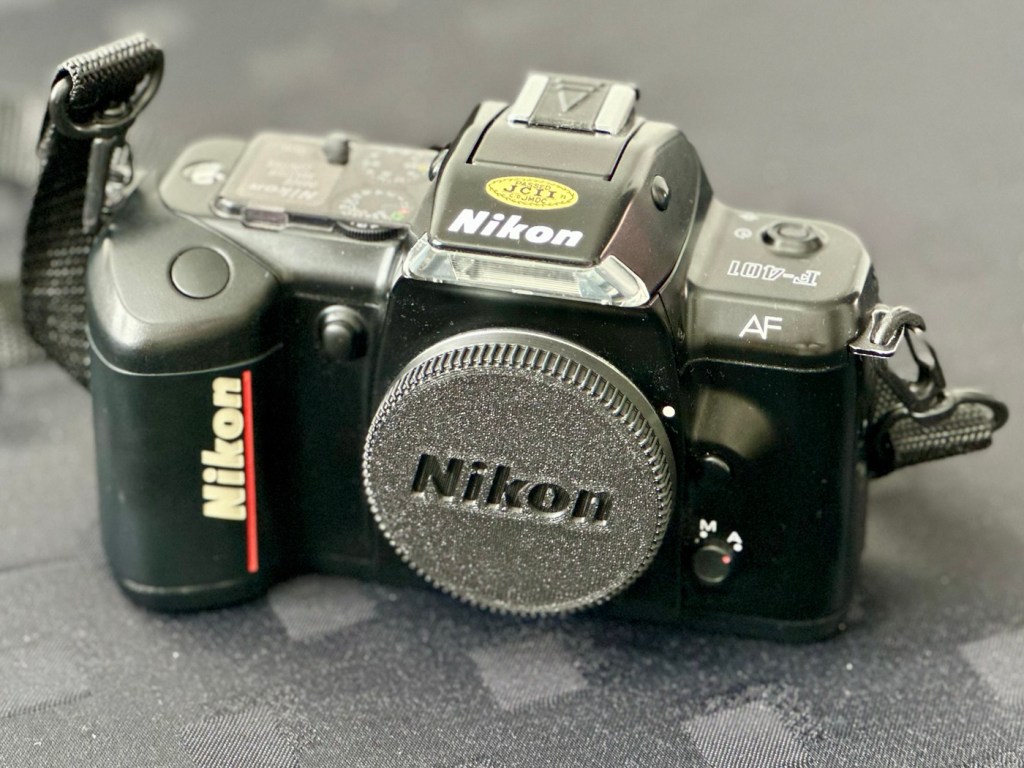
Here’s how this little unloved piece of camera looks after I have sorted it out, cleaned it and paired it up with a suitable lens:
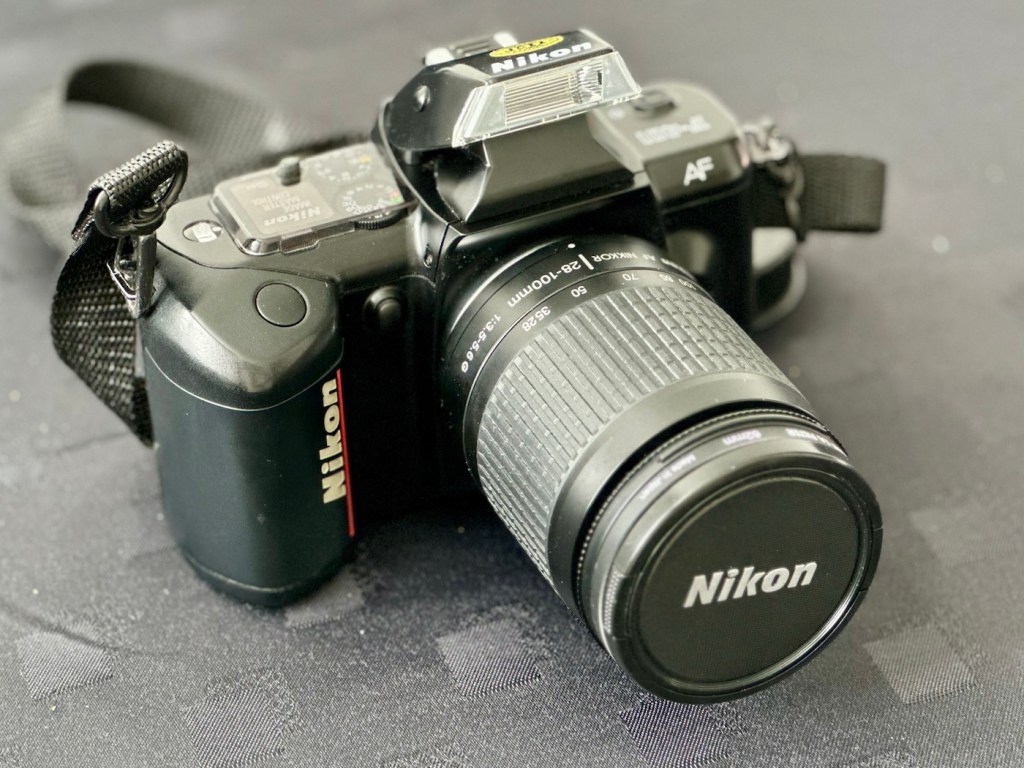
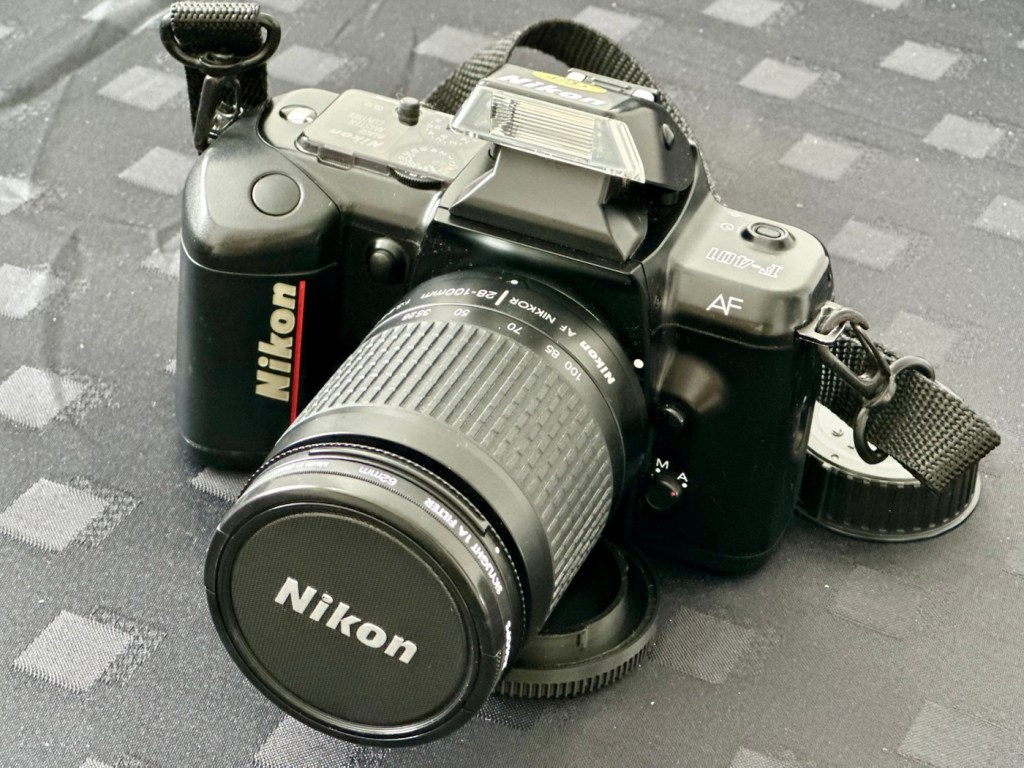
Looking fine and in full working order
To think if this camera had not been purchased it would have just been chucked in the waste. Instruction manuals are supplied for a reason, and it’s always wise to refer to one when things start to go wrong, nine times out of ten there isn’t a problem, just a minor misunderstanding.
Take it from me, instruction manuals are good. I have hundreds stored electronically referencing cameras I have had, through my hands over the past years.
Thanks for passing by, and as always it is very much appreciated.
I have so many cameras hanging around the place that I have fixed over these last few years. I have therefore decided to select a few of them to do a little series entitled seven days in seven pictures. One camera for each week. I will choose a random camera, and choose one picture on each day that has a little story behind it. For me, just as my working week does, the seven days will run Sunday-Saturday.
It could be from any era of camera I have fixed, and for those who take the time to read my posts you’d realise that it could be anytime from about 1920 to the present day. With all the cameras I currently have (about 125 in storage, and growing) this series could go on longer than the soap opera Coronation street has appeared on the telly box ( That comment will be lost on anyone outside the UK).
So for week one I’m going small, with this lovely little portable camera.
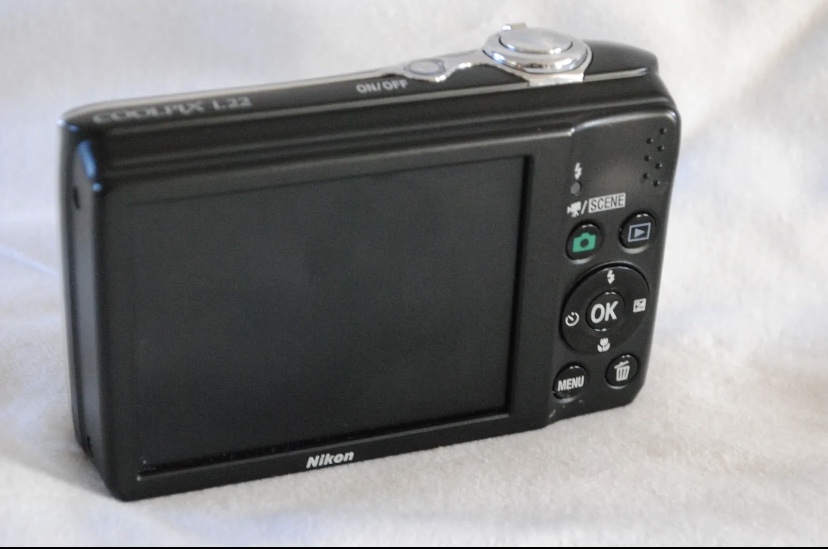
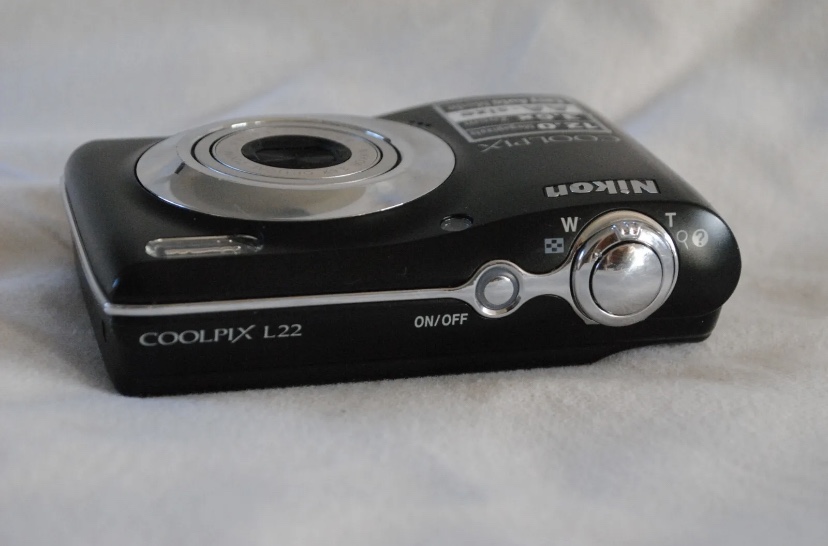
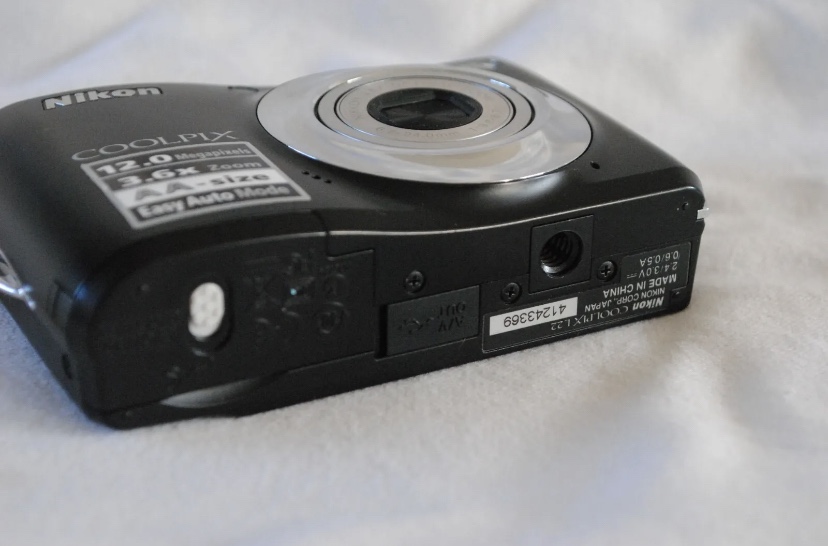
A Nikon Coolpix L22, I repaired this way back in 2023, I was going to pass it on to a family member, kind of pleased I kept hold of it though. Here’s the link to the original post: Nikon Coolpix L22
Nikon Coolpix L22
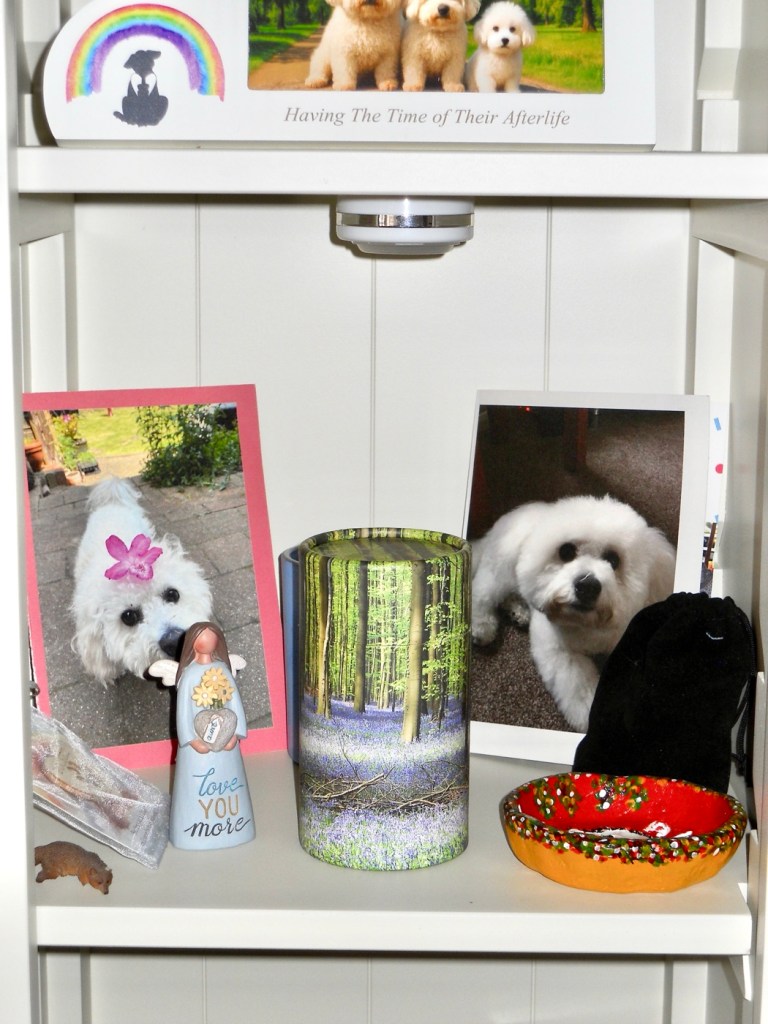
Sunday: it’s the 16th August. I’ve just finished a run of night shifts and for the first time in what seems like months, the temperature has dropped to a nice cool temperature and it’s lovely. To be honest there is only one subject i can choose for today, it’s exactly two years to the day when we lost our beloved little dog Alfie. This is a little display we have on a unit in our living room, often spoken to, touched and stroked, his ashes and pictures dominate this shelf. He was a beautiful and much loved companion and confidant, who we will always miss, he was such a big part of our family. Beautiful boy ❤️
Monday: It’s the 17th August. I’ve been asked by work to do a buckshee night tonight, so the wife and I are going to go out for some lunch today. And today’s photo is from the Grange farm centre where we ate. I go to buy plants, the wife goes to fill the garden with pottery figurines. In this case a couple of sheep, a hedgehog and an Owl. No plants for me though.
Tuesday: it’s the 18th August. On the grand scale of things, this is a quite boring picture, but quite relevant. In the Uk, and especially in my location we haven’t had rain in over 50 days now due to a quite spectacular heatwave. That dry spell ended about 1 am in the morning when we had the first rains. Beautiful, the smell was gorgeous and for the first time in a long period the air was fresh and clean.
Wednesday: it’s the 19th August. Today’s been a funny kind of day where time has run away with us. However Wednesday is a day where we meet up with a couple of friends and spend an evening indoor bowling at our local bowls centre. We’re pretty new to it and are still learning the finer details of it all, however we are improving weekly and enjoying it thoroughly. It’s great company.
Thursday: it’s the 20th August. It’s a wet start, it’s been wet all day, in fact it’s been wonderful. It’s always good to see some rain especially after the bone dry heatwave period we’ve just gone through. My garden water butt went from bone dry to full in just one small rainstorm, and that butt holds just over 100 litres. I need more water butts. I had to therefore complete indoor tasks today, so I decided to get my garage sorted, stuff put up on the walls and a new set of shelves built. And that’s today’s boring picture, an uninspiring photograph of the interior of my garage using the cameras black and white setting. Still a bit to do, but it’s looking a lot tidier now.
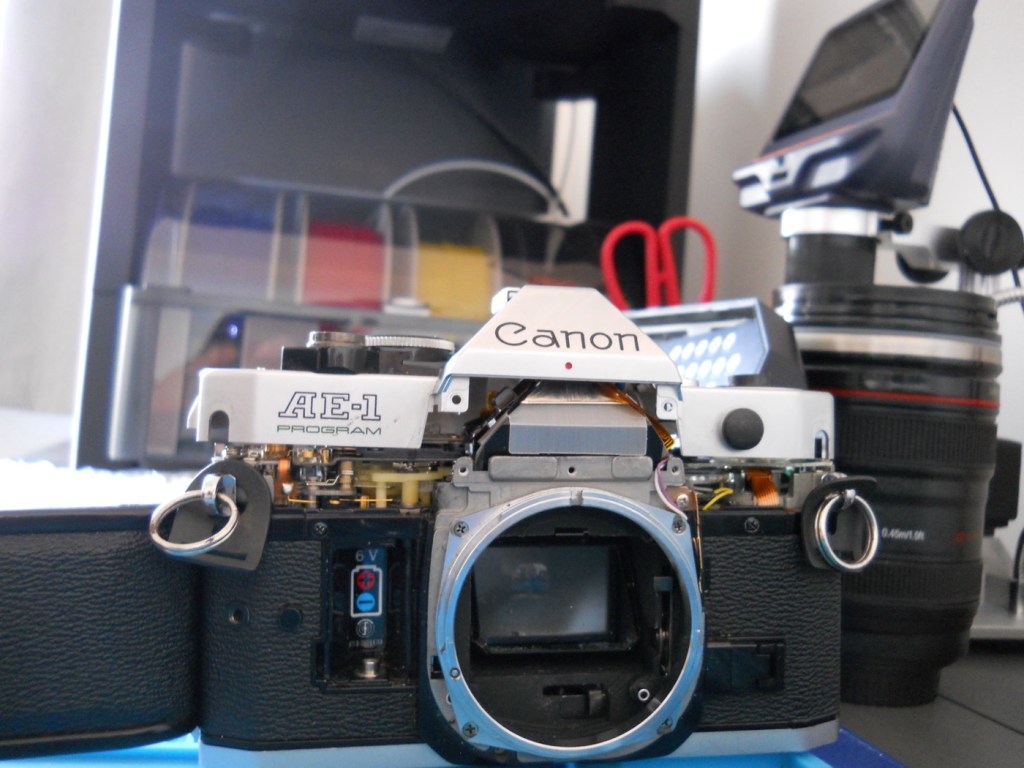
Friday: it’s the 21st August. We’ve been busy most of the day, I had to drop my wife off to have her nails done whilst I had an appointment at the hospital about an issue I’ve had dragging on from last year. The good news is that I’m now discharged with no further treatment or appointments required, I’ve been given the all clear and now been told to just get back out there and enjoy myself. Picture wise it’s not anything exciting, once home I continued work on a camera I’ve been playing about with for a few months, with the 3d printer in the background that has been used to create replacement parts for this very camera.
Saturday: it’s the 22nd August. Back to work today for a day, as I’m covering a colleague who is unwell. It’s been a pleasant day, not too hot and I’ve been all over Leicestershire and Lincolnshire today. Ive taken a lot of pictures and to be honest it’s been hard to make a choice from them all. In the end I’ve settled on this nice picture of the signal box on the Leicester- Peterborough line at Uffington. The colours are lovely, the weather was just fine and the light was good. This little camera really does come up trumps at times.
This camera influenced the partnership between NIkon and Kodak to produce one of the most expensive prosumer cameras of the 1990s. However this one is a lot less expensive but with some issues. Let’s have a look at it:
What the listing stated:
THIS UNIT IS FAULTY SUTIBLE FOR SPARES / REPAIRS ONLY SOLD AS SEEN
FAULTS INCLUDE BUT ARE NOT LIMITED TO, MIRROR STICKS
COMES WITH EVERYTHING SEEN IN IMAGES
NO WARRANTY PROVIDED
EBay
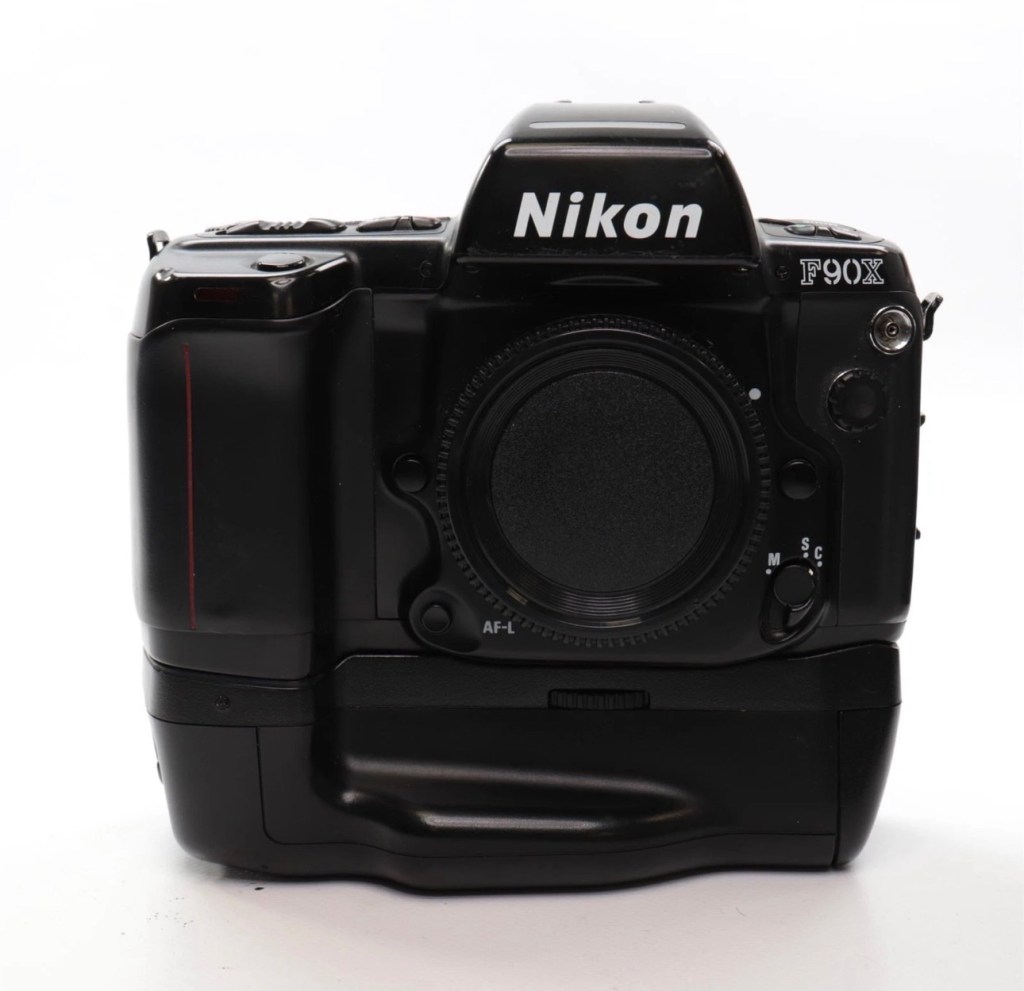
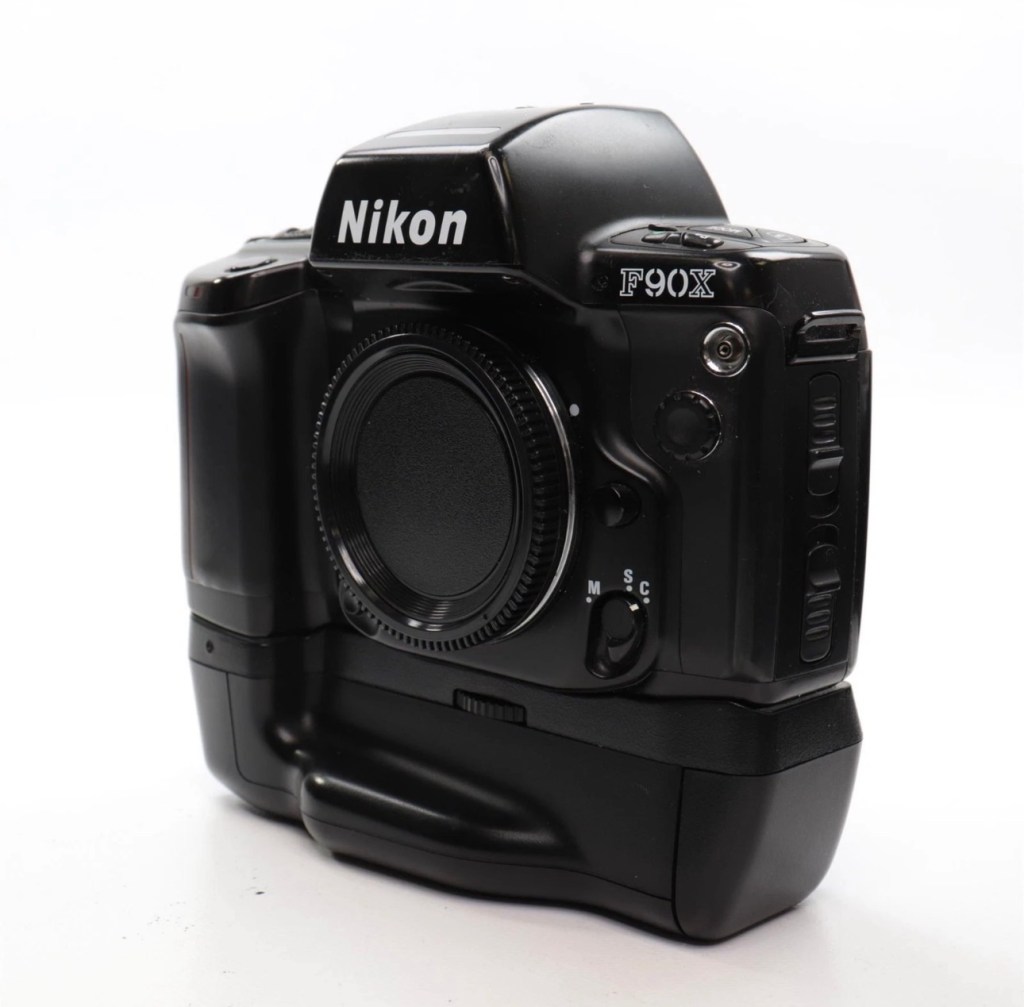
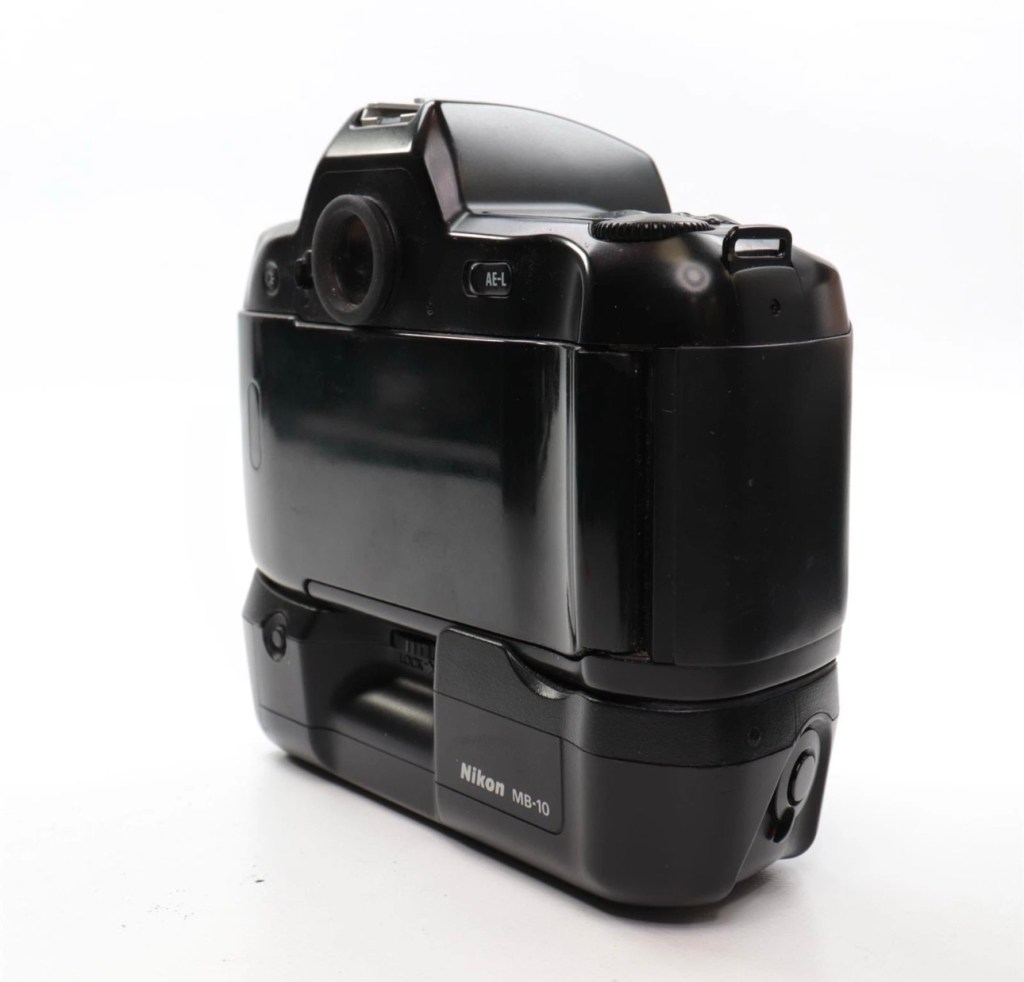
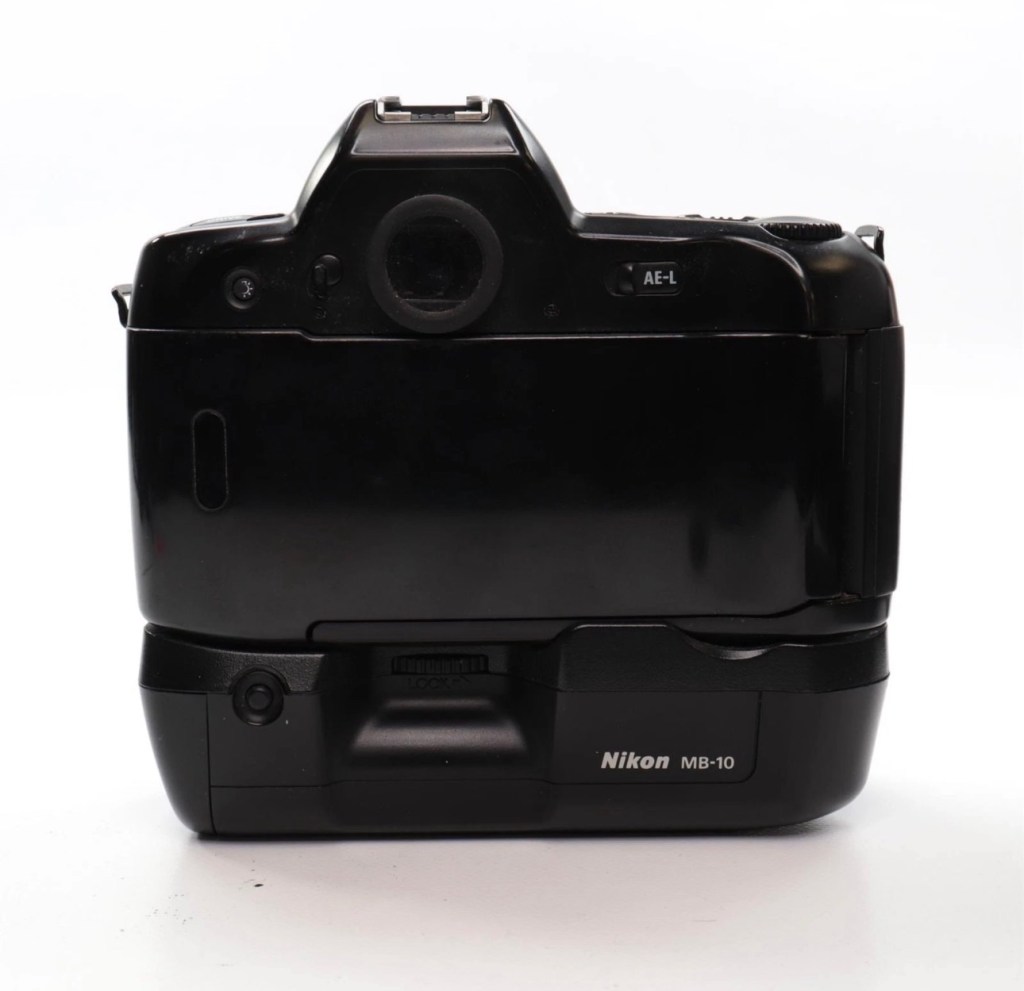
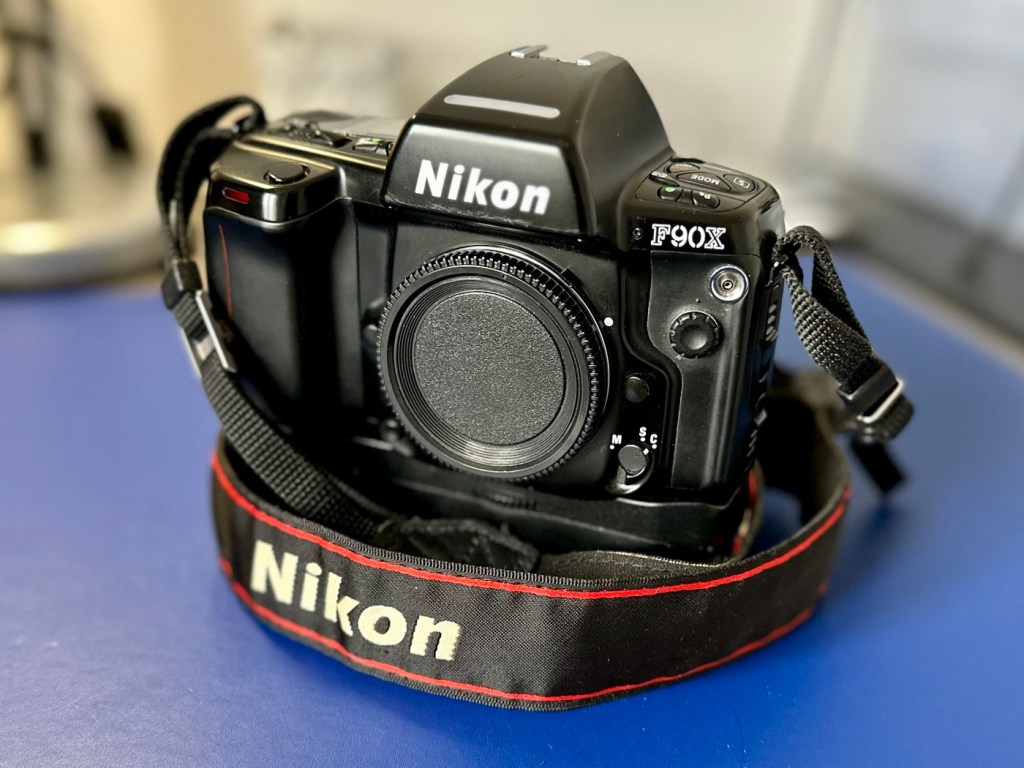
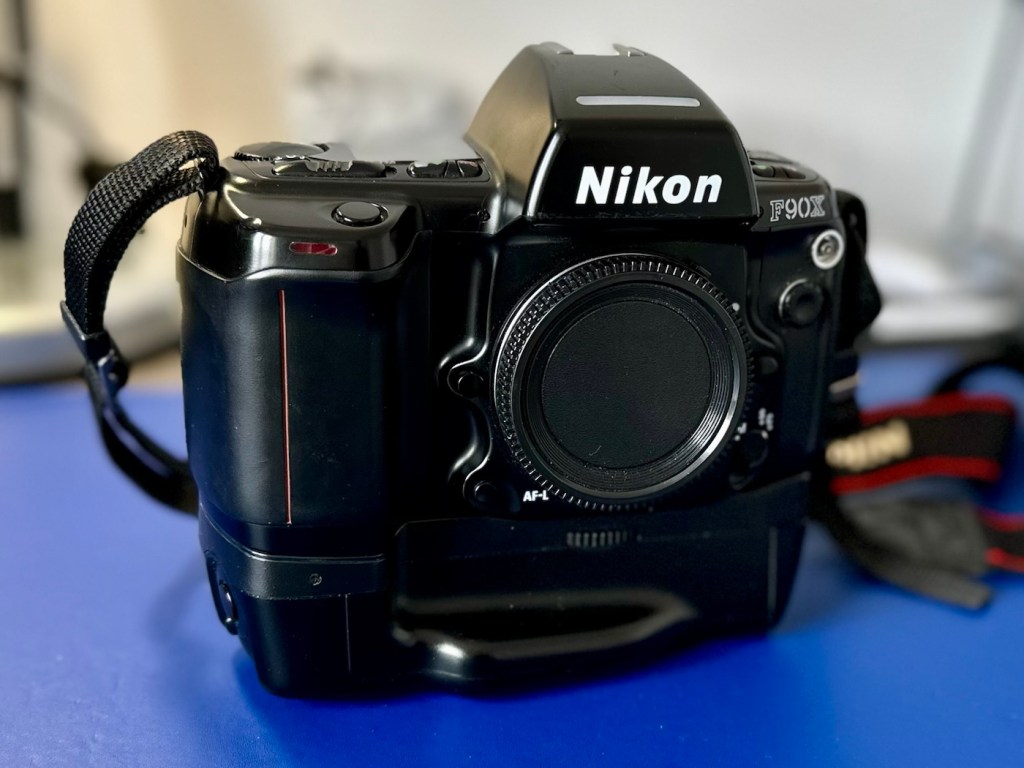
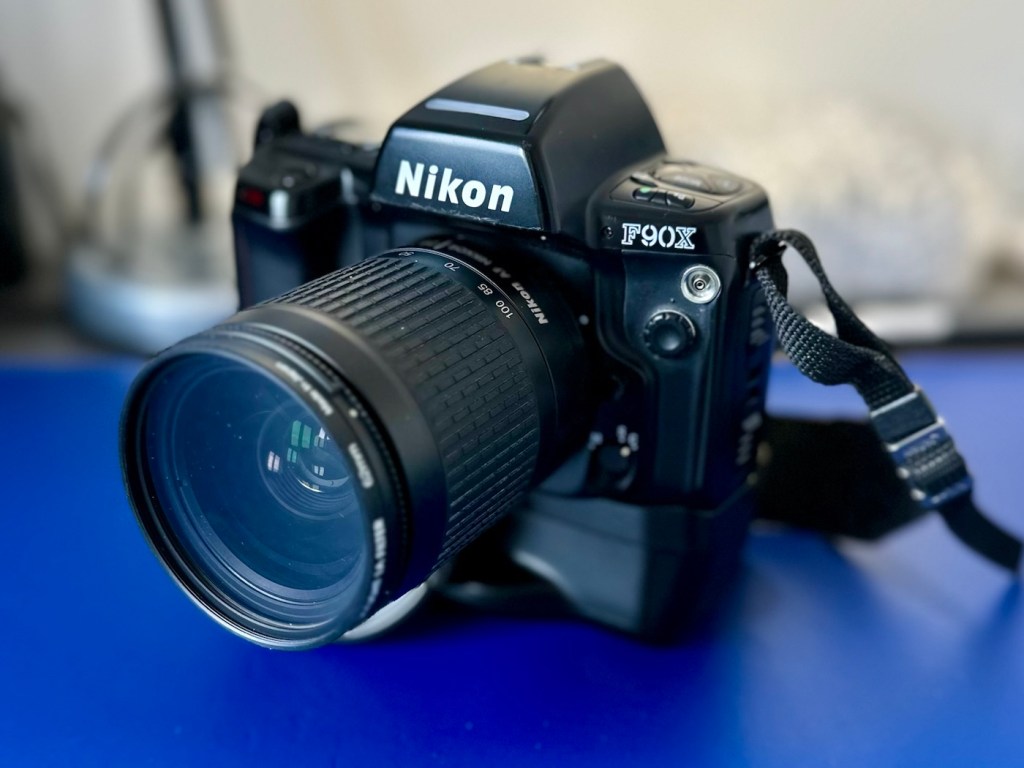
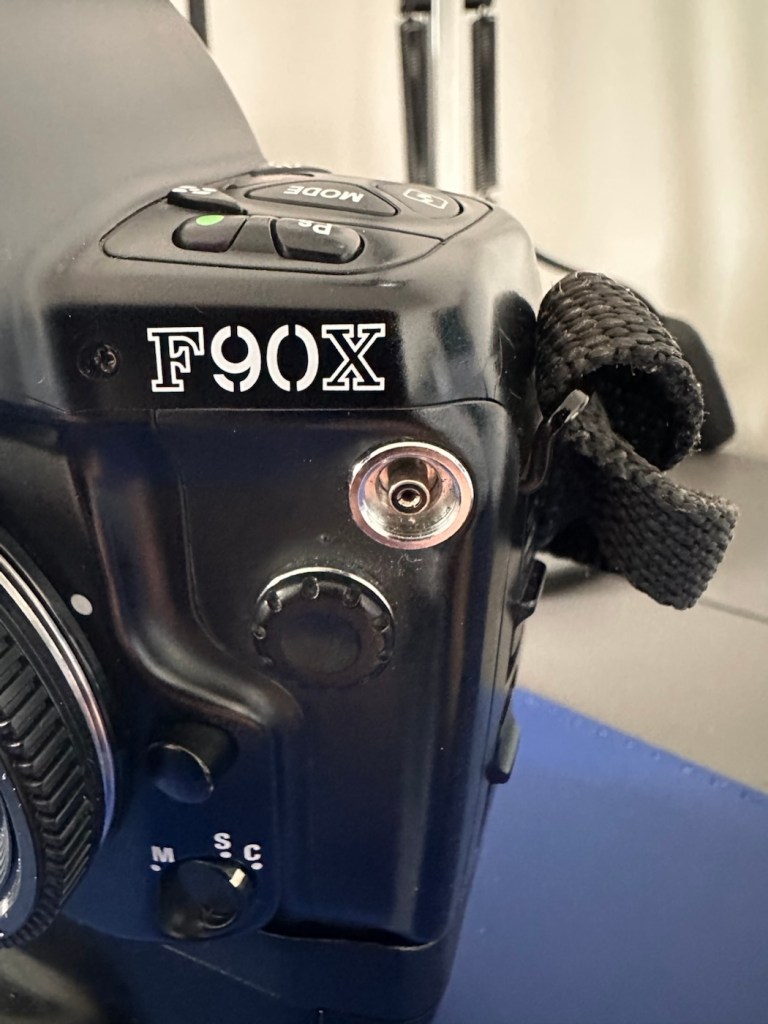
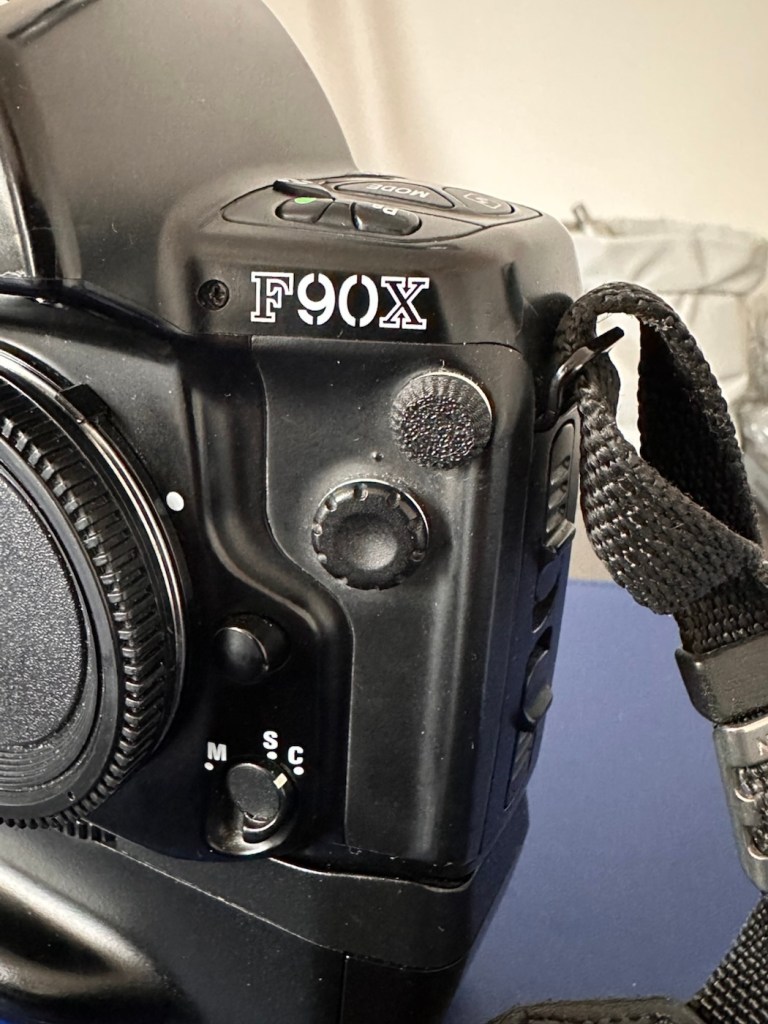
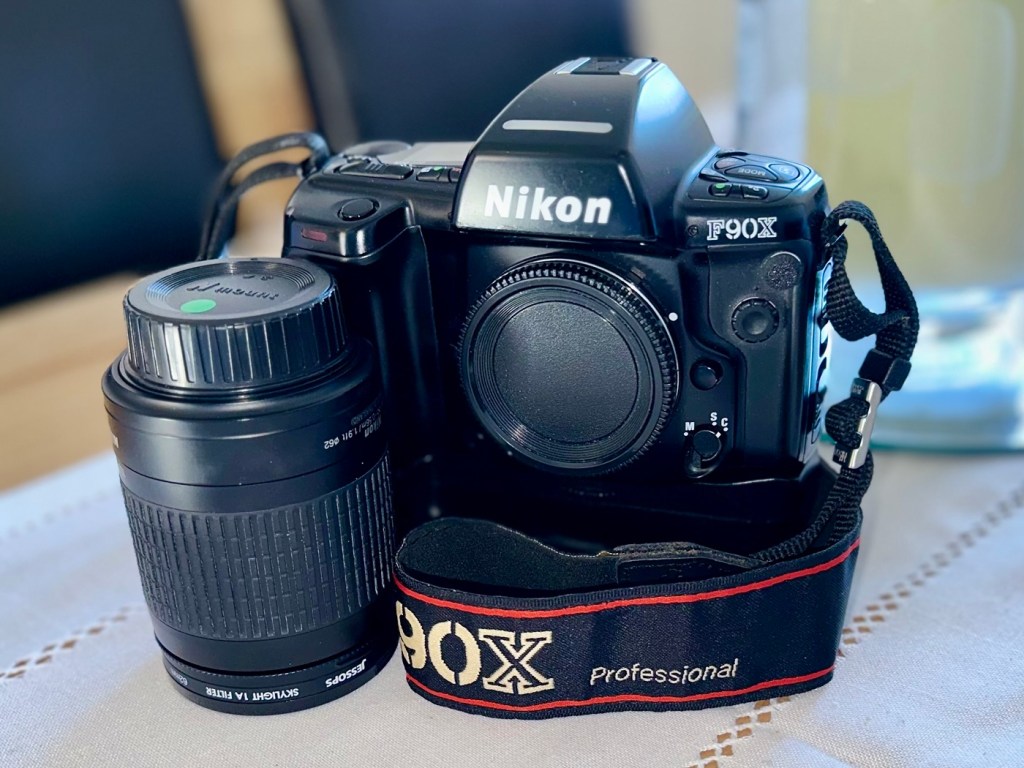
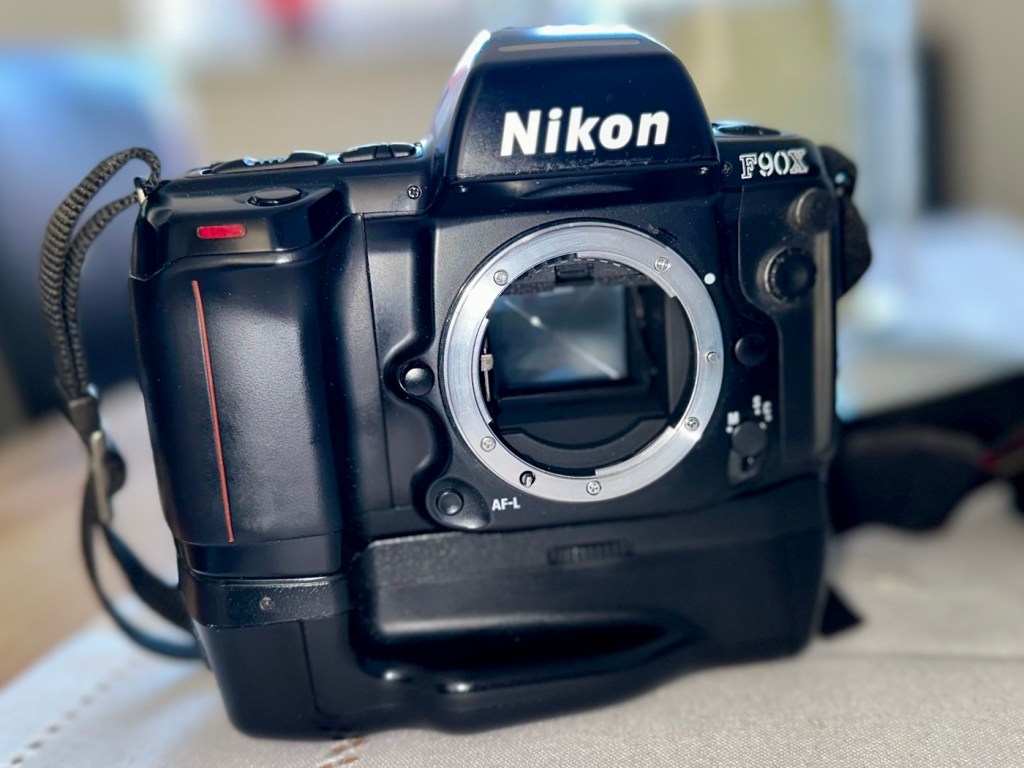
Nikon F90X with MB10 battery grip
Just couldn’t let this one go. Whilst browsing the sites for my next challenge last evening, this little bundle of joy just popped from one of my preferred sellers for a quick sale, it was about 11pm and was just posted at a sale price of £30:00GBP, however with a voucher I had, I was able to secure it at £27:00GBP. Considering this is a good quality camera of the mid 90s it also comes with the added bonus of an MB10 battery grip, superb value in my eyes. A lot of camera for a very low price.
Here’s a little bit about this camera:
The Nikon F90x is a 35mm autofocus SLR using Nikon’s F lens mount. It was targeted toward the advanced amateur or prosumer; its feature set is comparable to that of Nikon’s current D100/200/300 SLRs. The name N90s was used for marketing in the United States; everywhere else, the camera was called the F90x. This camera was also used as the base for the Kodak DCS 400 series of digital SLRs.
The N90s/F90x was introduced in 1994 and discontinued in 2001. The camera’s predecessor, the N90/F90, was introduced in 1992 and discontinued in 1994. The successor to the N90s, the F100, was introduced in 1998.
Features & Specifications
Nikon N90s global naming N90S adapted into Kodak’s DCS460, a 6 Mp Digital SLR
Bright viewfinder with 92% coverage, .78x magnification
Current settings are displayed at the bottom of the finder; information area is automatically backlit in dark conditions
Top LCD displays current settings and facilitates changes
Backlit for use in dark conditions; the backlight switch is near the left die of the viewfinder
Cross-Type Wide Area AF System
Choice of wide-area or spot AF
One CAM246 AF sensor
Continuous AF mode with release priority in addition to standard AF with focus priority
4.1FPS capable with continuous AF; 4.3FPS with standard AF
2FPS mode available
3D Matrix Meter when used with a D or G-type Nikkor lens
Center-weighted and spot metering are also available and usuable with AI lenses
3D Multi-Sensor Balanced Fill-Flash capability (with Nikon Speedlights SB-800/80DX/28DX/28/27)
DX-enabled (automatically reads speed information from film canisters)
Eyepiece shutter stops excess light from entering the viewfinder and interfering with metering
Overall strong build throughout (comparable to Nikon’s current D100/200/300SLRs)
Stainless steel lens mount
Requires 4 AA Batteries
Extensive system compatibility & accessories; see below
Accessories & Compatibility
F90X with MB-10 grip
The N90s/F90x is compatible with nearly all Nikkor F-mount lenses as well as all Nikon SB series speedlights.
Additional, camera-specific accessories available are:
MF-26 Multi-Control Back
Long Exposures to 100 hours
Freeze Focus: triggers the shutter as soon as a subject comes into focus
Custom Reset: customizes which settings are affected by the green-button reset
Date Imprinting: can also imprint shutter speed and aperture information
World Clock
Flash exposure compensation
Interval timer: up to 100 hours between pictures for 99 frames
Limit frame count in continuous shooting mode
Multiple exposures
Customize which settings are affected by AE-L and AF-L (auto-exposure lock and autofocus lock)
MF-25 Data Imprint Back
MB-10 Vertical Grip
Takes 4AA batteries or, with the MS-11 battery holder, two CR123 lithium batteries
Interchangeable focusing screens
E screen provides grid lines in the viewfinder
with 28-80mm, 20mm and 80-200mm
Lens Compatibility
All functions, including autofocus, work properly with Nikkor AF, AF-I, AF-D, and AF-S lenses.
AI and AI-S lenses are usable, with the loss of these functions:
Autofocus
Shutter-priority exposure mode
Programmed exposure mode
Vari-program exposure modes
3D Matrix metering (though center-weighted and spot metering remain functional)
The camera does not use VR with any lens.
G-type lenses (lenses without aperture rings) can be used with the loss of some functionality: only the lens’ smallest aperture can be used in manual or aperture-priority exposure modes.
Camera-wiki.org
Now my experience with this seller is that unless it is absolutely perfect he will not even entertain it. He doesn’t take the time to check and fettle, if it isn’t working from the start he will just get rid of. This attitude of his has meant I’ve had some right bargains in the past with very little wrong with them. I refer you to a recent purchase Canon EOS D60 that had very little wrong with it, but was also a lot of camera for a very low price.
Now I’ve always wanted a Kodak DCS 400 series camera, especially a 460 version as it takes me back to my days when I was working at Kodak in Harrow, I remember when the DCS 400 series came out and back then they were introducing such a new technology that they were commanding a huge price of around $35,000 at the time. These cameras were basically digital versions of the film camera I have purchased above. So whilst I’m on the lookout for a reasonably priced DCS 400 series camera, I guess I will just have to do with the camera that started it all off. And for £27:00GBP I’m not complaining.
I think I may know why this mirror is sticking, and if it is what I believe it to be it could be quite an easy fix. (Famous last words)
So let’s stop all the reminiscing, and wish list writing and get on with this camera’s assessment.
Assessment:
It’s arrived, and as expected it’s a beautiful looking item in an extremely good condition.
Stunningly good condition
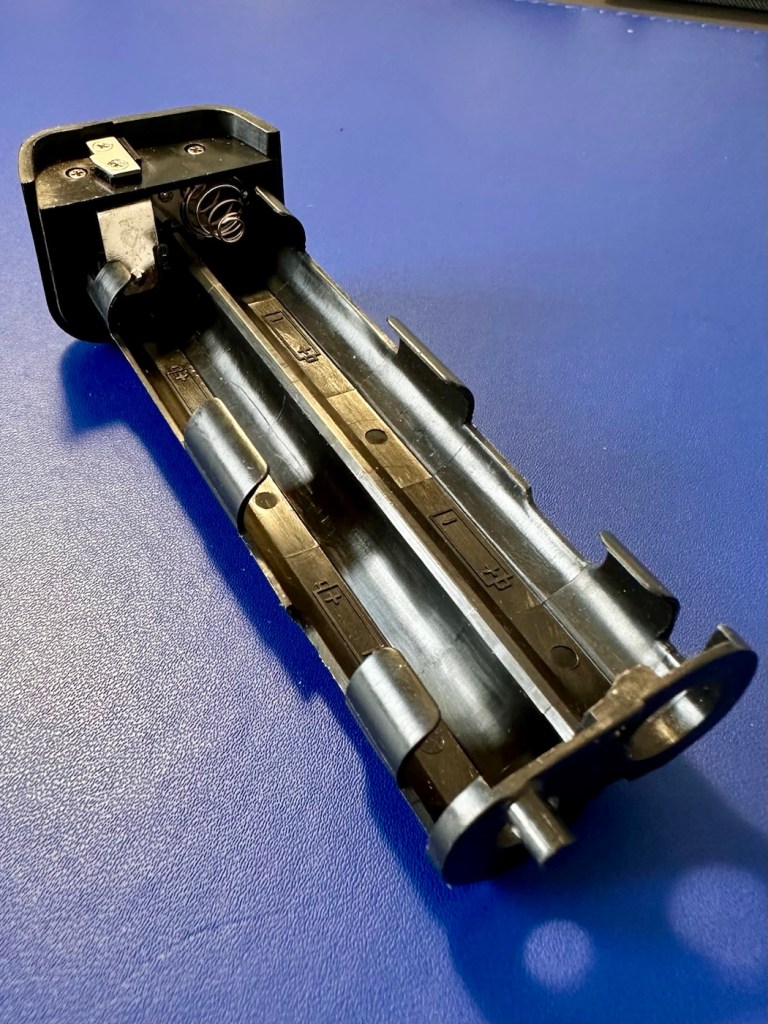
The mirror appears to be in a semi raised position, the battery pack is clean with no signs of contamination and battery leakage, so now seems a good time to put in four AA batteries and slide the battery pack into place and secure it.
Battery pack clean and contamination free
Turn the battery on and the mirror clicks back into its closed position. And here I am, probably 40 or 50 actuations later and I can’t recreate the sellers fault of a sticking mirror. The mode the camera is set in, is indicating long exposure times, maybe this has given the impression of the mirror sticking when in fact it’s just doing what it should relative to the light it is seeing. I need to check in clear daylight, but I’m sure this is part of the issue….if there is one.
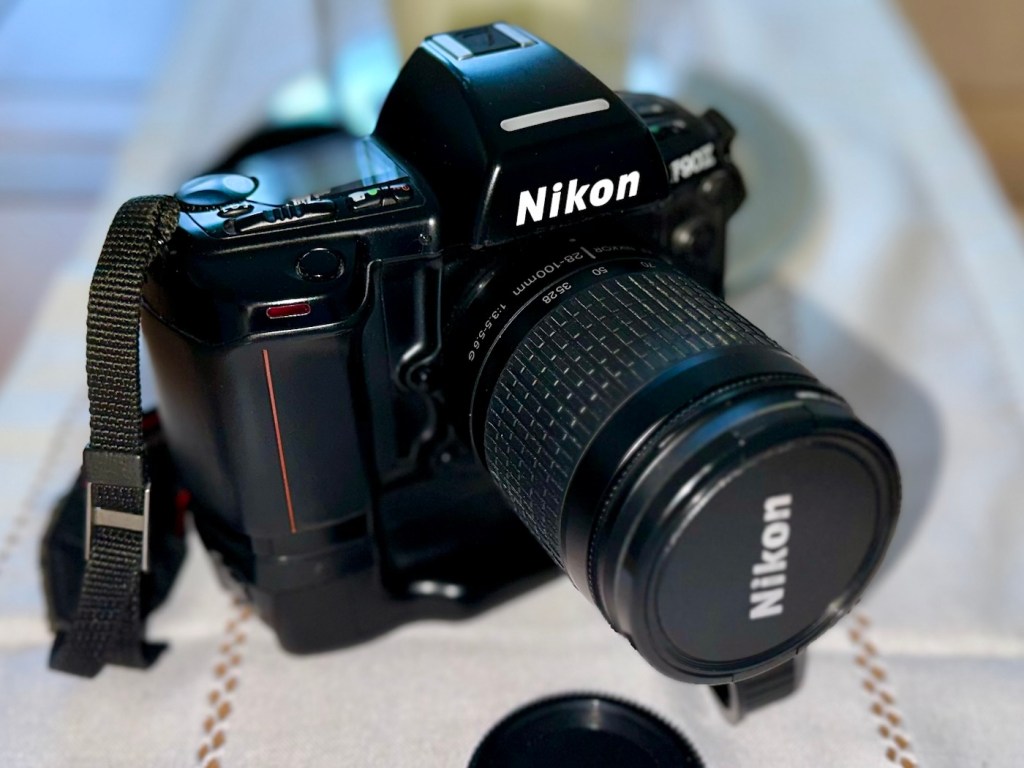
With a 28-100 lens added
I have a 28-100 lens mounted that I use for testing, the autofocus is working really well and all seems good.
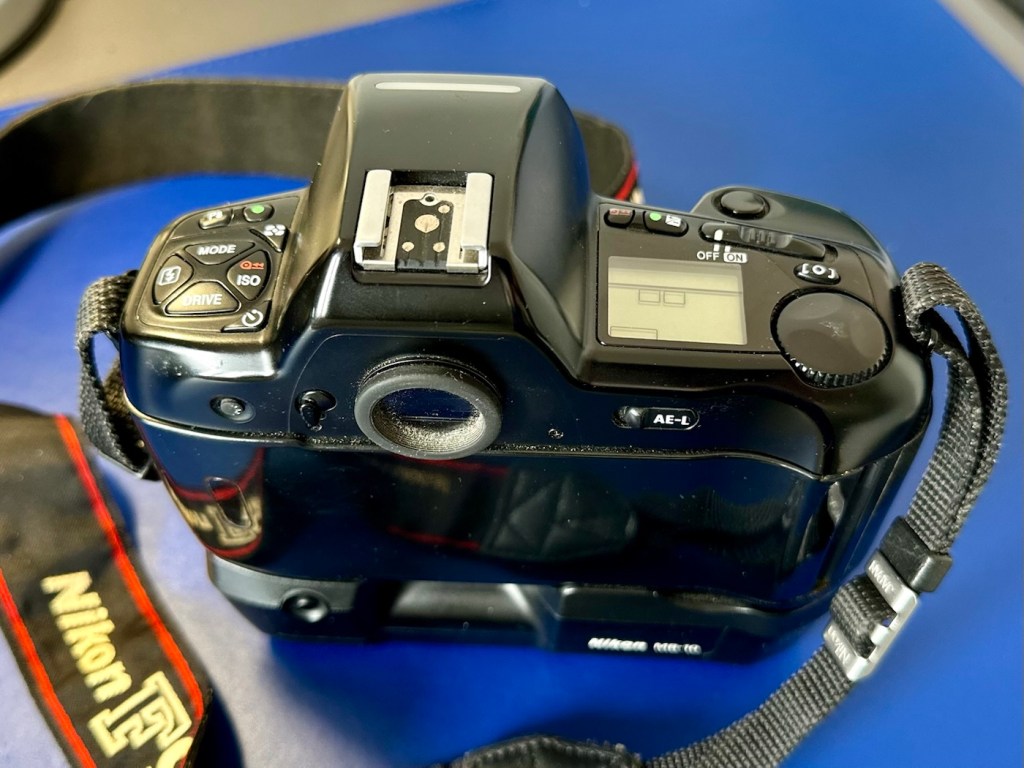
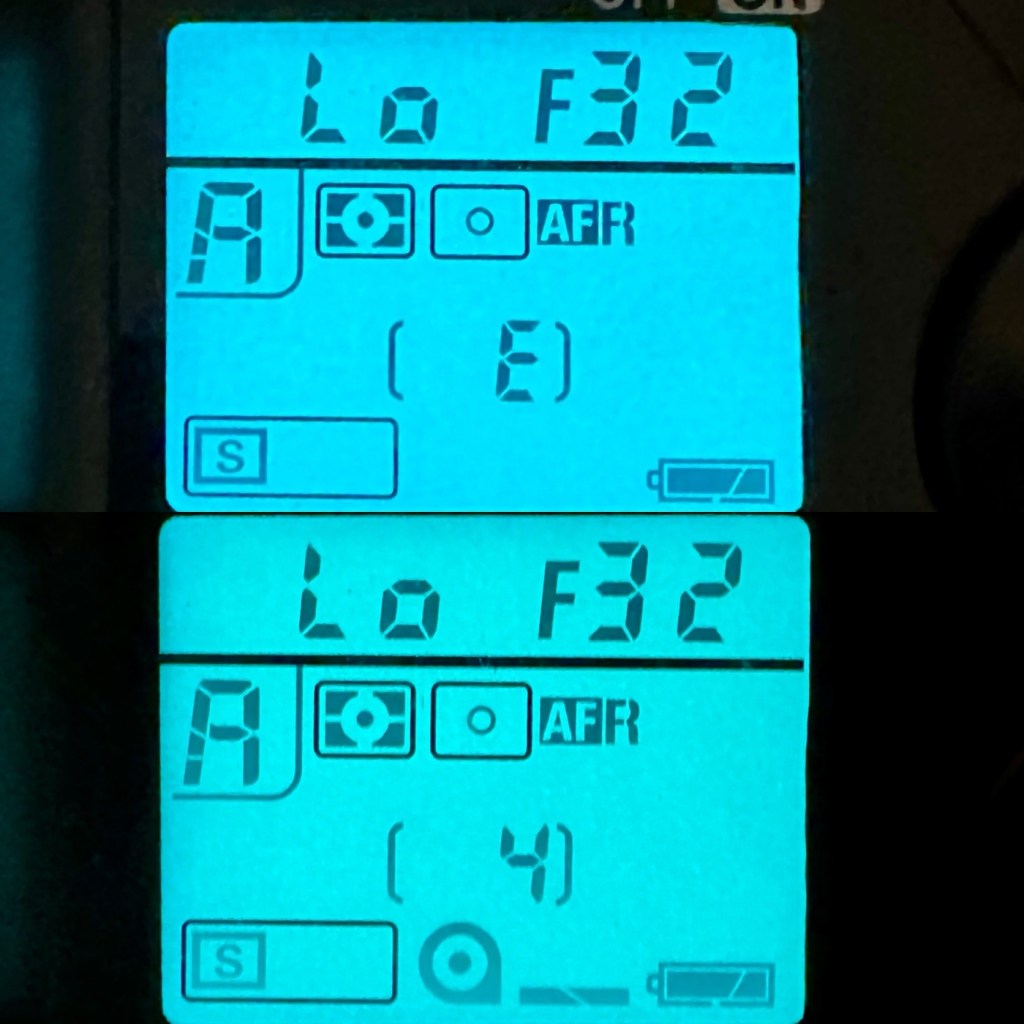
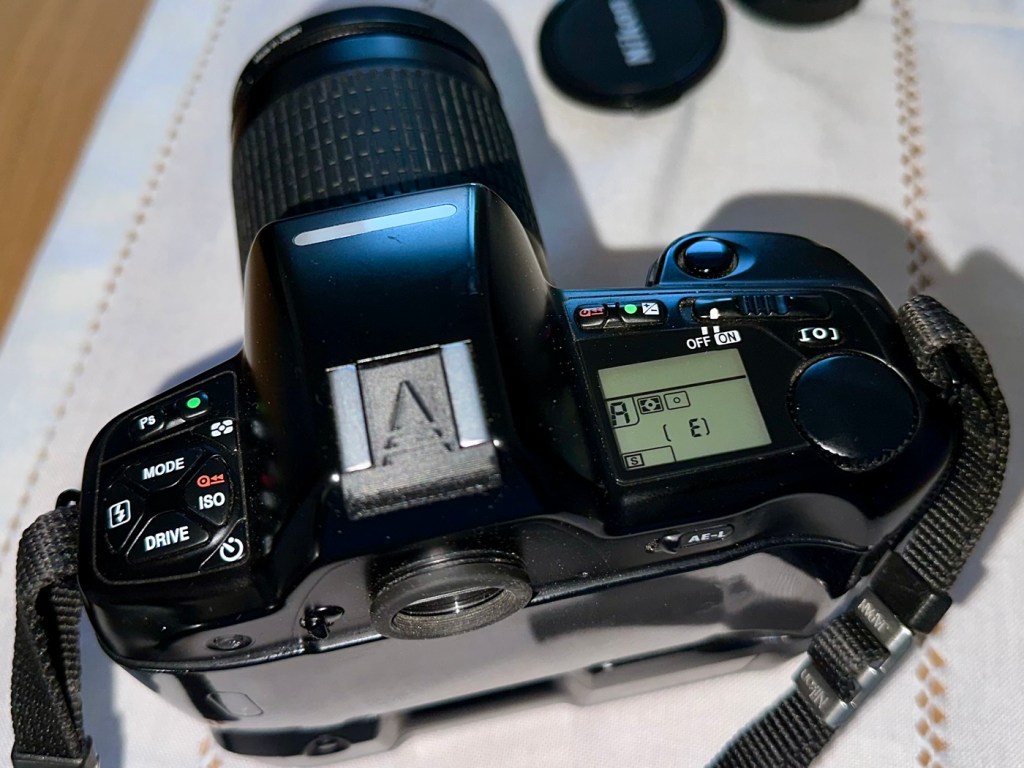
However, take a look at the picture below. It contains two photos of the LCD screen on the top of the camera. What do you see in the top photo that would make you think there is an error?
Is that an error?
For the un-informed, those who are not familiar with this camera or its operation, you will instantly see the letter “E” that is commonly known as an error indicator, in later models it is shown as “ERR”. I do believe the seller has possibly mistaken this for an error code, but if you refer to the bottom photo where I have now installed a test film, it becomes clear that the “E” on this camera represents the word “empty”. No film installed, a simple and easy to make mistake. The bottom picture indicates a film is installed and that 4 exposures have been taken.
As these cameras have in the past been known to have a mirror sticking issue, I will replace the mirror bumper felt. It is well known that when the felt has deteriorated to such a level, the felt becomes sticky, and the mirror just sticks to the felt when it opens. It’s an age related issue that is easy to repair. Even though I have not experienced it with this unit, I will replace it as it will probably fail at some point. I will also check the light seals and replace them if I deem this necessary.
Repair:
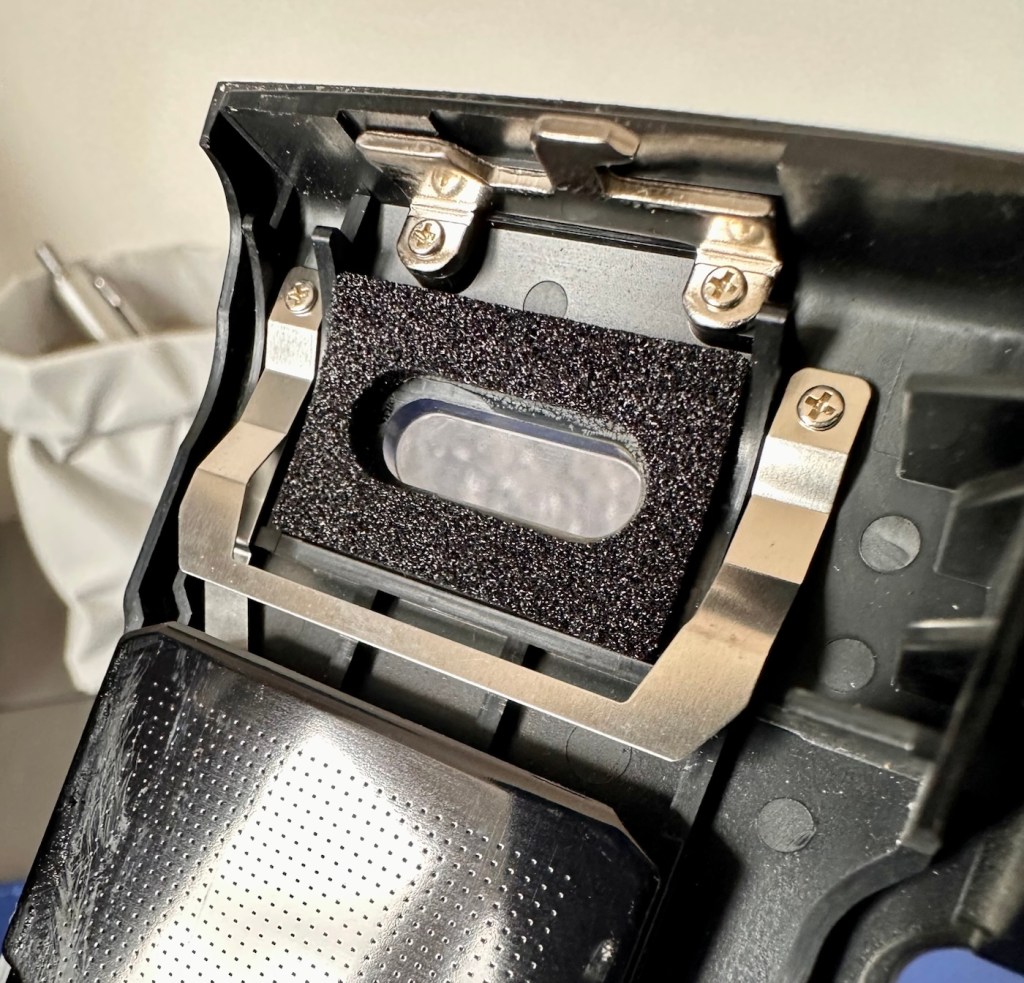
The light seals do not need replacing. In fact there are only two small spots of light seals on this camera and both are in good condition.
The two areas where there is light seal – with no issues
However the bumper seal was showing signs of degradation, so this has been replaced.
Old sealRemoved
The old seal peels out but leaves a sticky residue behind, this has to be removed with some IPA prior to cutting new foam to size and reinstalling. Whilst I was in the lens are I also removed the focussing screen to clean it and remove the old ingrained dust and dirt.
New bumper foam installed Focus screen removed to cleanSome of the dirt and debris from inside
The area within the mirror area is now clean and dust free after I have used a small air blower to get the last of the debris out of the barrel area. Mirrors have been cleaned and polished and the body cap has been put back on the front of the camera to ensure no further dirt or contamination gets in there whilst I work on the outside.
I’ve printed a hot shoe flash cover purely for aesthetic reasons, I’ve also printed a sync cable cover, for similar reasons, but generally just to ensure any open and exposed areas are covered up. It does make it look a lot nicer.
Hotshoe connectorHotshoe cover in place
The sync cable cover also helps keep the exterior tidy as well as protecting the connector.
Without With
All I need to do now is clean the exterior of the camera where there is some light dust and dirt. When this is done I will use my usual car cockpit polish to finish the camera off.
When that’s done I will do a quick fly through of all the settings to check if they are all functioning as they should.
Result:
The camera has cleaned up very well and looks glorious. All settings are functioning as expected, and there have been no issues with a sticky mirror or any other issues. The camera is just working well and doing exactly what it should be doing.
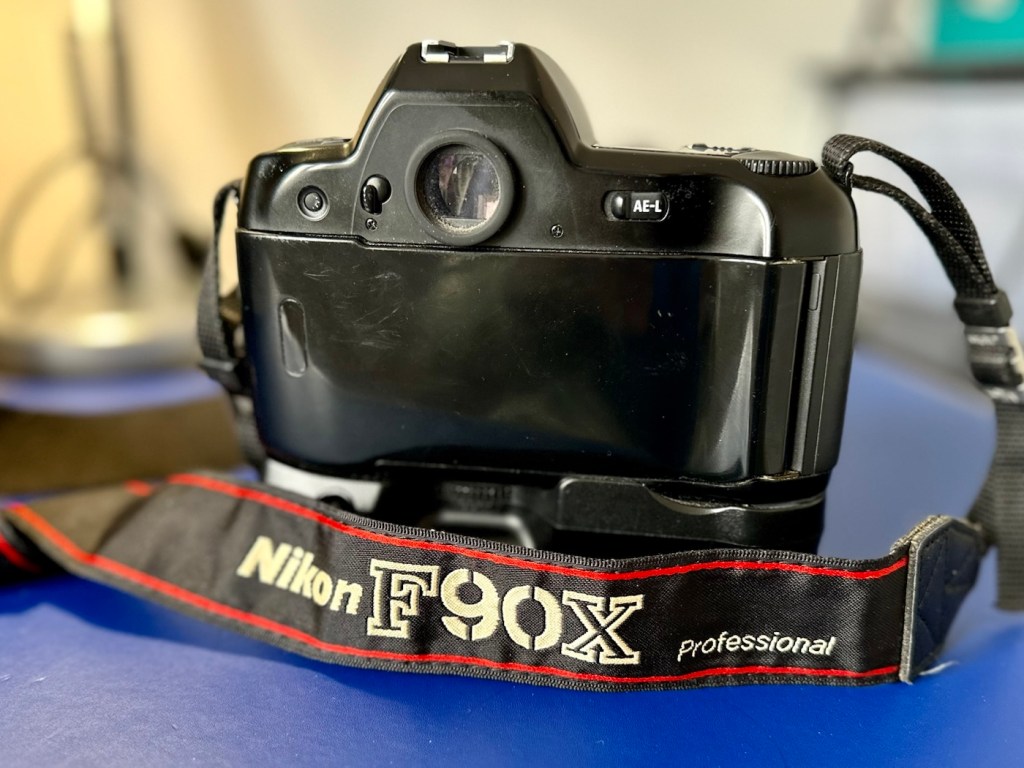
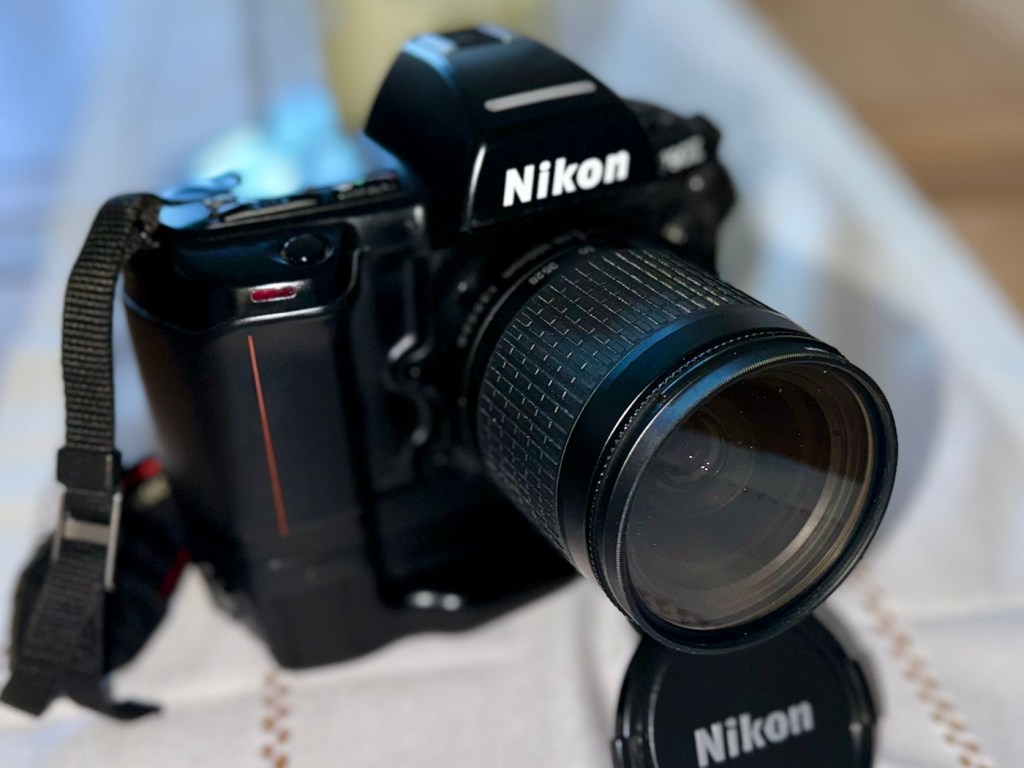
A lovely looking, fully functional camera
I’m using a G type lens so I’m restricted on the type of photography I can do, it stays on its lowest aperture (F:32) but that’s perfectly fine In bright sunlight conditions. I need to purchase myself another lens for testing to allow me the use of the full spectrum of apertures on this unit. That said, my lens has performed perfectly on this unit.
As I’ve stated before, this seller is one of my favourite suppliers as his cameras are always in a good condition, he doesn’t like anything unless it’s absolutely A1 perfect, so this is where i benefit as every unit I have purchased from him is perfect in my eyes, and in many cases need very little doing to them to bring them back into a working condition. This is one such unit.
So, I have yet another lovely piece of 90s “Big” tech restored and working perfectly. The next thing I need to do is to put some film through it. I’ll let you all know when I’ve done that.
Thank you for passing by, have a wonderful weekend, I really appreciate your being here.
Strange title. I know. But I had my first experience of it only yesterday. A photographic moment that I’ve never experienced before, but shall be using more of in the future.
My dear wife – totally unaware, as was i
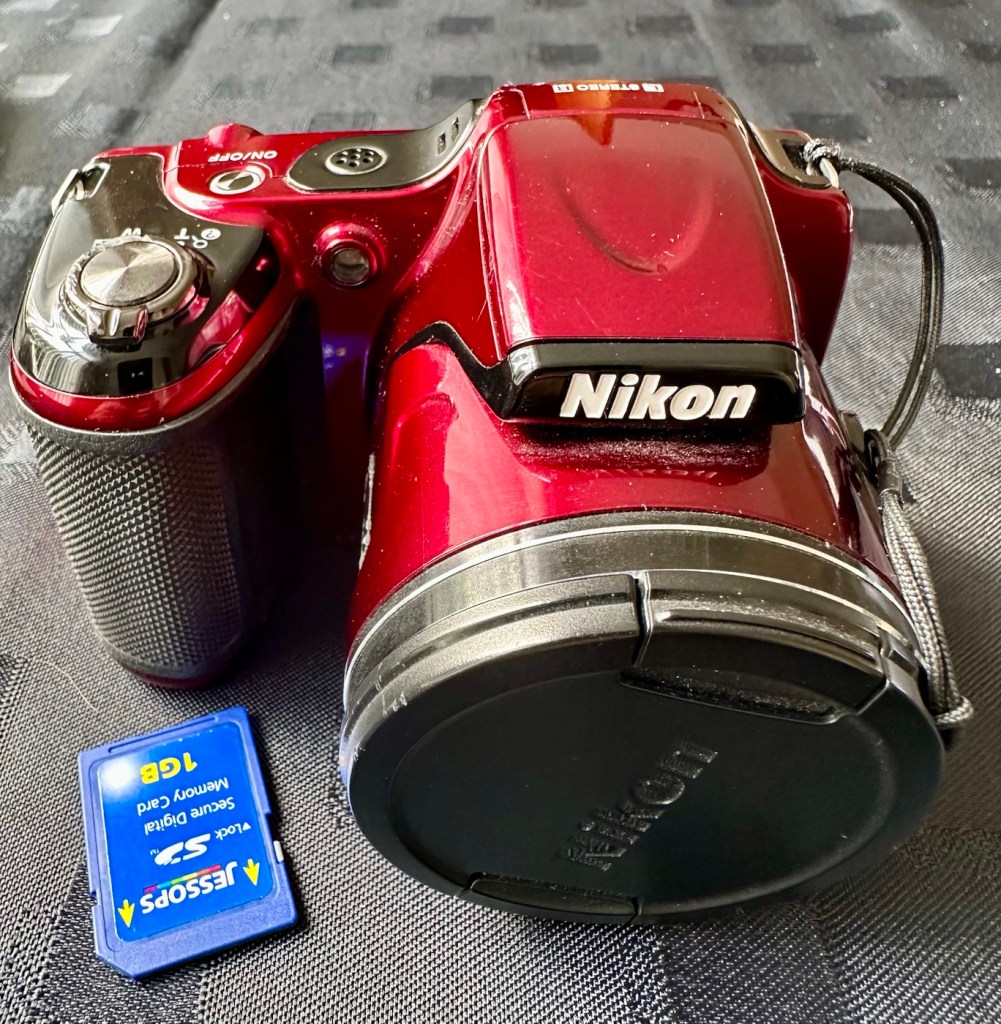
I’m currently in the middle of repairing a Nikon Coolpix L820 16mp bridge camera. The camera has a broken rear LCD screen, and this is the only way of seeing the subject as there is no through the lens viewfinder. Whilst testing its limits and finding out about the faulty screen, I became aware that it sounded as if was working, it was making all the right sounds. So I threw an SD card into the camera to give it a try.
I was just pointing anywhere and pushing the exposure button, taking pictures of everything and nothing, I had no control on settings and functions only the exposure button. Anyway, I did this for a few minutes then transferred the SD card to a reader connected to my iPhone.
Nikon Coolpix L820
Wow, I was impressed with this one picture only, of my dear wife just finishing some lunch. She wasn’t aware I had taken it and neither was i.
This is the magic of photography.
The original was colour, I was so impressed with the sharpness, tones and colours in the picture. It’s not a particularly good picture, just a candid one of someone going about their day, totally innocent and unaware.
I love Black and white pictures, so I quickly converted the colour version via my phone.
I was in two minds as to whether I continued with this repair, as the cost of parts were rising the more I delved into it. This picture alone, changed my mind. I am going to finish the repair as this camera is too good to let go.
And I’m just amazed, that a random photo, that the photographer and the subject were both totally unaware of being taken, has come out so well. (All that has been done is a bit of cropping to align the subject)
The post for the camera referred to herein, will be published shortly.
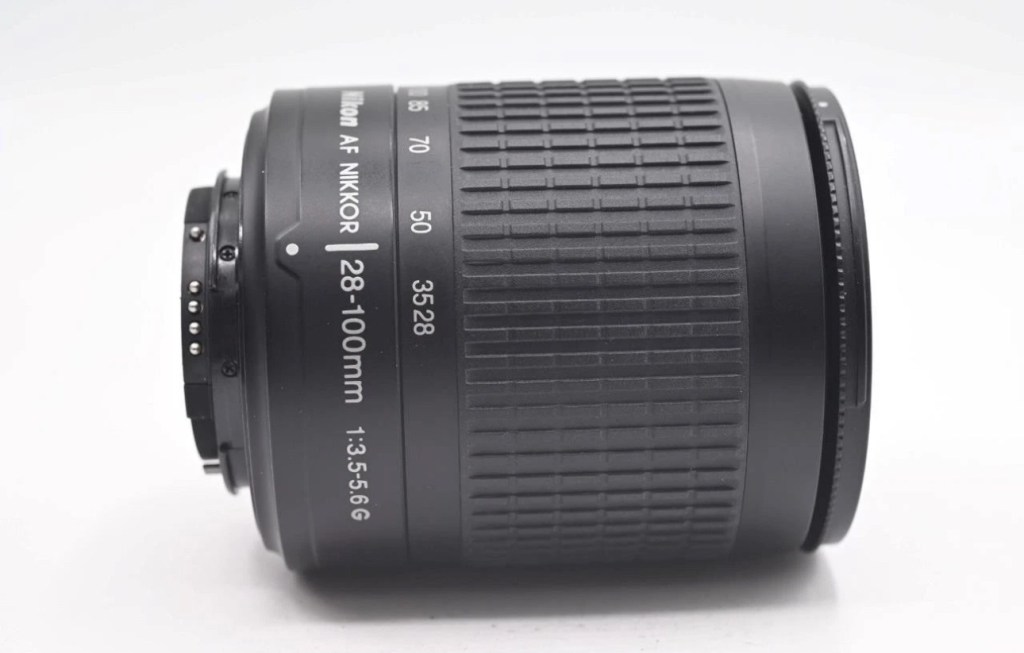
Nikon Nikkor 28-100mm Zoom Auto Focus Lens F3.5-5.6 G
It will autofocus with: Df-D1-D1x-D1H-D2-D2x-D2xs-D3-D3x-D3S-D50-D70-D70s-D80-D90-D7000-D100-D200-D300-D300s-D600-D610-D700-D750-D780-D800-D810-D850-D7000-D7100-D7200-D7500 & Fuji S1, S2, S3,S5
This lens will not autofocus with : D40-D40x-D60-D3000-D3100-D3200-D3300-D3500-D3600-D5000-D5100-D5200-D5300-D5500-D5600 as these cameras do not have integrated autofocus motors in their bodies, but it will still work with manual focus and auto exposure as it has a “chip” mount.
It will also work Nikon 35mm AF film cameras: F80, F90/90x, F75, F70, F65, F60, F55, F50, F80, F90/90x, F101, F100, F401.
Comes with front / rear lens caps
EBay
Anyone that has followed my recent repair of the camera: Fujifilm Finepix S2 Pro will be aware that I purchased a lens as a test lens for working on some stock that required a Nikon mount. I went cheap and purchased a lens that was so badly affected with lens fungus that it will require a deep clean and some TLC. Anyway, it allowed me to test electrical contacts and all the menus, and that was about it, it served a purpose there, but taking a picture was like looking into a deep fog, it was hopeless. Anyway that lens is now set aside and will become one of those projects to dig into on a long winter evening…or two, or three.
As I have a number of Nikon based cameras needing assessment on the horizon, some with sensor issues, i have made the decision to pay a little more for some quality, from a company called AP photographic who specialise in quality used equipment, a company that is based close to where i used to live down in the south. This Lens has cost me £58:95GBP including postage, a fair but good price for some peace of mind. This post will not be a repair post as there is nothing wrong with this lens, it will be more of an assessment of the lens when used with the Fuji S2 pro i featured in a previous post.
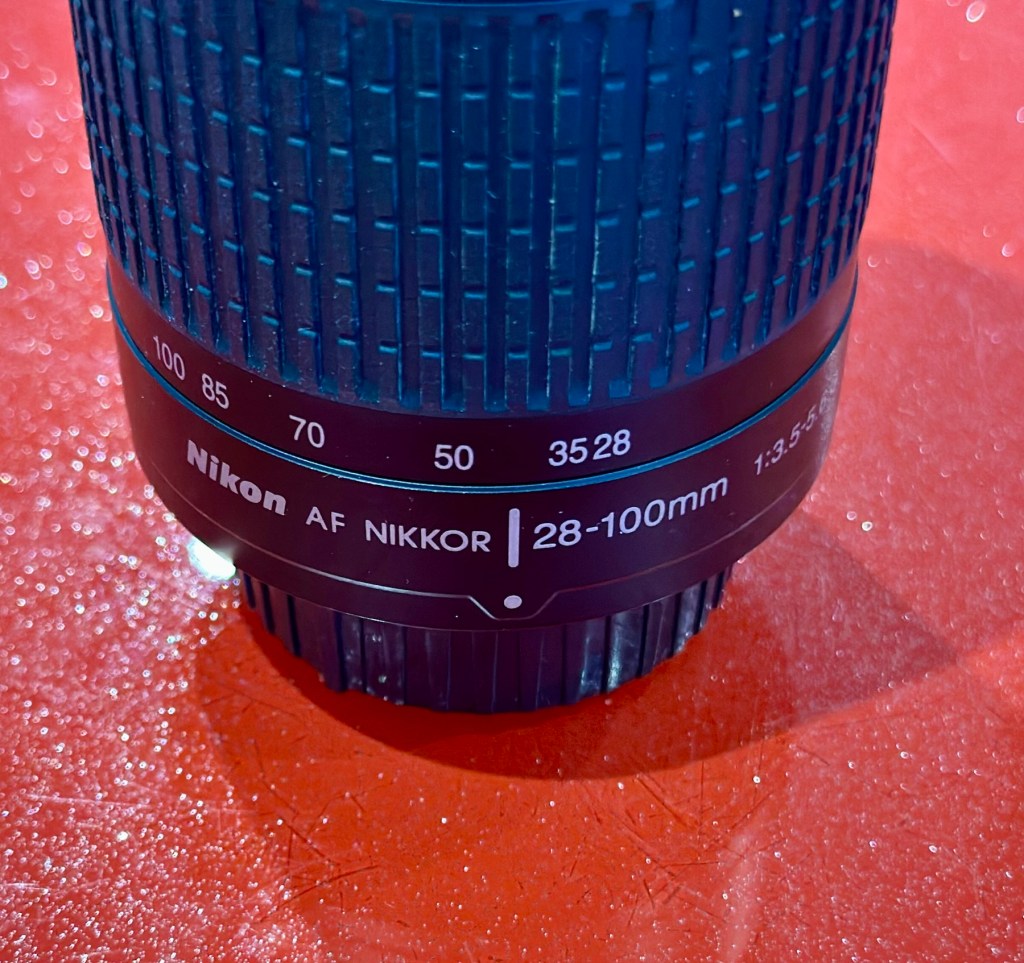
Nikon Nikkor 28-100mm Zoom Auto Focus Lens F3.5-5.6
I’ve put this post up to show the difference in the pictures taken on the S2 with both the old lens as well as this lens. I think the results will show quite a noticeable contrast and confirm just how restrictive a lens is when it is infected with a fungus problem.
Assessment:
The lens has arrived
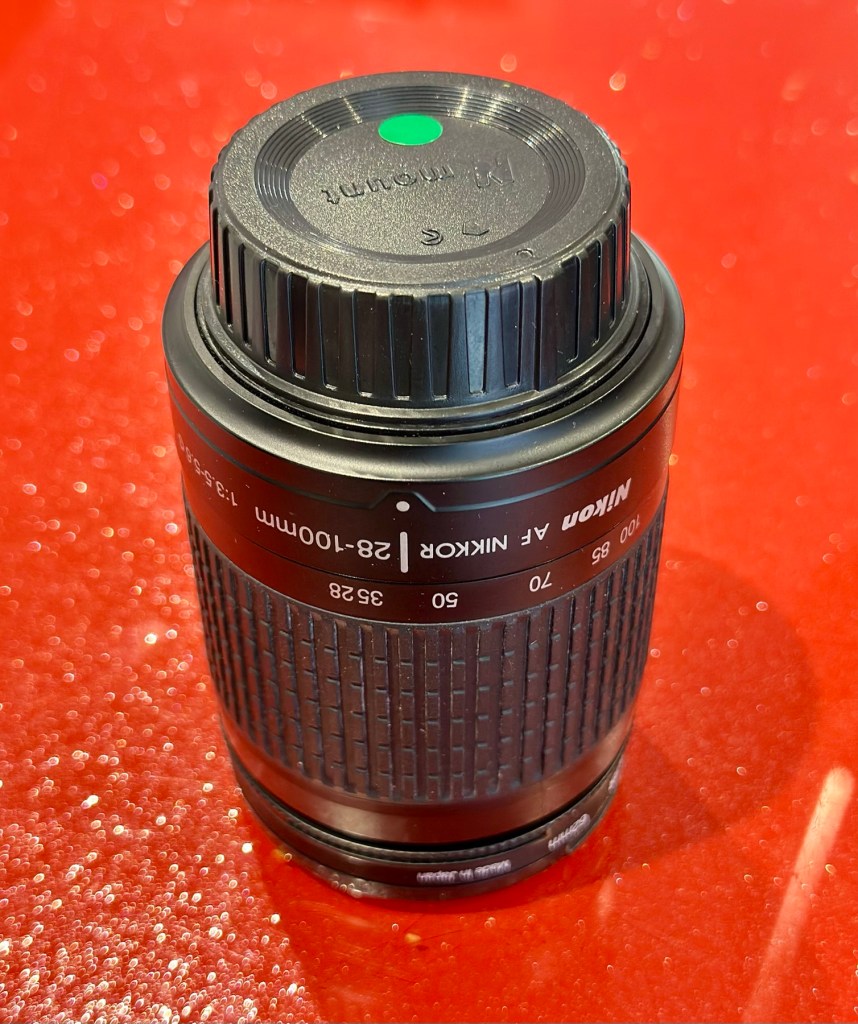
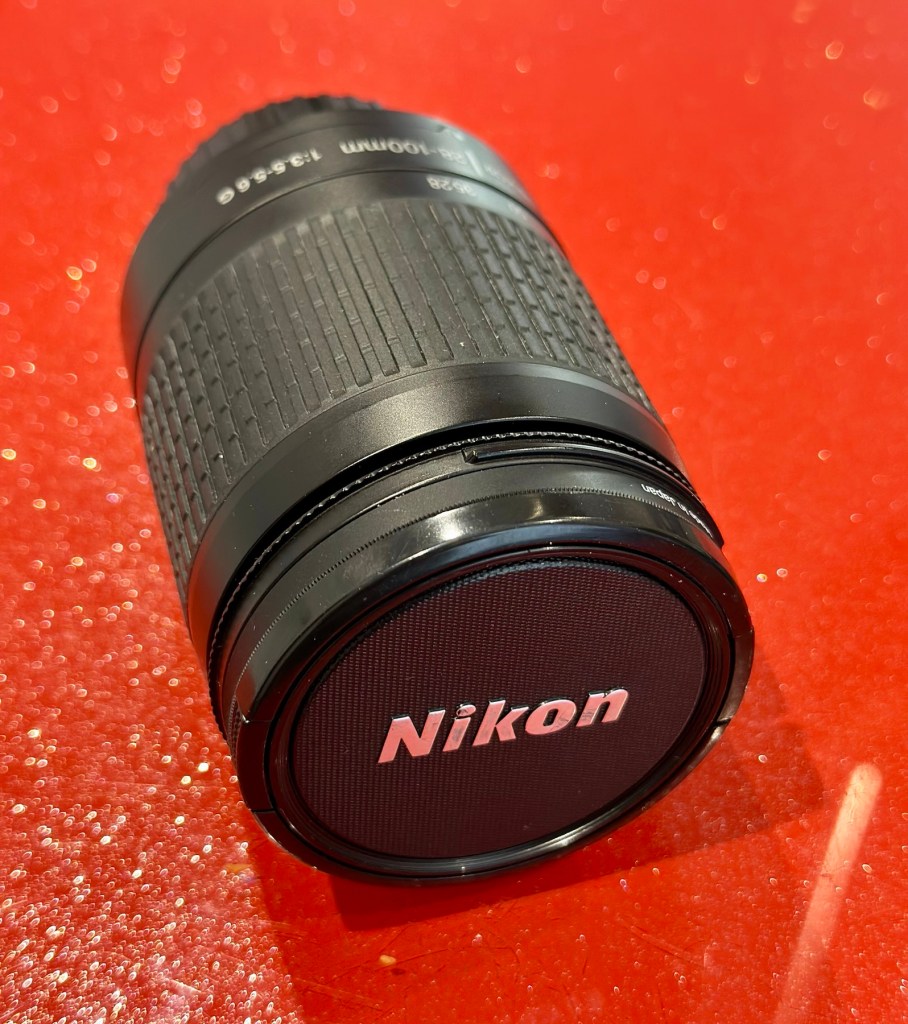
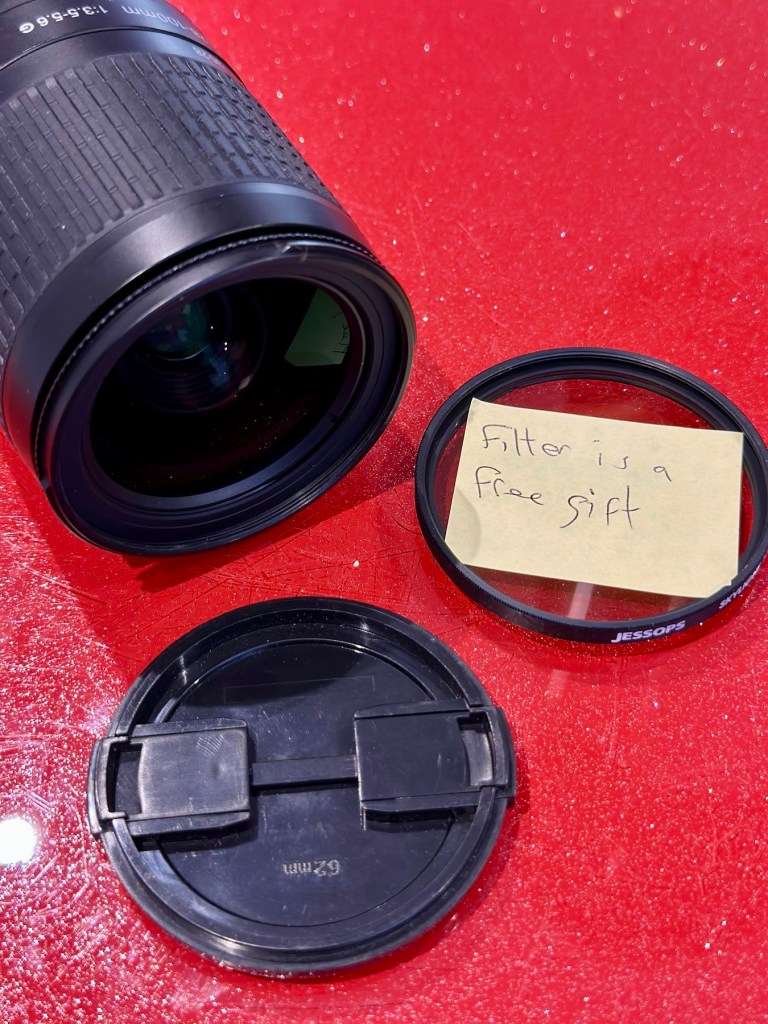
The lens arrived within a couple of days and is in perfect condition. It has a lens cap and bayonet cap so is perfectly protected against dust dirt and damage from foreign objects. And when the lens cover is removed there is another little surprise, a post it note saying “Filter is a free gift” that just happens to be attached to a daylight filter. Nice little touch 👌
Nice touch
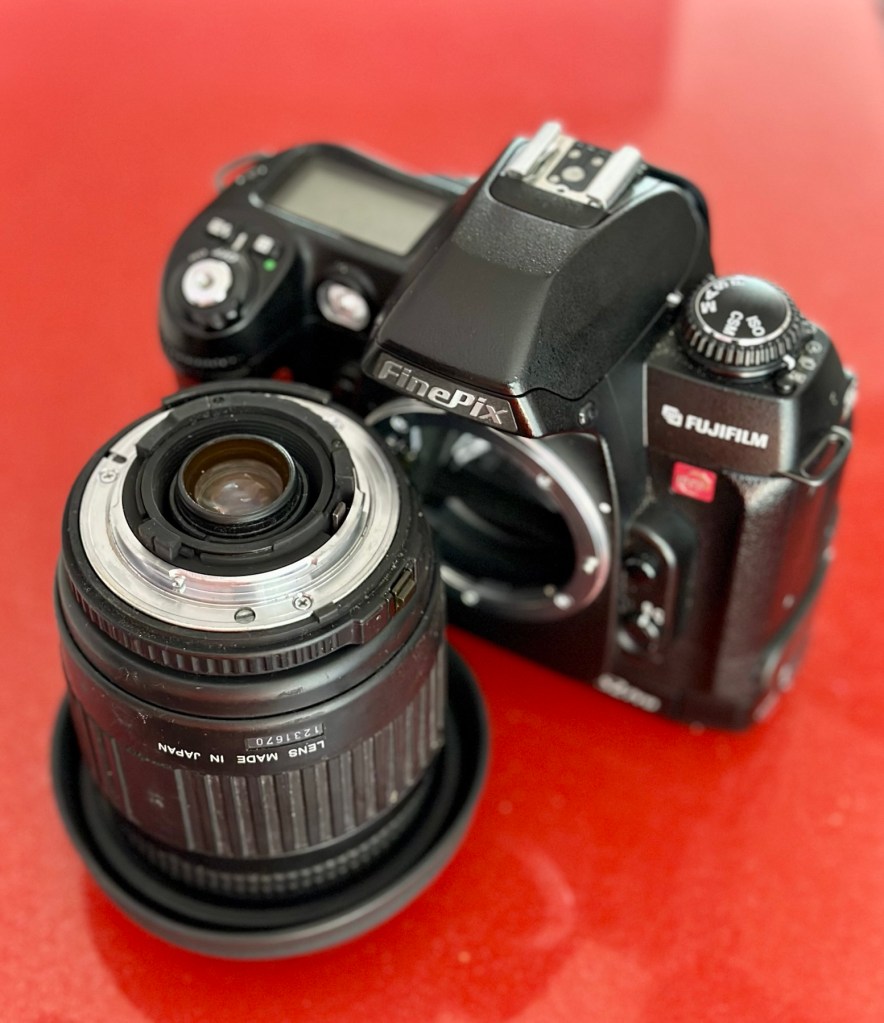
Lens is a perfect fit, no aperture ring on it as it is fully automatic, full autofocus. I’m not sure how the flash will work with this lens though when I use the Fuji S2 Pro, as that body works best with a fully closed lens aperture, but I’m sure I’ll be able to work it all out and get it functioning as it should. And I did, i played with the Aperture settings in “A” mode and it works just fine. It’s faultless.
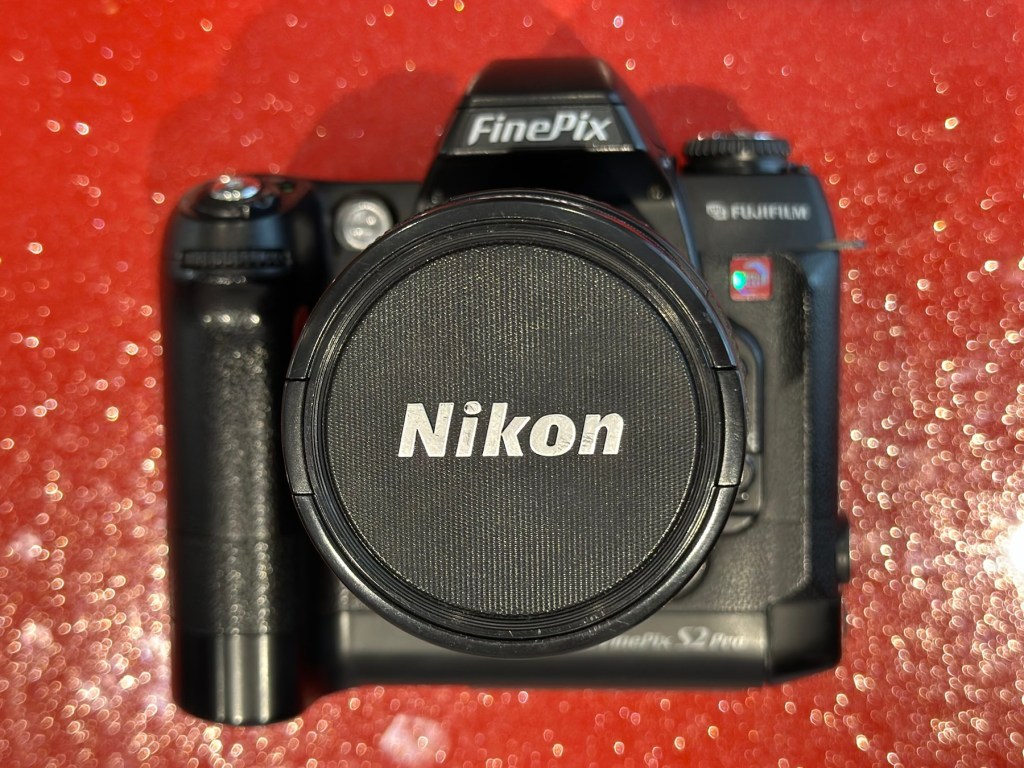
Attached to the Fuji S2 Pro
That said on the S2 it not only looks good, it takes good pictures. Compared to the lens I last used this one is crystal clear, not a bit of fungus no aberrations and not a speck of dirt. This is a good lens and will serve me well for the purpose of testing other equipment I have awaiting attention. I think I’ve purchased a good example here.
Result:
I can confirm that the Fuji S2 Pro does not have a thing wrong with it and is working perfectly. All modes, all conditions are performed just as they should be. This lens is gorgeous as it is so clear and has been so well looked after. I believe this whole unit will be the one I wander about with when i go out on my walks. I can’t wait to take some serious photos to post.
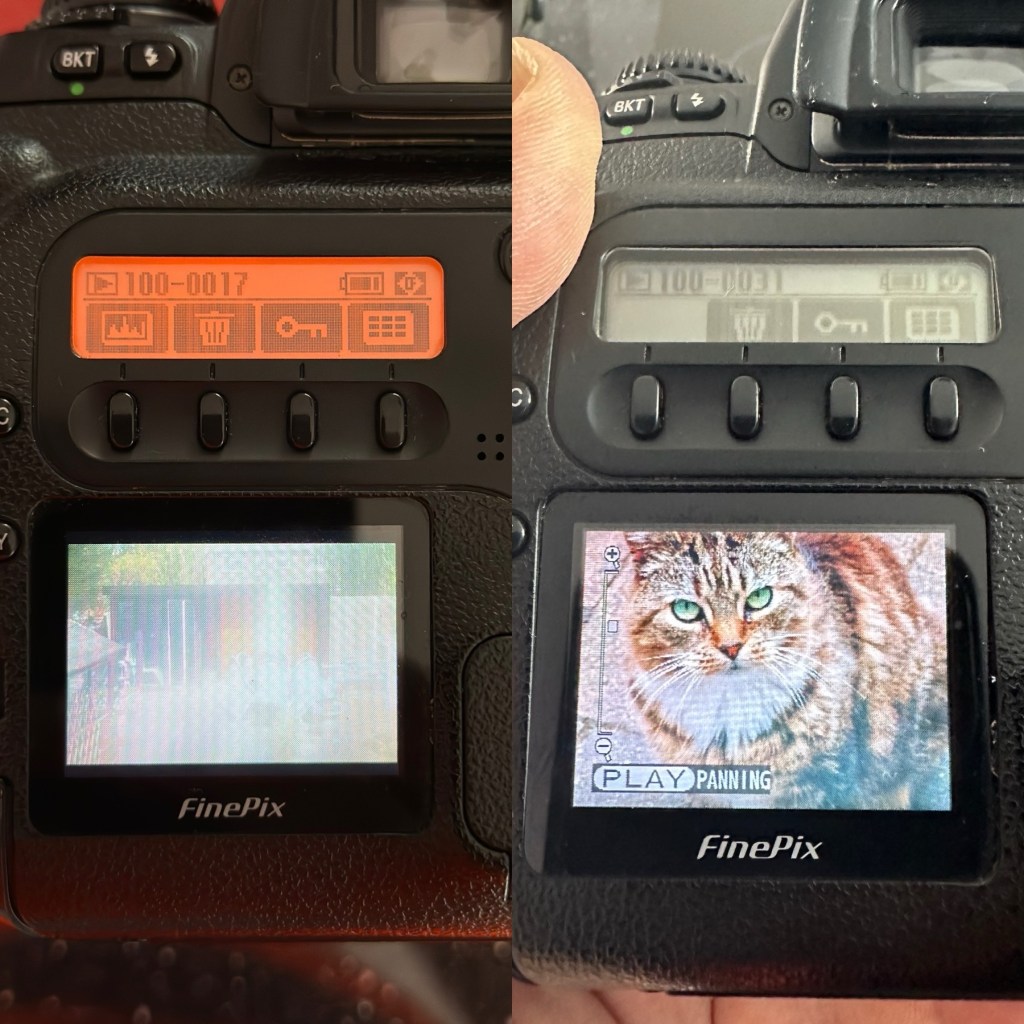
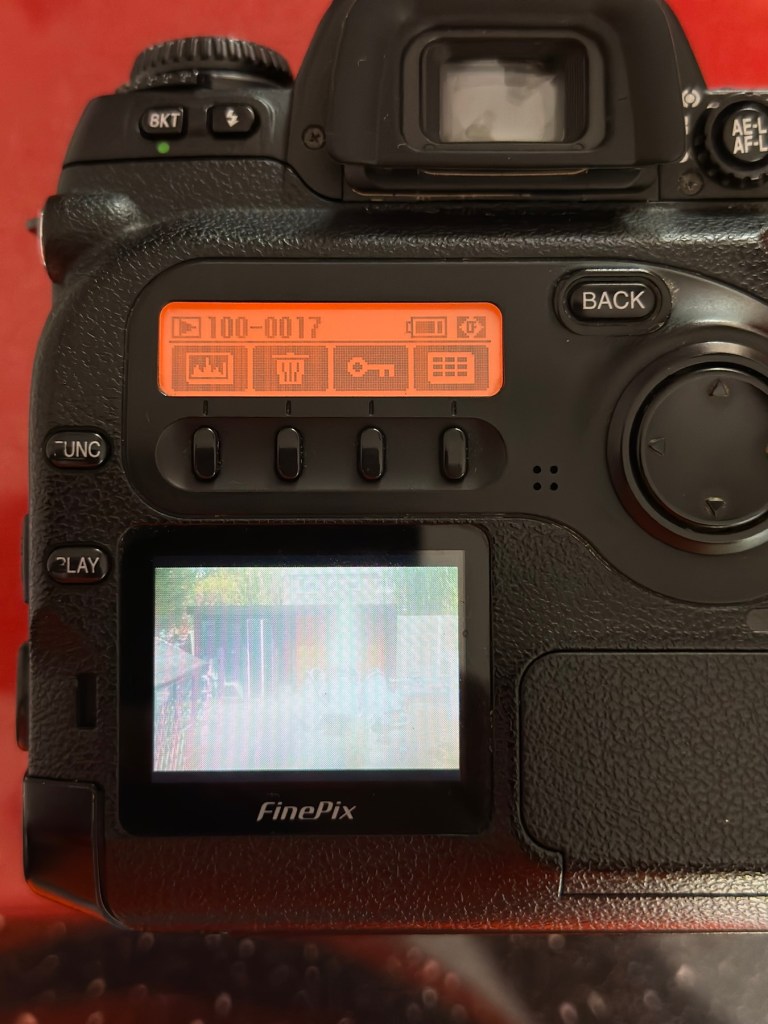
A quick comparison fungus lens v clear lens as seen on the camera LCD screen
I took some pictures just randomly around the home setting with the old lens to show how foggy things were with the lens fungus. I have tried to take some more photos of the same locations with the new lens as well to just show how they compare and these can be seen in the pictures grouped below.
Before and after pictures, what a difference the fungus has had on the results.
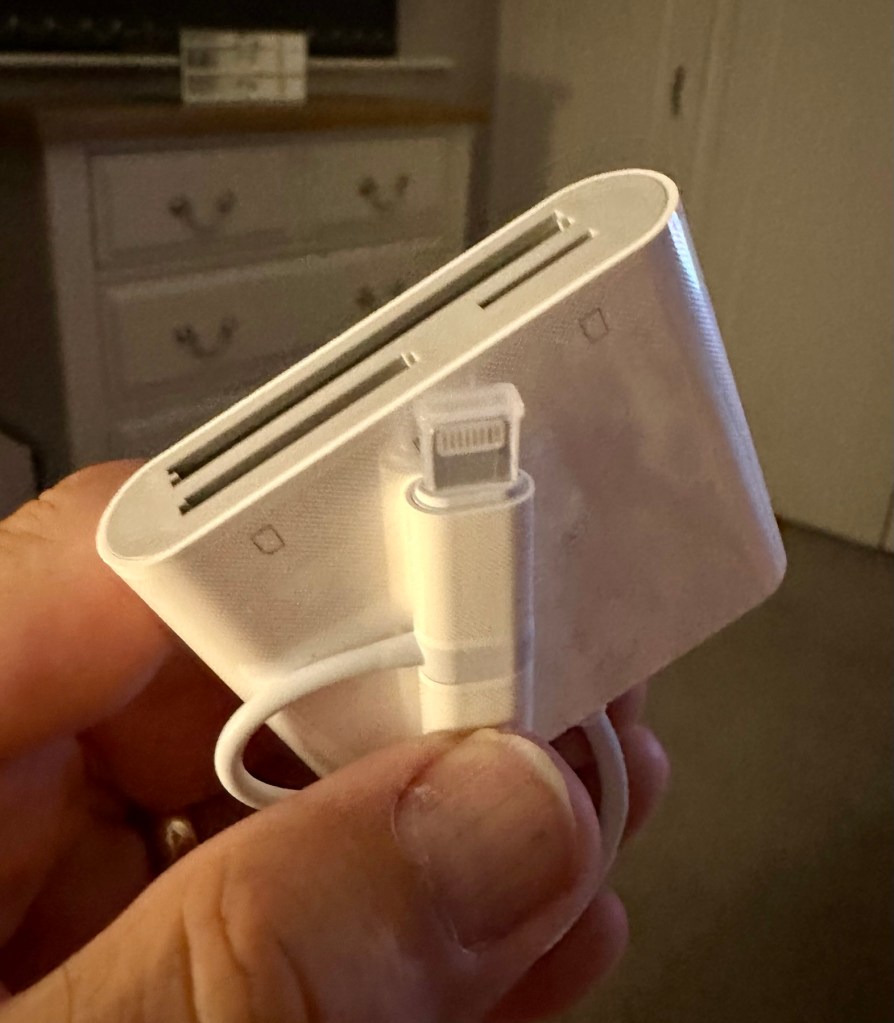
All these pictures are on an old CF card so it is a bit of a palaver to get them on to new technology, but it is doable, it just takes a little time, and this gadget allows me to load numerous card types even the CF cards direct to my iPhone via a lightning connector. It also has a USB-C connector for other phones. It works really well as you can see in all the pictures in this post.
Multiple media cards direct to my iPhone
And below are a few random photos taken on the S2, it has a good black and white mode but is quite heavy on contrast. Post editing would probably be recommended, but to be honest I really love its moody appearance.
4 random photos in and around the house. And Tabs the feral cat popped by
This camera and this lens have proved fantastic. I know you can get far superior picture sizes and quality on a basic mobile phone, but where the heck is the fun in that? This camera cost me £8:00GBP. Just £8:00. And it is a superb camera that will be going on many trips with me as I just love it and how it looks. I now know it intimately after reading up on it and testing it, and cannot wait to put that knowledge to use.
Cameras are better than mobile phones. Old ones like this are fun, and an absolute privilege to use. It’s not all about the Megapixels, just remember these old cameras were the ones taking high quality professional pictures back in their day. Just because time moves on, and just like an elderly old lady or gentleman, they should not be discarded because they no longer serve a purpose. Respect the older technology, learn from it and you will ultimately become a wiser person yourself. Oldies rule! Never forget it. 👊
Thank you so much for passing by. It’s always very much appreciated.
ALL ITEMS IN THIS LISTING ARE FAULTY FAULTS MAY VARY BETWEENS ITEMS
SOLD AS IS
NO RETURNS
EBay
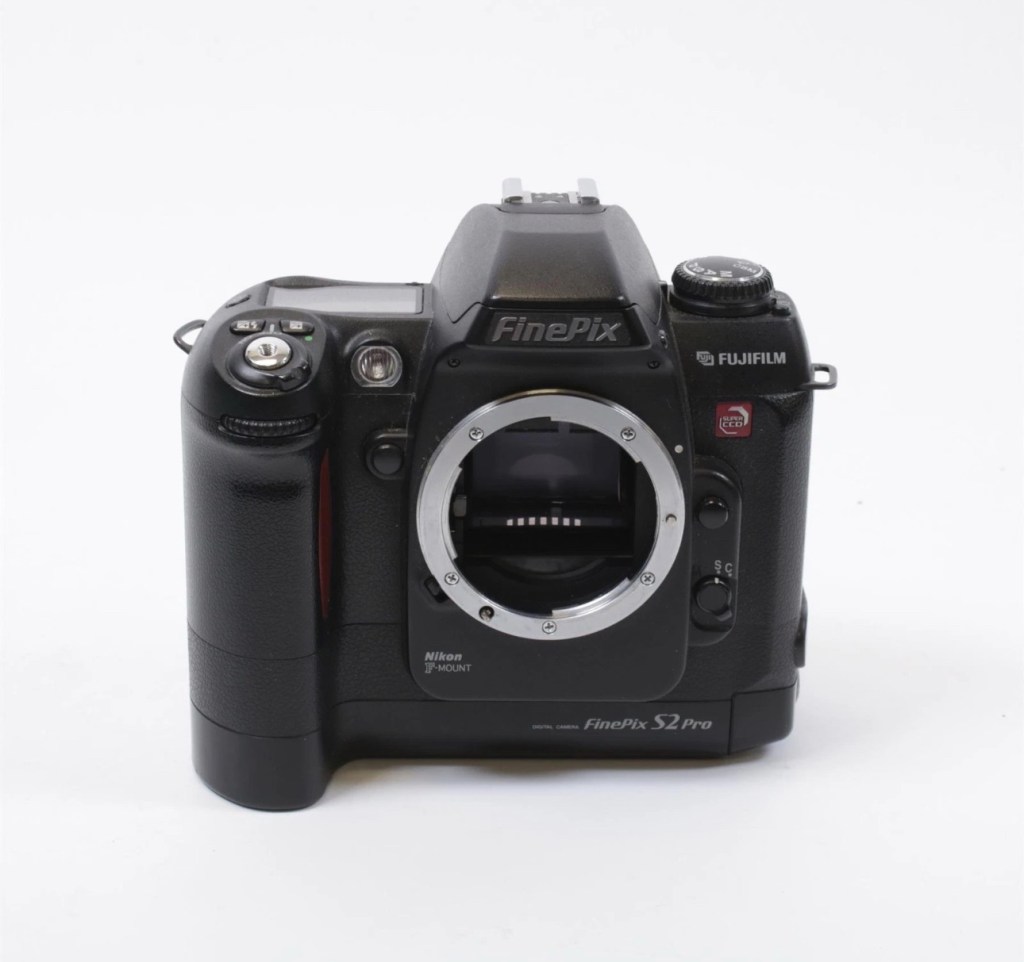
The Finepix S2 Pro
I’ve purchased three cameras as a job lot in an auction. All of them have issues but the issues have not been clarified. This is very much a “Suck it and see” auction where I get what I’m given. I’ve paid £24:22GBP for all three and that includes free postage. I’ve purchased from this seller before who is a bonafide Camera business based in South Wales. He has no time for faulty items though, quick in and out is his way of working, no time to fix stuff. I’ve got three good cameras in this bundle and this works out at just about £8:00GBP per camera. And where can you get cameras like this for those prices nowadays.
I’ve just read a blog where a guy had one of these cameras from new, and in 2002 he had paid £1550.00GBP for this camera. Wow, and here i am 23 years later paying the grand total of £8:00GBP for one. Even if I don’t get it working, I’m happy with that.
Now this particular camera had two issues in its lifetime that caused concern, and one of them meant it was pretty much game over, and that one was the CCD issue that used to plague this range of cameras. Fuji released a whole bunch of these cameras with a faulty CCD that had to be fixed under a recall. They built sufficient replacement CCDs to cover the recall and that was about it. There were no remaining CCDs left and at that point what was left had become as rare as hens teeth. If you suddenly developed that faulty a later date, then tough…you were stuffed.
Serial numbers affecting CCD problems are listed below:
Model Serial Number Range
FinePix S2 Pro 31A127**~31A143**
32A000**~32A039**
33A000**~33A007**
34A000**~34A004**
Fujifilm
The second issue was with a batch of these models that had a “bad” resistor in the power circuit that prevented lock up if there was a power spike, if this failed then the camera just stopped and you were stuck. There was another recall on the second issue but there is probably a lot of cameras out there that again weren’t part of this recall. And I guess owners were pretty fed up of recalls at this point and were off loading their equipment as quick as they could.
The serial numbers regarding the lock up problem are listed below:
Between serial numbers 24L00441 and 24L00680 Between serial numbers 24L01057 and 24L01256 Between serial numbers 24L01553 and 24L01863 Between serial numbers 24L10257 and 24L10608
Fujifilm
My camera serial number
Above you can see the serial number for my camera. Thankfully my number falls outside the range of any of the cameras inflicted with either problem, so it’s fair to say (Fingers crossed 🤞) that I shouldn’t suffer with any of the known issues with this unit. In layman’s terms I think i may well have dodged a bullet here.
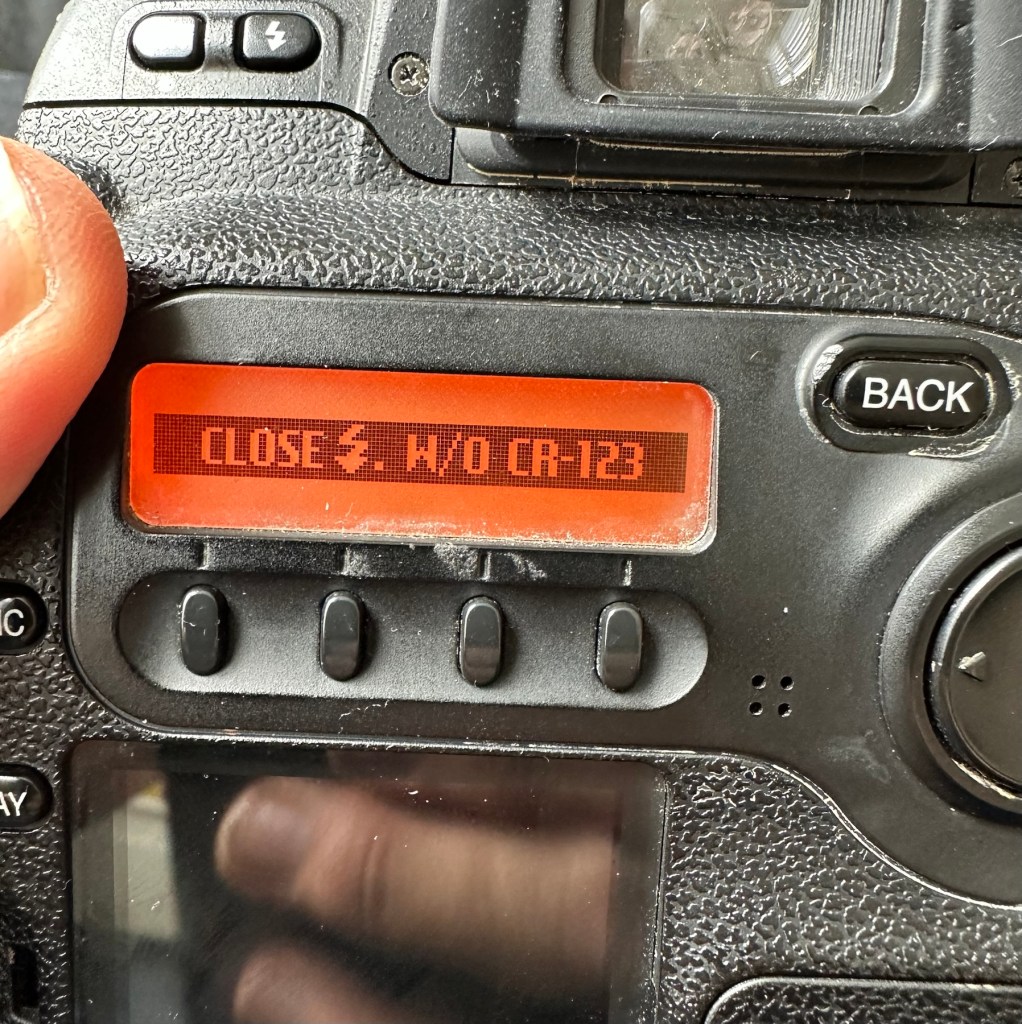
I did speak to the seller regarding the fault on this camera and he stated it was just a general error code on the top screen. There is a general error that arises occasionally regarding certain lenses where they have to be locked on their minimum aperture for the camera to work properly, however I’ve not attached a lens yet so this cannot be confirmed.
Here’s some history:
The Fujifilm FinePix S2 Pro is an interchangeable lens digital single-lens reflex camera introduced in January 2002. It is based on a Nikon F80 (N80 in the U.S.) film camera body that was modified by Fujifilm to include its own proprietary image sensor and electronics. Because of the Nikon body, it has a Nikon AF lens mount and so can use most lenses made for Nikon 35 mm cameras. It is autofocusing, with an electronically controlled focal plane shutter with speeds from 30 sec. to 1/4000 sec., built-in exposure metering and pop-up flash. Its ISO film speed equivalents range from 100 – 1600. The S2 Pro also has sound recording capability. The camera is no longer in production, having been superseded by the Fujifilm FinePix S3 Pro in February 2004.
Aside from the Nikon lens mount, the camera’s principal distinction is its 6.17 megapixel photo sensor. Known as the Super CCD, it is unique in having its photodiodes oriented diagonally rather than horizontally and vertically as in all other DSLR cameras. This allows the use of a sophisticated interpolation system that produces an output image equivalent to 12.1 megapixels. The apparent resolution of images in this interpolated mode lies somewhere between 6.17 megapixels and the 12.1 megapixel interpolated output.
A huge number of these cameras were built using a Sony sourced defective CCD that was subject to a recall by Fuji. The recall ended when the stock of these replacement CCD’s was depleted. There is word that no other stockpiles exist of this Super HAD CCD, making these cameras that are found with the purple or black tinted image problems extinct, only usable for parts. The Fuji F700 used a similar defective HAD CCD, but in 3.1/6.2Mp size. That camera has met a similar fate.
Wikipedia
So let’s hope that we can get some pictures out of this unit. We just have to wait and see what arrives.
Assessment:
Well the camera has now arrived, and I must say it is in an absolutely beautiful condition. Cosmetically there isn’t a scrape or scratch, all screens are scuff free and it looks as if this unit has been well cared for. It just needs a wipe over to clean. The package is just the camera body with no extras such as a body aperture cover or neck strap, but who’s worried about that, they can be procured at a later date.
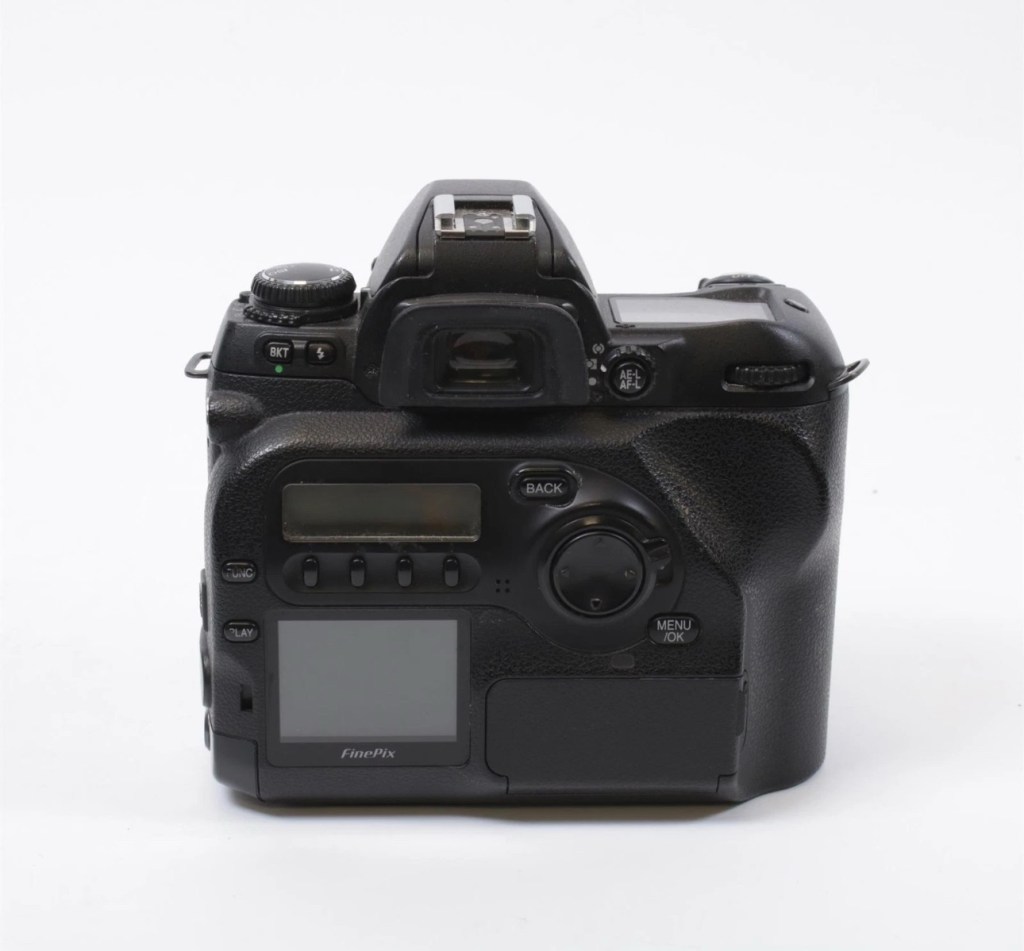
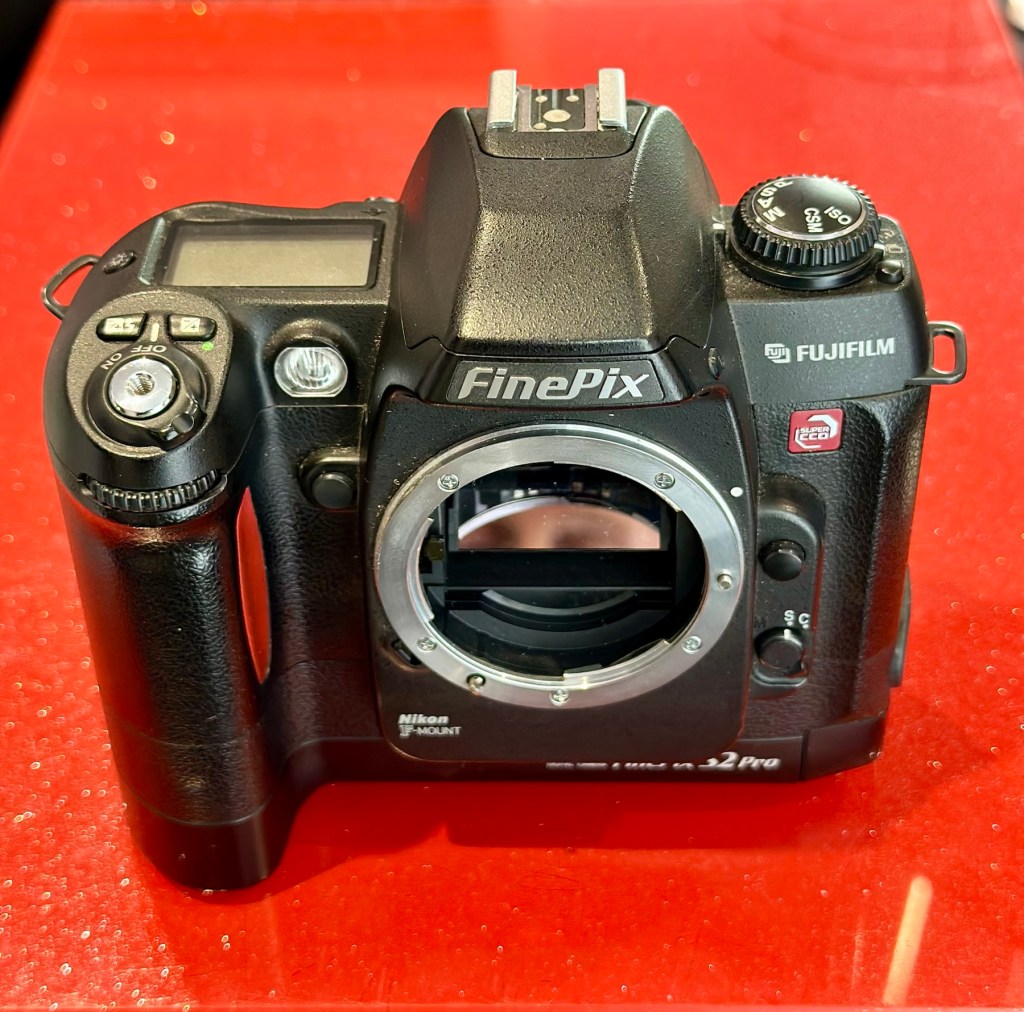
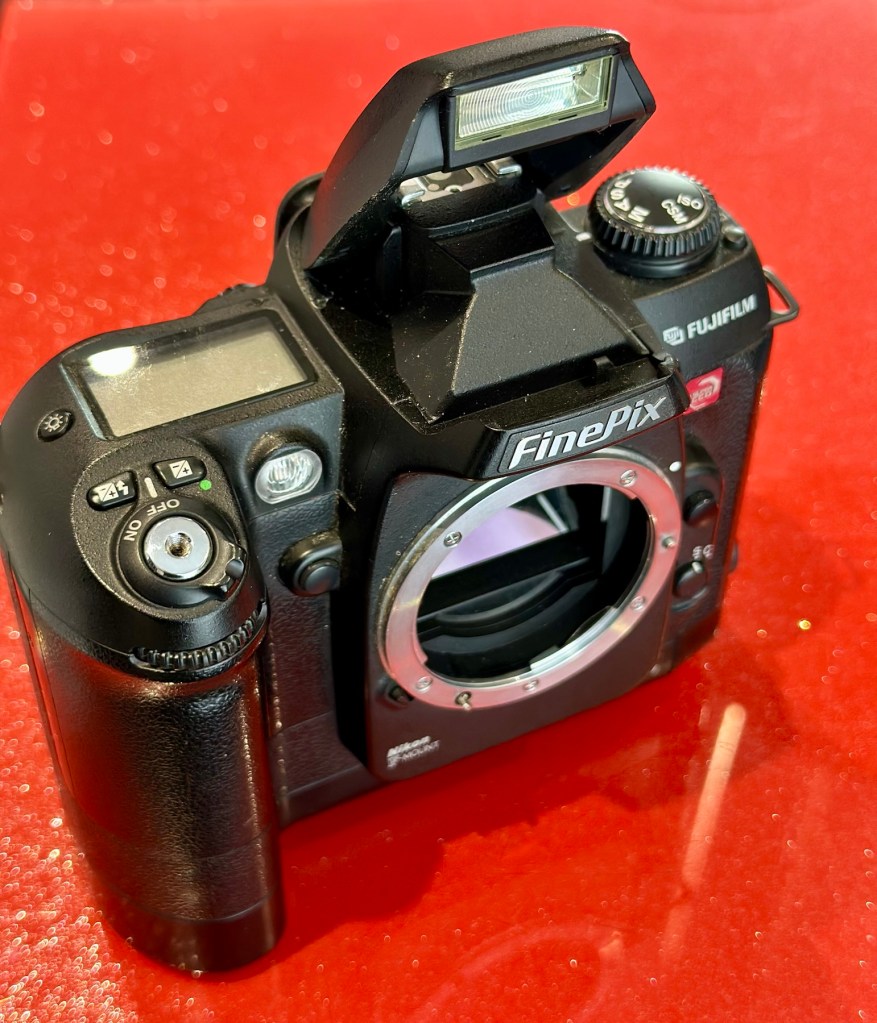
Front viewRear viewFlash openNikon type F mount
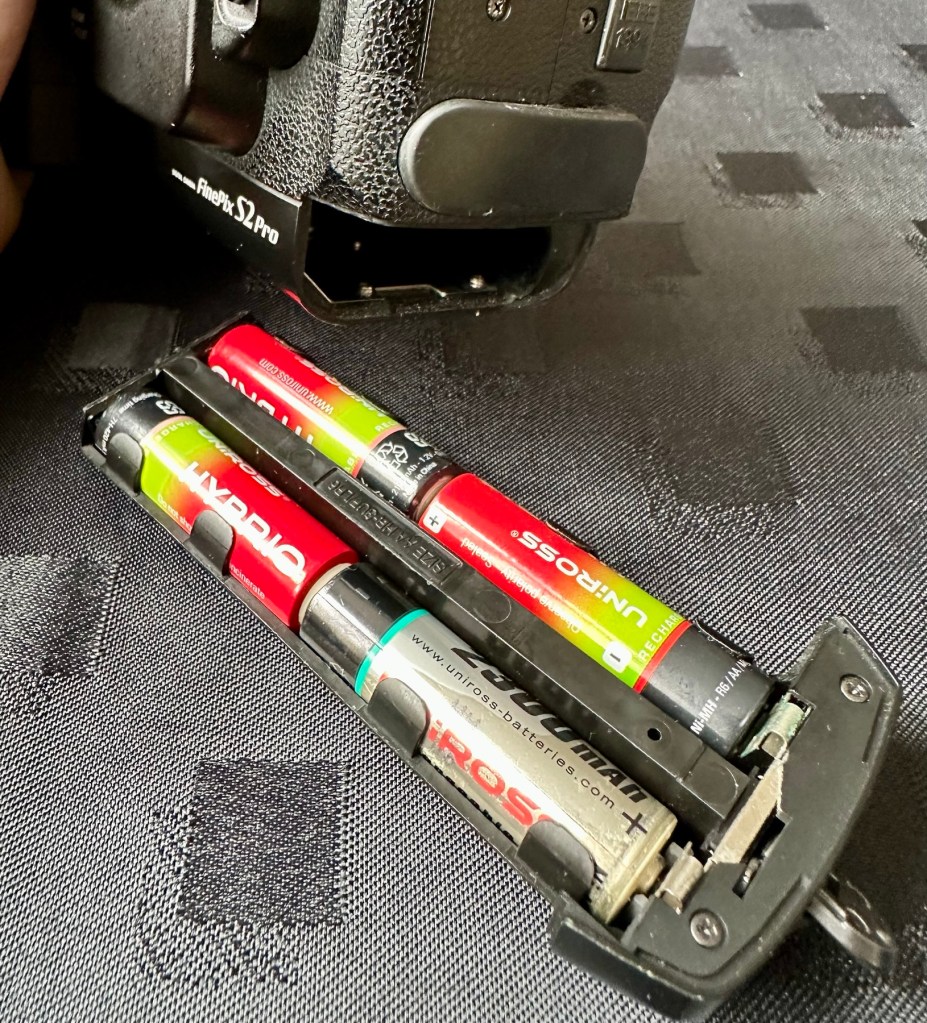
These units are quite power hungry requiring a total of six batteries. 4 AA cells go in the base and two Lithium CR123A batteries go in the grip. These batteries work in unison, one set handling the basic camera functions whilst the other deals with the capture and processing of images. It’s a strange affair, loosely based around the same setup that was originally on their film based camera counterparts.
AA batteries CR123A batteries
I’ve had to order the lithium batteries, however I can still get displays and Information using just the AA batteries in the base, basically it is semi functional in this situation.
The lens mount is a standard Nikon F mount, I’m going to have to search through my equipment to see if I have such a lens, I suspect I don’t, so I may well have to purchase a small lens purely for test purposes. I have some other Nikon repairs in the queue, so a lens to have for test purposes wouldn’t really go amiss.
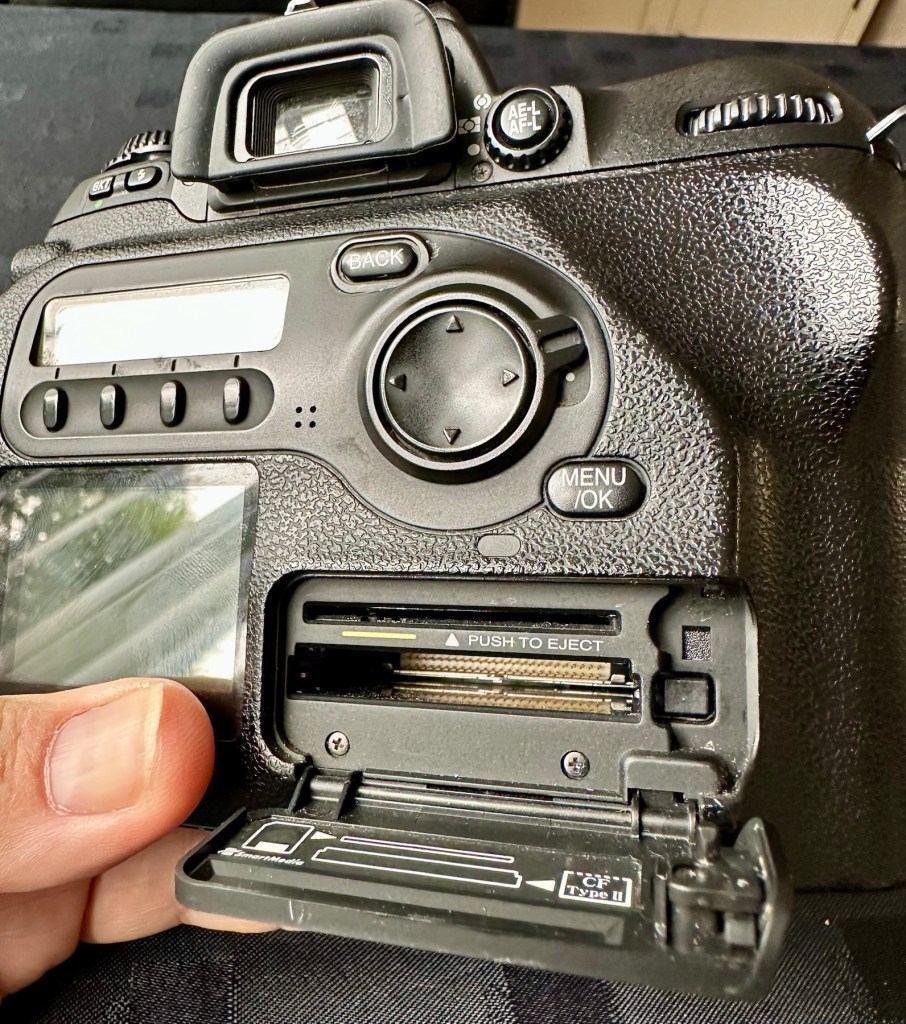
The unit takes either a CF card type II or a Smart-media card (Max size of 2Gb on both) that is located behind a hinged section on the rear of the camera, these work fine and have no bent pins.
Media card ports at the rear
With batteries in place I get the full range of menus, and nothing comes across as suspect at all at this stage in the assessment.
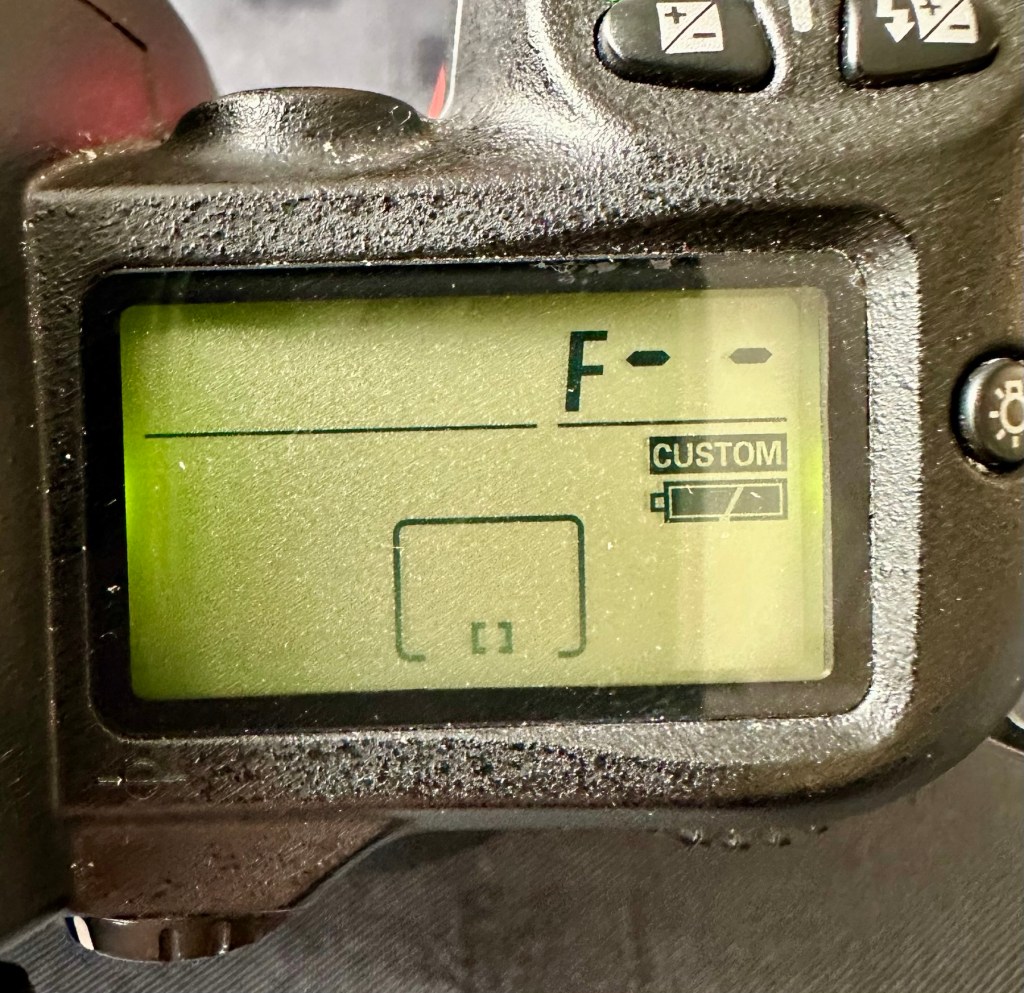
The top menu – no lens attached to test
The top menu by the exposure button is the only “F” indication showing, I have no lens attached so this might be the reasoning for that, but if I do put the menu into manual mode I get the full range of shutter speeds and can even operate the shutter, the shutter seems to be working at all selected speeds with no issues as far as I can see.
Some of the shutter speeds available in manual mode
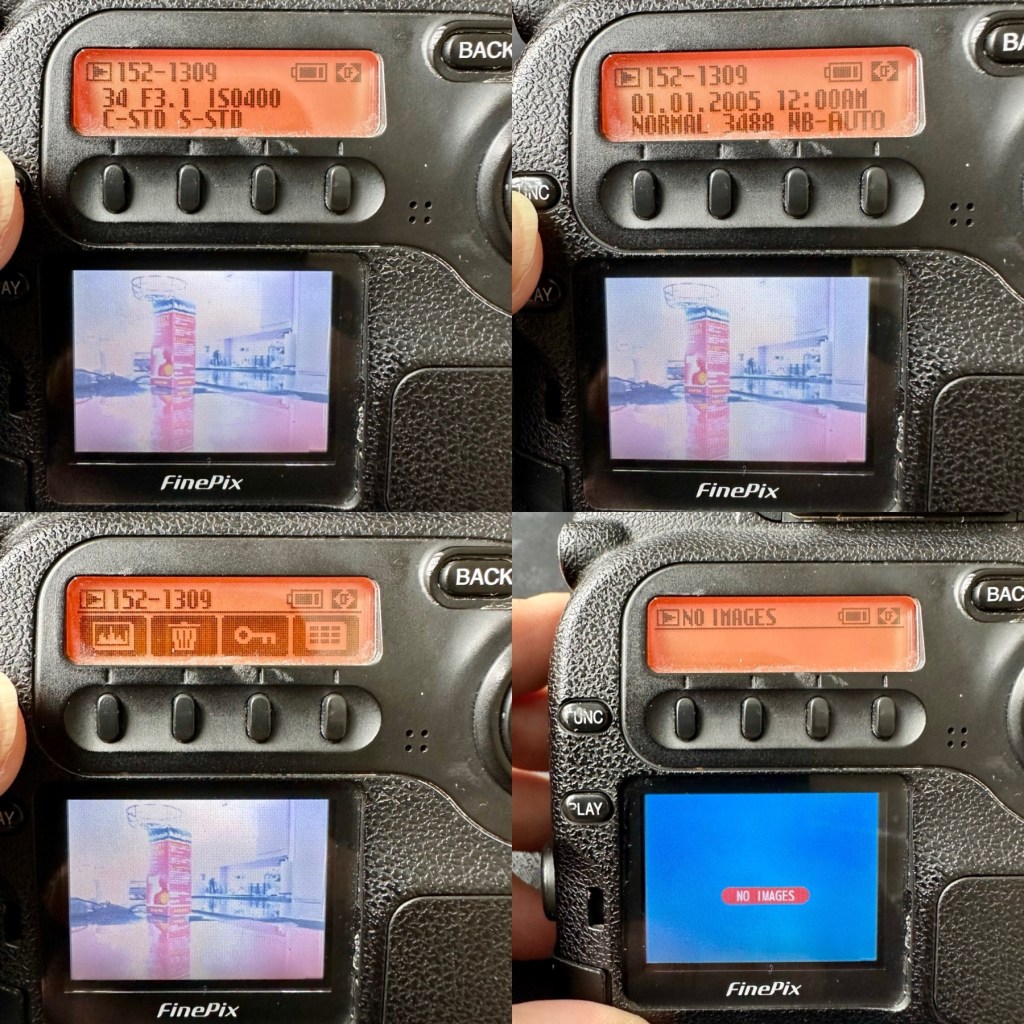
All other menus are available and I’m even able to format the CF card via the cameras menu. The picture you see on the screen was taken on another camera. It wiped fine so no issues here.
Various menus and the screen after a format was completed through the cameras menu controls
The camera seems to be working with no apparent communication issues as yet. When you try to use the flash it even informs you that you need to insert the correct batteries to test. As I’m awaiting the CR123A batteries I won’t be able to test the flash functionality until they arrive.
No CR123A batteries installed? – You can’t use the flash
As I have stated the testing can only go so far until I have the missing items in my possession, for me that is the two missing batteries and a suitable lens. I’m currently in the process of procuring both. Physically there is nothing wrong with this camera after spending a good couple of hours going over it. I’m quite comfortable with it and believe it could be a lens communication error or just a failure to read the instructions properly by the previous owner. All I need now is that lens. I’ll let you know what occurs in the repair section.
Repair:
To be quite honest it’s not really been a repair, it’s been more of a “pre flight check” to collar a phrase, going through all of the cameras capabilities and ensuring that they are all functioning correctly. As the camera was listed as faulty, and the fault was not identified, I have had to do many hours of testing and Investigation to get to this point.
I’ve done a bit of shopping and managed to buy a nice little lens from the Southern hospice group. Always happy to help a charity and secured this at a good price of £15:50GBP, and that includes the postage, for a Sigma 28-200 f/3.8-5.6 Ø72 Zoom Lens Nikon F Mount. There looks like a bit of fungus on the outermost optic, however I can always clean this if it’s too bad. If not I’ll just leave as is for the moment and keep it vacuum bagged between uses, I can always do a separate post on cleaning up fungus in a lens at a later date. (I have done a basic fungus clean in the past : Canon EF lens 35-80mm)
My new – old test lens
I wasn’t looking at spending too much here, as I only wanted a lens to test a number of Nikon repairs I have upcoming as well as this S2 Pro. This lens will fit that role perfectly, and be added to my collection of other lenses that I have that allows me to test a range of different camera products. I have also purchased an “F” mount body cover for the camera to protect the unit when there isn’t a lens attached to it.
The two CR123A batteries have arrived and have been placed in the handle grip. The warning that was there before the batteries were installed (see picture above) has disappeared and when placed in manual mode the flash fires just perfectly, no issues here.
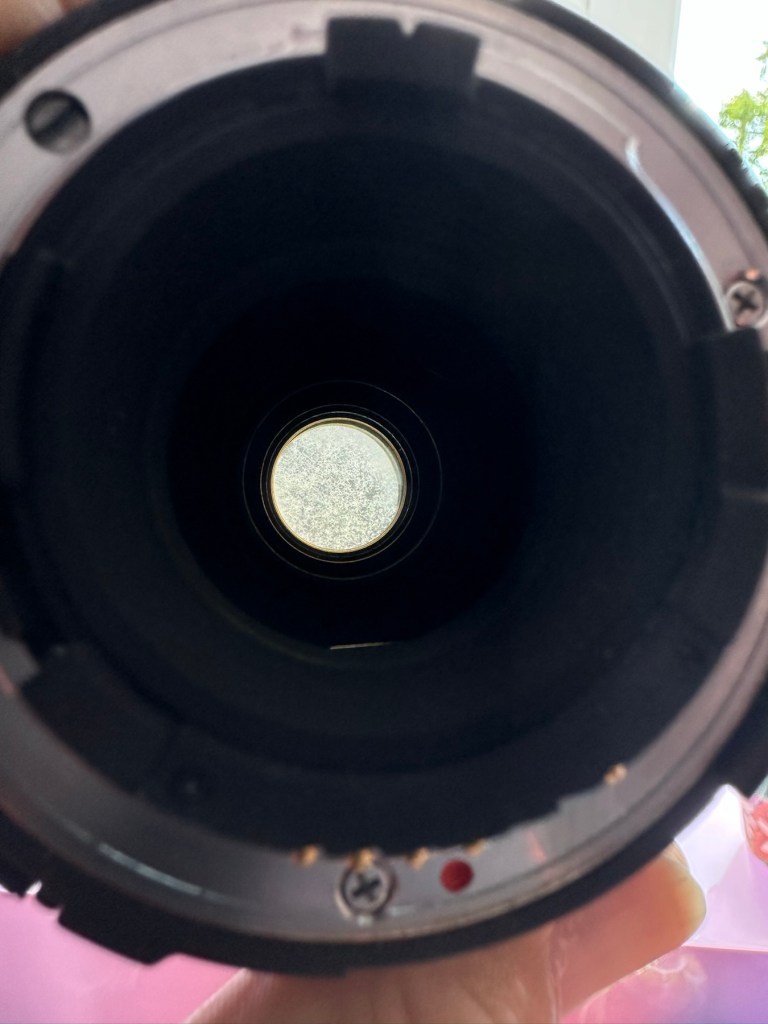
The Lens has arrived. Good point is that it fits fine and looks good, and all electrical contacts are good. Bad point is it has severe fungus throughout, and is just like looking through a fog.
Severe fungus in the lens
I will do a separate post on cleaning this problem up in a later post. However I’m not overly worried at this point, I paid a very low price so it was to be expected, I’m not complaining to the seller who was a Hospice, they need the money and I can fix it so there really is no problem.
That lovely looking lens hides a problem
The excellent news is that the lens does exactly what it should. The camera indications are good, all working exactly as expected . However the pictures via the screen are extremely hazy due to the fungus infection on the lens. There are no black or purple casts on the pictures so I am quite happy that we haven’t inherited the dreaded CCD issue discussed earlier in this post.
Hazy days – Lens fungus
If I use the lens wide open and pop the camera into auto mode I do get an “ERR33” code and that is a communication issue between the lens and the camera. As I have stated earlier in this post, you have to have the lens set at its lowest aperture and locked for the error code to go. Fortunately this lens allows you to lock the aperture and once this is done the camera takes over the exposure when it is working in automatic mode. So as I also stated earlier, it appears the seller was probably not aware of this requirement/issue.
Result:
We have a fantastic working camera, it does all it was produced to do, it has its little quirks and oddities, but being familiar with these cameras and at least having some knowledge and awareness of how they operate is always a wise thing. Read the instructions and don’t just throw them in the drawer until you eventually sell the camera on as a damaged item, when in fact you were just lacking the knowledge on how it operates in the first place. Instruction manuals are good, they serve a purpose. Knowledge is king.
The complete camera with lens
This camera cost me £8:00GBP. That is a superb price for a camera of this quality even though it is now 23 years old. It has a lot of life left in it, and I can’t wait to get it out and give it a real test.
It’s a little beauty – And the lens that needs attention
So in theory I’m confident and happy that this camera is now in a fully operational order, it’s needed a clean, it’s needed a lot of research to find out how it works, and I’ve also downloaded the operating instructions and repair pack should they be required.
It’s taking pictures and storing them. It’s just the lens at the moment isn’t performing at its best due to its fungus on the optics issue. I’m keeping the pictures stored on the card to compare them with the new pictures that will be taken once I have another lens to use.
Once the lens clean up is complete, if I ever get around to it, I will link it through this post.
Edit:
As 12/7/25 I have purchased a newer higher quality lens without any of the above issues to be able to get some instantaneous results, and as I have about seven other Nikon cameras requiring testing, some with sensor issues, it was wise to invest in a better quality lens. I have purchased a Nikon 28-100mm AF Zoom Nikkor Lens G AF-d, in perfect condition and the post regarding it can be found here: Nikon 28-100mm AF Zoom Nikkor Lens G AF-D
A newer – old lens, much superior quality
As previously stated I will add photos in this post once the new lens arrives, to show the difference from the fungus infected lens to a decent lens. The old lens is still a work in progress and I will post about it again as a separate post once the clean up is complete. It will probably be a job completed once the long winter nights are back in situ.
Below are comparison photos between the old lens with fungal issues and this new lens:
It’s just typical for me to manage to make another post from an issue that has arisen from fixing a different item. But isn’t that life? Continuous improvement is a factor we come across on an almost daily basis, and if you deal with old items as much as I do, then there is always something else that needs repairing, something that requires your attention and I just love that. The ability to improve or make something better, gives such a feeling of achievement and accomplishment, and total satisfaction. And that’s why I write this drivel. It’s for me, it’s what this blog was originally set up for. It’s my journal of what I do.
Many thanks for following this post. You know it is always very much appreciated.
The batch of cameras I purchased the other day, all old SLRs / DSLRs have now arrived… with a bonus.
I was expecting 10 cameras but I’ve trumped that with 12 and a lot of spares as well. The guy I purchased the Nikons from has thrown in two more D70 as spares, with loads more spare parts. He was having a clear out so I guess he’s funneled that stock my way…thanks old chap.
So I have received today
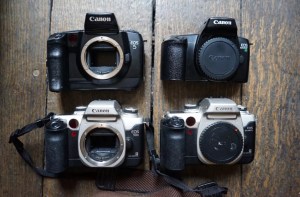
One Canon 5 SLR – stuck mirror, missing some small Connection covers and like a lot of these old cameras has a sticky rubber covering that was well known back In the day.
One Canon EOS 50E – damaged curtain, faulty lock and again sticky.
One Canon EOS 1000F – cosmetically sound no other visible issues.
One Canon EOS Elan 2 – cosmetically sound, just sticky.
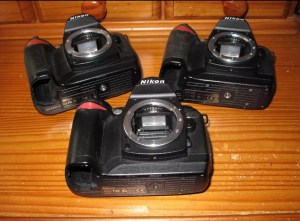
Two Nikon D70S DSLR – missing battery covers and some other small accessory covers, both sticky.
Six Nikon D70 DSLR – all missing battery covers, or other accessory covers, one missing a CF card reader and all sticky.
And two sizeable bags of D70/D70s spares
And then there were 12
I’ll be starting with a good clean to get rid of that stickiness and then I’ll power each up individually to see what other issues lie in wait. I’m hopeful I can get most of them up and running, I’m confident that the majority of the DSLRs will be repairable.
I’ll feature the repairs once I’m in a position to donate the time to them. I’m a busy boy at the moment what with work and the wife’s growing list of things that need doing around the house.
I’ve spent the grand total of £91 GBP on more damaged/faulty stock today, I now have enough stuff to be working on to keep me busy for months.
On top of the 6 Canon cameras I purchased last week I now have a further 4 Canon film cameras ( Eos Elan 2, 50E, 1000fn and an Eos 5) I’ve also got two faulty EF lenses to test the old Canons with, these will also get the repair treatment.
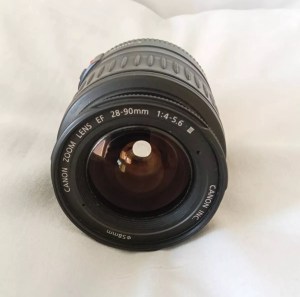
Canon EF lens 35-80mmCanon EF lens 28-90mm
I’ve also purchased four Nikon D70 and 2 Nikon D70S units all needing the repair treatment, I’ve even blagged some spare parts here as well so overall it’s been quite a good days shopping.
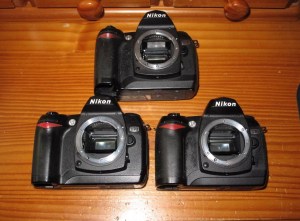
Three Nikon D70 camerasMore Canon SLR film camerasMore Nikons
Might have just taken 3 years, but I’ve now finally fixed the notoriously damage prone battery door.
Circa 2010
Inspection
How the Camera looked upon arrival
Now these small digital units are well known for having faulty battery door mechanisms and this example is no different. The only real way to fix this issue is by obtaining a replacement fascia with the lock mechanism in place or source a temporary fix that will get us by. The lens seems to have an autofocus issue, again this is a common fault with these kind of units. I may dismantle the lens assembly, clean and lubricate. The electronics seem fine, a factory reset may be in order. I’ve used the strap and case from a damaged L22 to further compliment this unit. Recycle that’s the theme.
The camera was received with the information that the auto focus was not working and that the battery door was broken causing the batteries to fall out, also the batteries had to be full for the camera to work. Let’s take each issue one at a time.
The autofocus. This camera has numerous settings and one of those is smart auto that sometimes goes into “panic” and causes the unit to show errors especially as the battery starts to drain due to the camera constantly trying to focus on something that is not there. Move the setting to std autofocus and the camera is not so overwhelmed with information and is more willing to cooperate. Before I did this though I reset back to factory settings, I have then spent over an hour taking pictures of all sizes using all settings with no issues. I’m assuming the issue of autofocus was never really an issue, it’s basically back to basics as in computer terms “turn it off and on again”. After a reset of course.
Pictures good and reset carried out
Battery door. This is a known design issue with these early Coolpix cameras, I don’t know why Nikon didn’t address them back when they were produced. As these were made back in 2010 when digital cameras world wide were at their peak with something like 21 million units being produced, I suspect a recall would have cost a fortune. That said 12 years down the line it explains now why items like this have become disposable and are now ending up wrongly in landfill. The battery door has two points of contact where the door actually locks. One at the very edge of the body is the main culprit and when this goes batteries will fall out. The second catch relates to a small moveable switch in the middle of the door that has to be moved to open the battery compartment. If this alone is broken as is the one on my unit, then the battery’s will stay put temporarily until the user starts moving the camera around and then the door will pop and the batteries will exit the camera. As these catches form part of the front fascia there is really only two options available. Option one: purchase a damaged donor camera, make the repair and use the remainder as parts. Option two: Make a repair that is not particularly aesthetically pleasing but allows further use of a camera that is in all other aspects working perfectly. And we save it from landfill for a while longer keeping to this sites aims of recycling. I’m going to be looking at option two and will expand on what I intend to do later in this piece.
Broken tab middle of battery flap
Battery life. These units were ploughed out en masse before rechargeable batteries had a proved and viable existence. If you use bog standard cheap old batteries on these cameras using autofocus, flash and god knows whatever then prepare to replace those batteries quite frequently. Use batteries that have heavy duty not pound shop specials and here is why. Today I tried two brand new cheap batteries, the camera wouldn’t turn on and all I could hear was a clicking sound. I changed the batteries for two new high output ones and the camera operated fine, rather flummoxed with this I decided to get the multimeter out and have a check, the cheap batteries had a charge of just over one volt, about 30% less than expected and in theory it was dead. The better battery was holding one point five volts so in that respect it was working as it should. Moral of this story is don’t use cheap batteries on items that demand more such as photographic equipment.
Options for securing the battery door
Cheapest options, elastic band, piece of tape does the job, life extended. Hey presto! I have seen many fixes, Velcro tape – it works, small catches fitted as an afterthought- they work, they are all good ideas that extend the life of the product, an item that would normally just be flung in the bin as soon as the issue developed. The important thing here is that there is little value in this product now so don’t go over engineering things and looking at expensive solutions that will yield no long term benefits. Keep it simple and pass the solution on. Try and use items that you have around you, recycle and reuse that’s the purpose of this site.
Let’s add a nice strap and pouch from a donor camera
I like the idea of a small 3 inch metal strip and a thumb screw that fastens into the tripod hole. I may well make this up to show you what can be done, I have some plate laying around and a number of screws so that one is a starter for me. I will also look at one of the other examples mentioned above as a comparison. If I ever get around to making this I’ll update this post in the future. For the meantime why use a sledgehammer to crack a walnut, the elastic band option is more than suitable for this camera. I’m passing it onto my nephew, he’s new to photography and whilst he is deciding if he likes photography or not, why not experiment and give this little unit a few extra years of innocent experimentation 👍
Update – August 2026
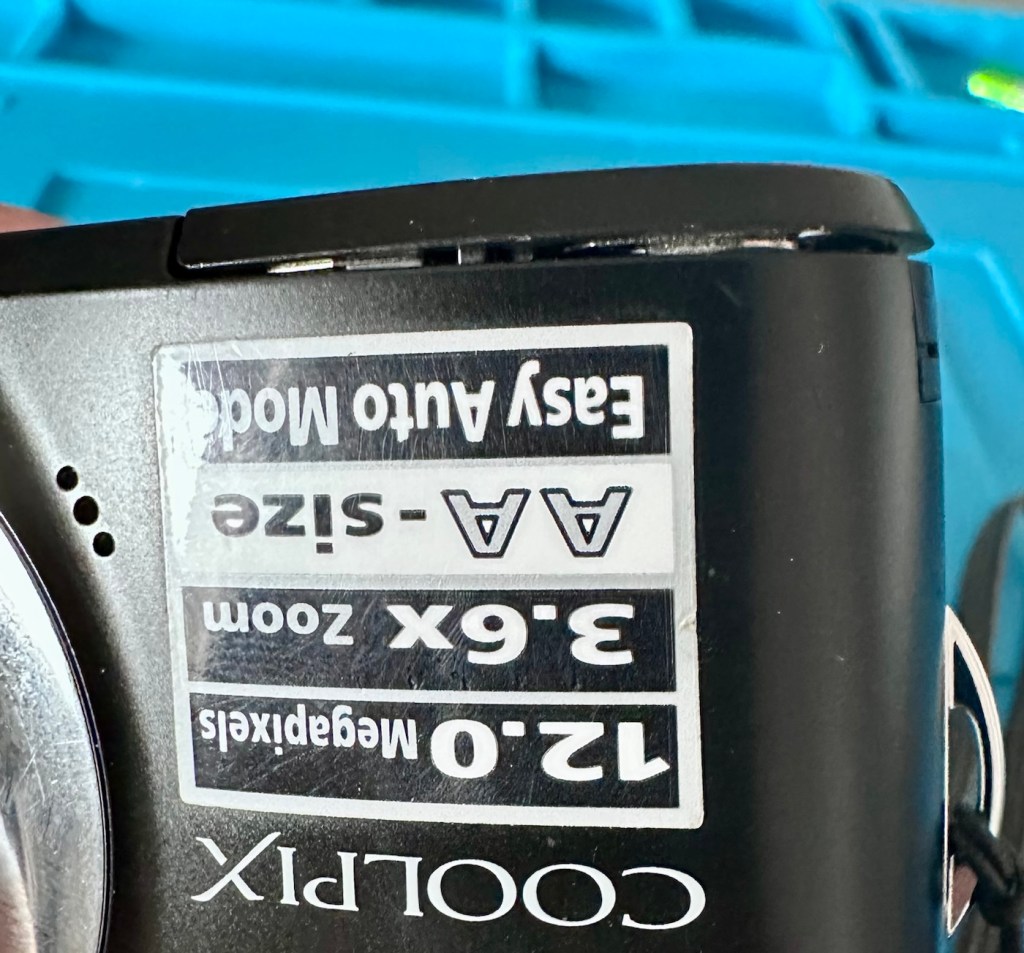
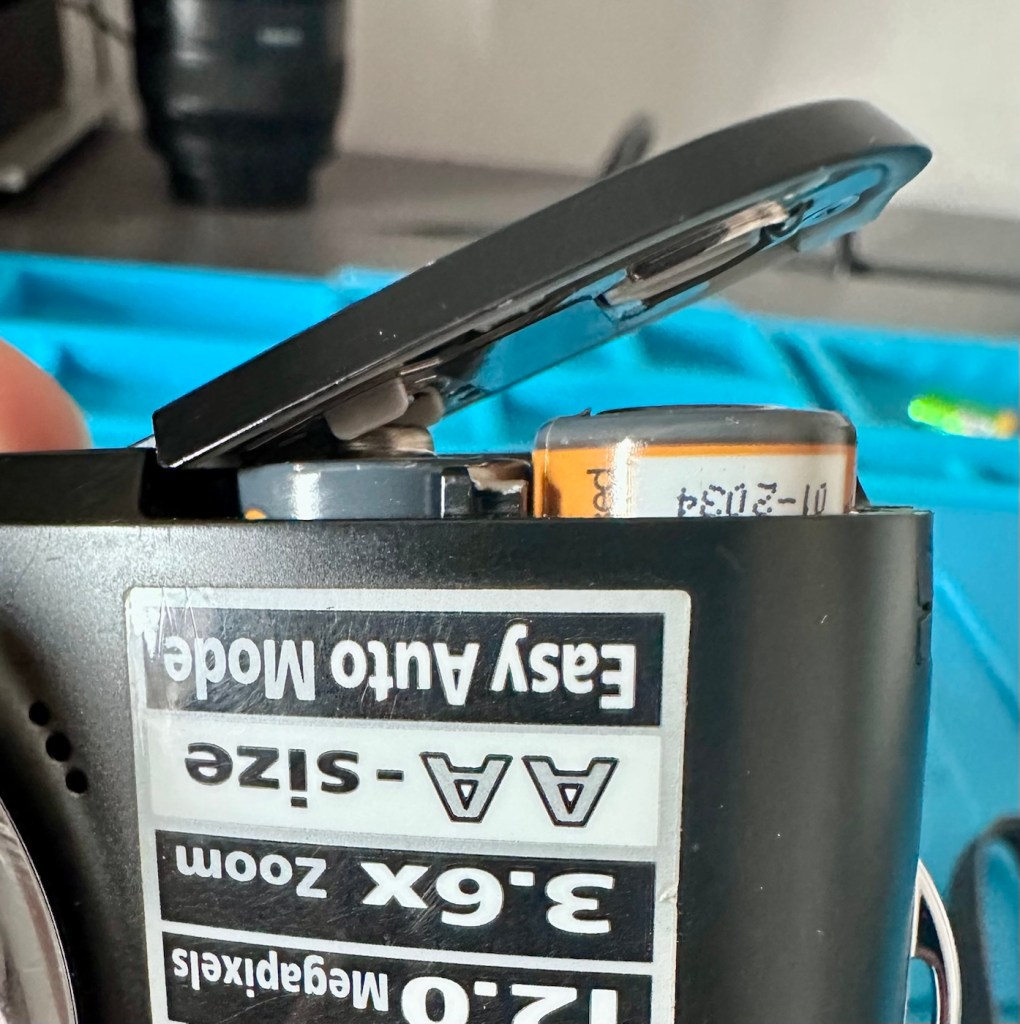
I’ve just used the camera for a series I have produced called seven pictures in seven days where I use one of my old cameras to document my week in just seven photographs. Only then did I realise that this camera has been carrying an issue all that time. Nothing too serious, these cameras were renowned for having a small catch in the battery door area that broke causing the battery door to ping open due to the pressure created by the battery springs inside. It’s not a door problem, that is fine, so replacing that would achieve nothing. The issue is with a small catch that is actually a part of the body shell, so to fix the issue entirely a new front body shell would need to be acquired. Three years down the line I can’t really say that I have seen a viable donor come up for sale that itself wasn’t suffering the same issue. Alternative options need to be considered. Some options are discussed above. I’m going to look at an option that isn’t obtrusive, and doesn’t affect the overall looks of the unit.
Spring pressureBursts open
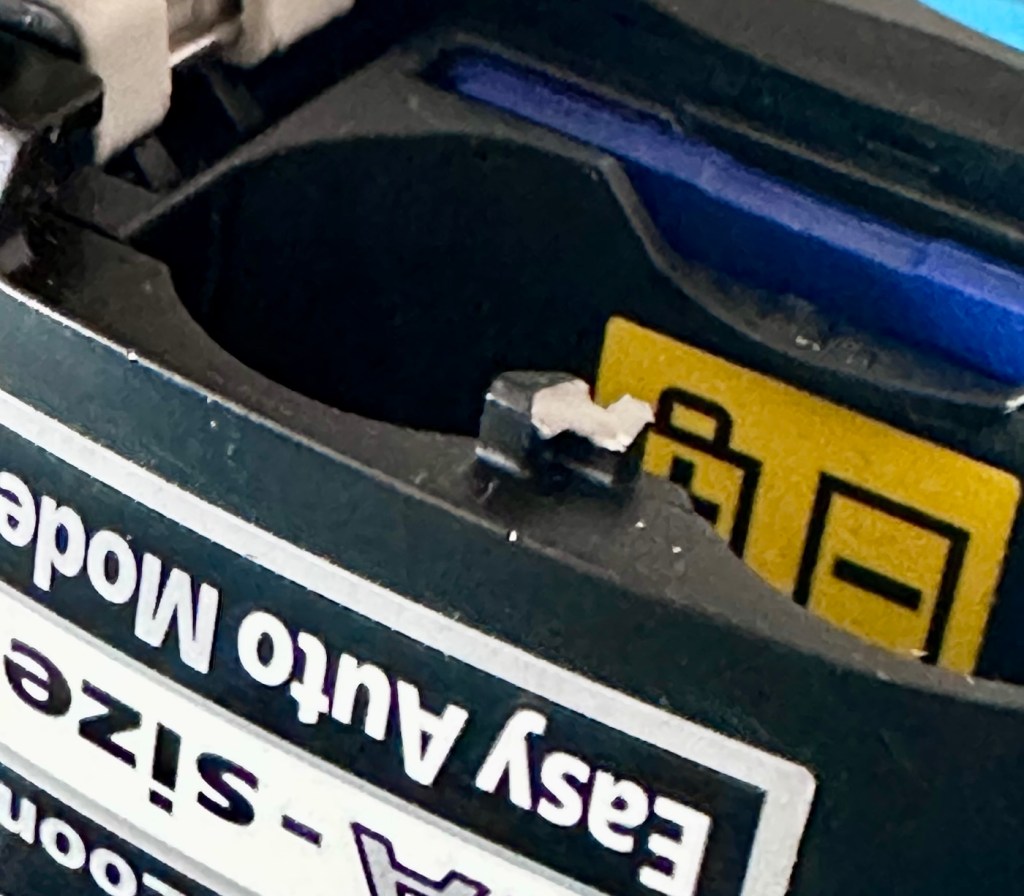
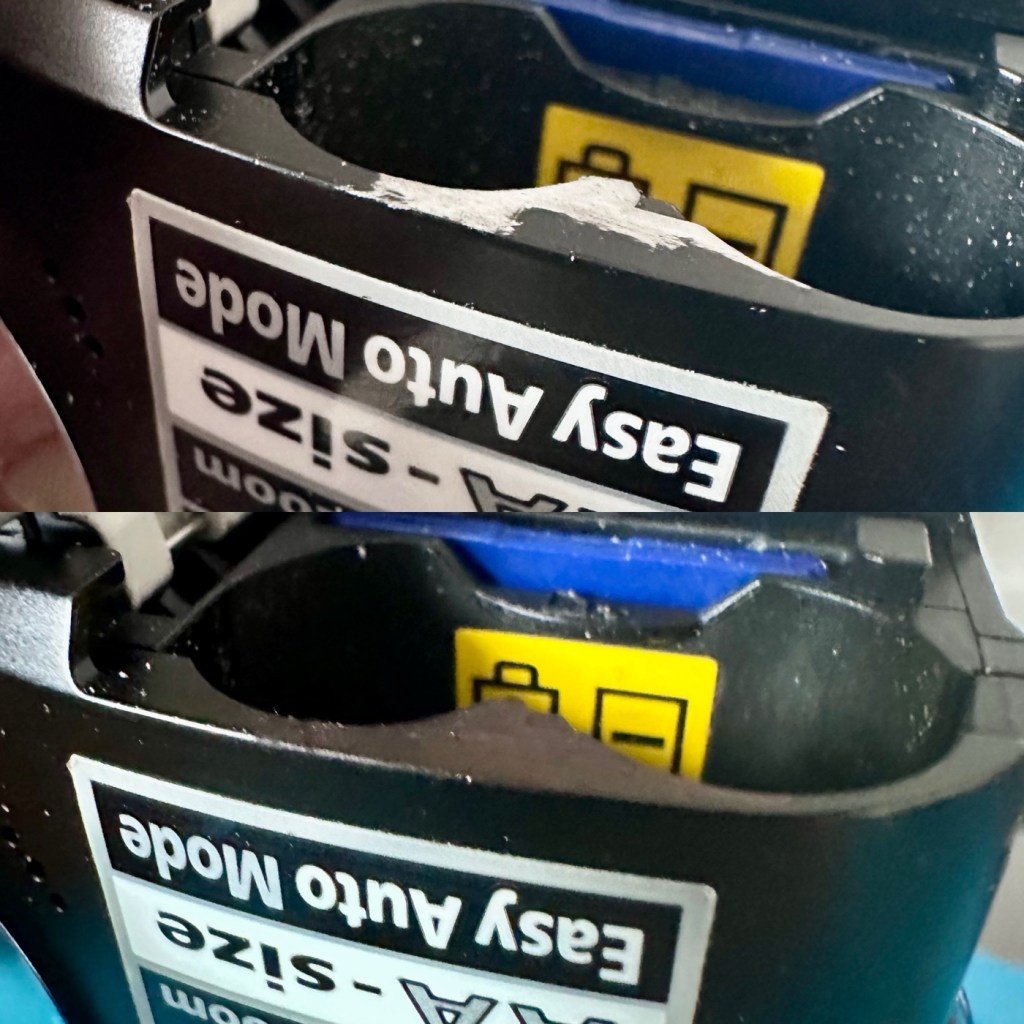
First I have to tidy up the damaged clip and prepare the area. All I do here is grind off the old broken catch, and then I use some permanent marker to just tidy it up aesthetically. The posh way of saying “Make it look nice”.
The catch Before and after removal
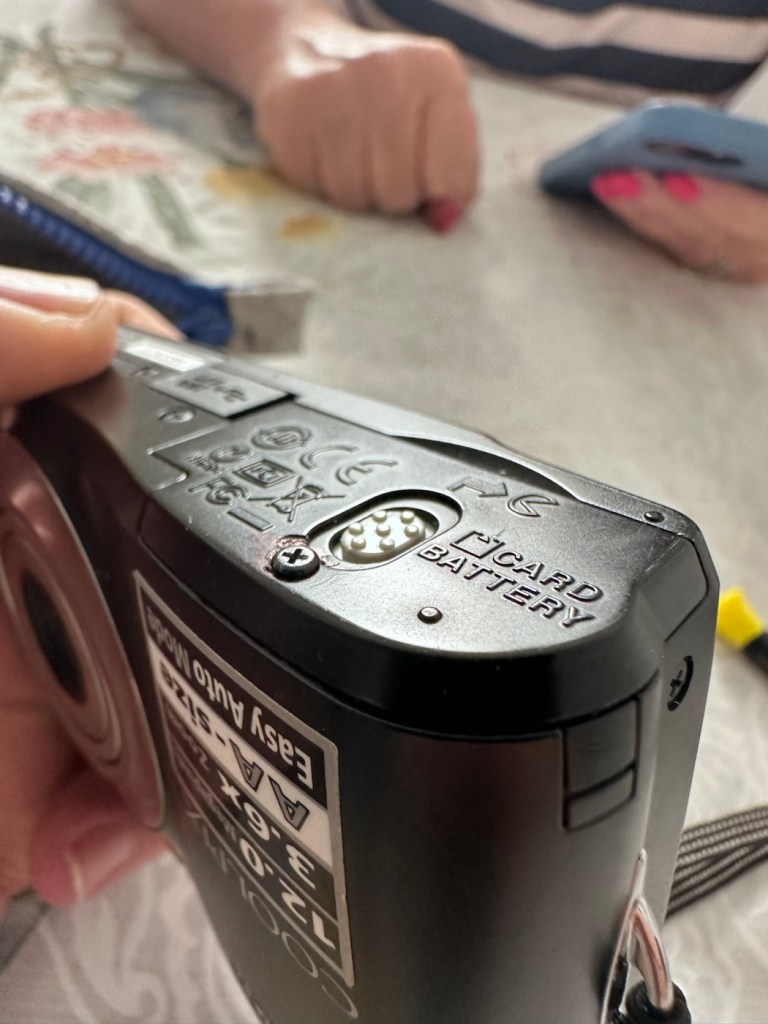
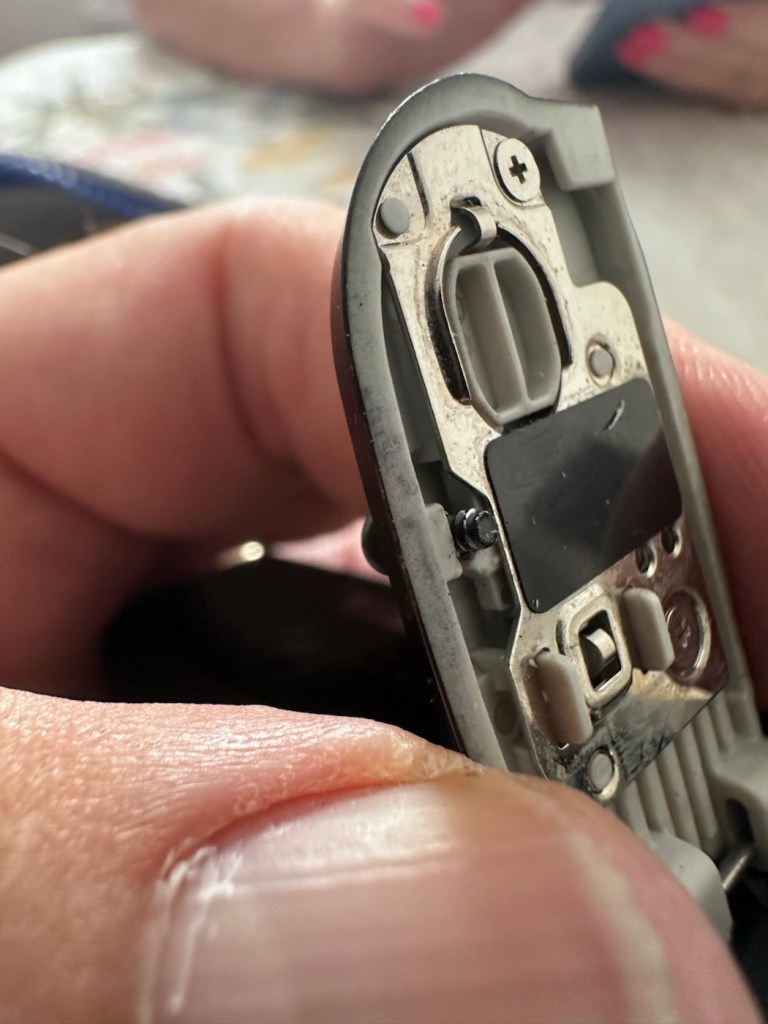
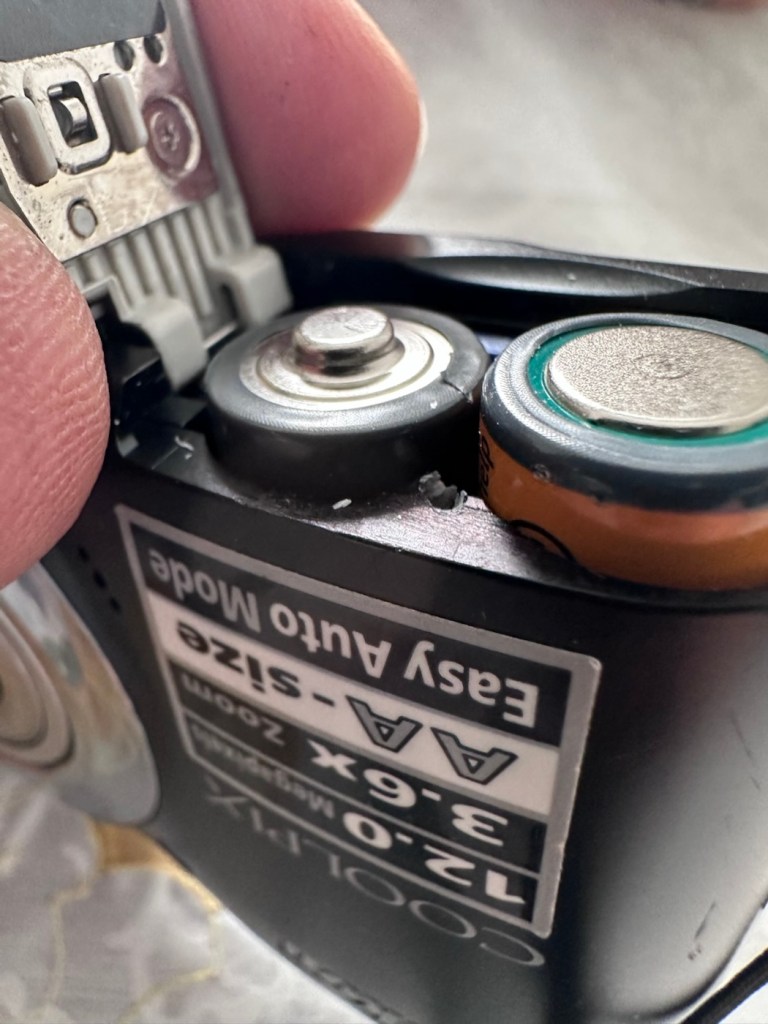
My plan is to just drill a tiny hole here, through the door and into the body, to allow me to put a small black screw in place to prevent the door bursting open and spewing the batteries everywhere. Yep, I know it now means a small screw driver will be required to make battery changes, but hey, these batteries last quite a while so it shouldn’t be too much of a chore. And the camera will look no different with added parts, such as obtrusive tape, cable ties and clamps. It will fit into its case just as it did before and look no different. it will be a sympathetic repair.
A small screw hole right through the lid into the bodyIn the lidBody hole

































You must be logged in to post a comment.