

I’ve recently inherited 8 rolls of life expired 35mm film. In other hands I guess these would just be discarded, and thrown away, however this is me writing, you know, that fool who collects old knackered cameras. That’s me that is.
Well I’m going to use them.
What could possibly go wrong.

A number of things to be precise, let me enlighten you. As these rolls of films all expired back in 2005 this means they expired 20 years ago, that’s a third of my life span, phew! Film loses its sensitivity over time and we will have to compensate for that when we get to use the film. Colours and dyes fade, and the finished product (if there is one) is likely to look washed out. Add to that the issue of not knowing how the film has been stored over the last 20 years, and this could be the difference between there being an image and just being blank film. If the film has been kept cool, and in a darker environment, there is more of a chance of getting a result than one that has been stored in light and heat. You get the picture….or not.
These rolls are colour negative film all using the C41 chemical development process. And for this type of film and process, the line drawn in the sand says that it’s wise to overexpose the film by 1 stop, for every 10 years (Decade) of expiry. Since the rolls i have are now twenty years out of date, following these guidelines I would be advised to overexpose these films by 2 stops.
Black and white film is more forgiving and might not require adjusting at all, whilst transparency film is totally unforgiving, and personally i wouldn’t touch it with a barge pole.
The higher the ASA setting on the film, means that it requires less light, a lower settings means that more light is required. Therefore, as an example, if these films were originally rated at 400 asa i would now be advised to expose them at 100 asa therefore allowing more light in to expose the deteriorating film accordingly. But remember, when you process the films they must be processed at standard normal development times, if you push or pull the development times you will not achieve the result you require. Develop as normal.
The unknown factor here really is how the film was stored. Chances are that if it was stored in perfect conditions, then we could probably get away with using its original asa setting. But we just don’t know and will just have to suck it and see as they say. We won’t really know how things are going to turnout until we’ve developed the film.
Old film is good for experimental purposes, you don’t really want to trust old film to a photo shoot as you could be wasting time and money. Unless you really want that old washed out retro 70s look.
The film stock I have is listed below:
I have 4 rolls of Kodak Gold 200ASA colour film.
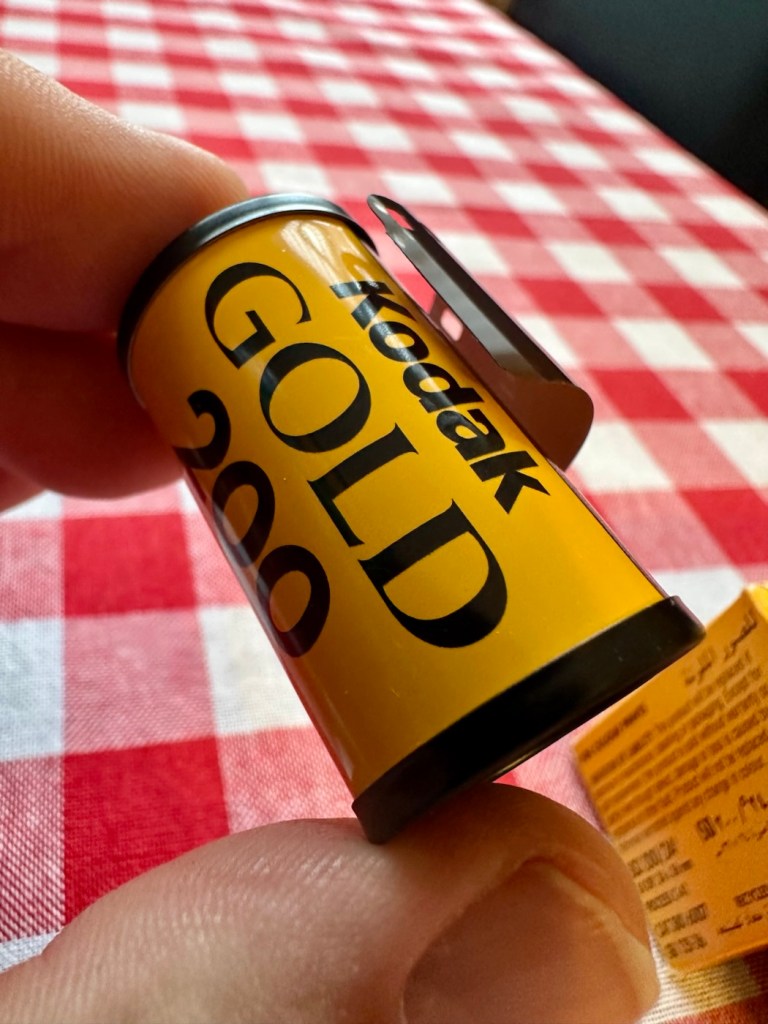
I also have 4 rolls of Kodak Gold Ultra 400ASA film.

All expiry dates are circa 2005, so they are exactly 20 years out of date. I’ve put them all in to cold storage for now but it could well be 20 years too late. Typical for me, always late to the party!
As an aside to these films, I’ve also found a Canon EOS 30 body that I have also been given to get working again, it just so happens to have a partially exposed film inside it. Now this roll I will have to expose as per normal as it has a dx code reader inside, and I can’t override it from what I can tell initially. It will be interesting to see what it returns.
So. When I get around to exposing these films, the 400ASA will be exposed at 100ASA and the 200ASA ones will be exposed at 50ASA. To be honest, I will probably expose half a roll of each at the original setting and then half at the modified setting. It will be good to see the difference, the deterioration and the grain quality. I have a number of old 35mm cameras still to test, so these rolls will be a welcome opportunity to test and experiment, and you don’t often get the opportunity to do this, so I’m going to make the most of it and have some fun.
I’ll let you know how it goes 🤞
 Foxes Den
You must be logged in to post a comment.