

I’ve recently purchased two old point and shoot cameras as a lot. One was from 1960 and the other one was from 1972 only 12 years apart, but a world away in technology regarding light sensing ability and technology.
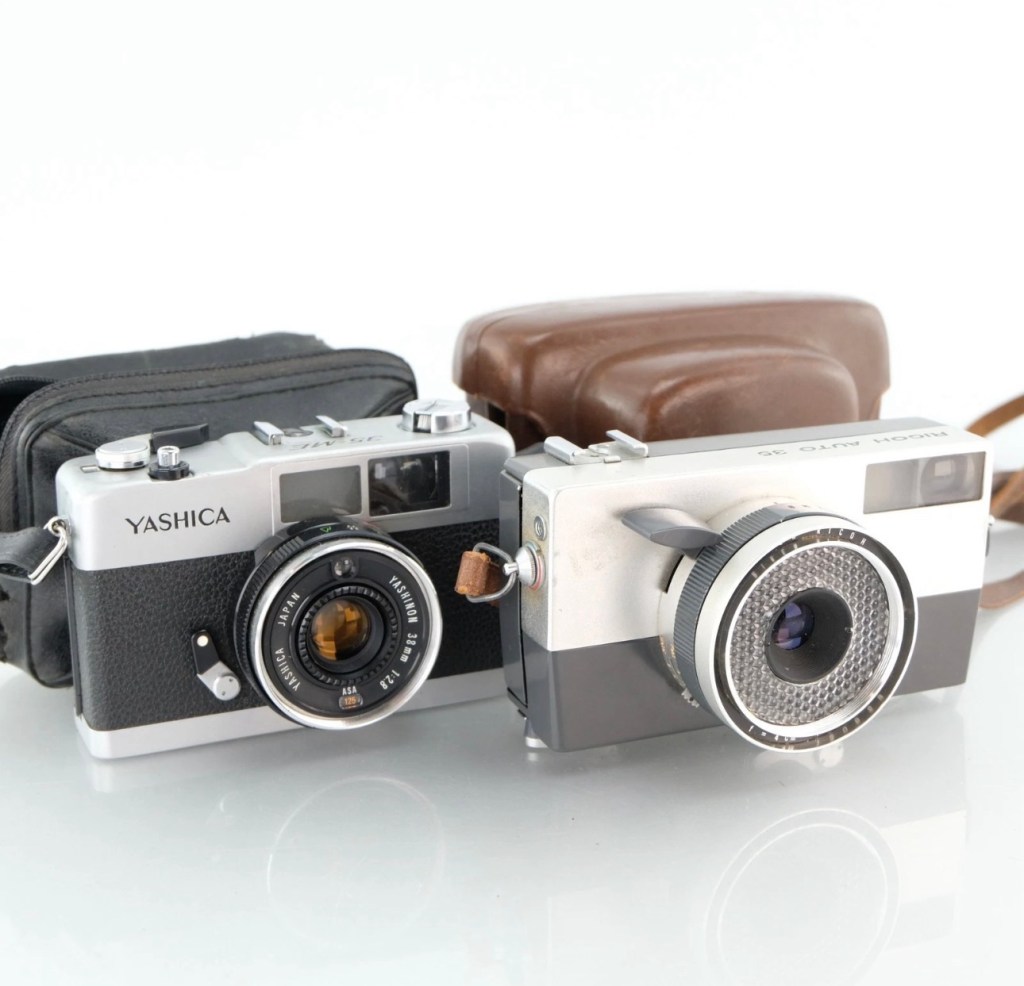
These two cameras only cost me £4:99 In total, they were sold as spare parts, and I suspect the issues could be around the light metering, as to be honest there isn’t a great deal else that could go wrong with them. Here’s a quick breakdown of the metering methods on each camera, followed by a more complex explanation around just what each method of metering involves.
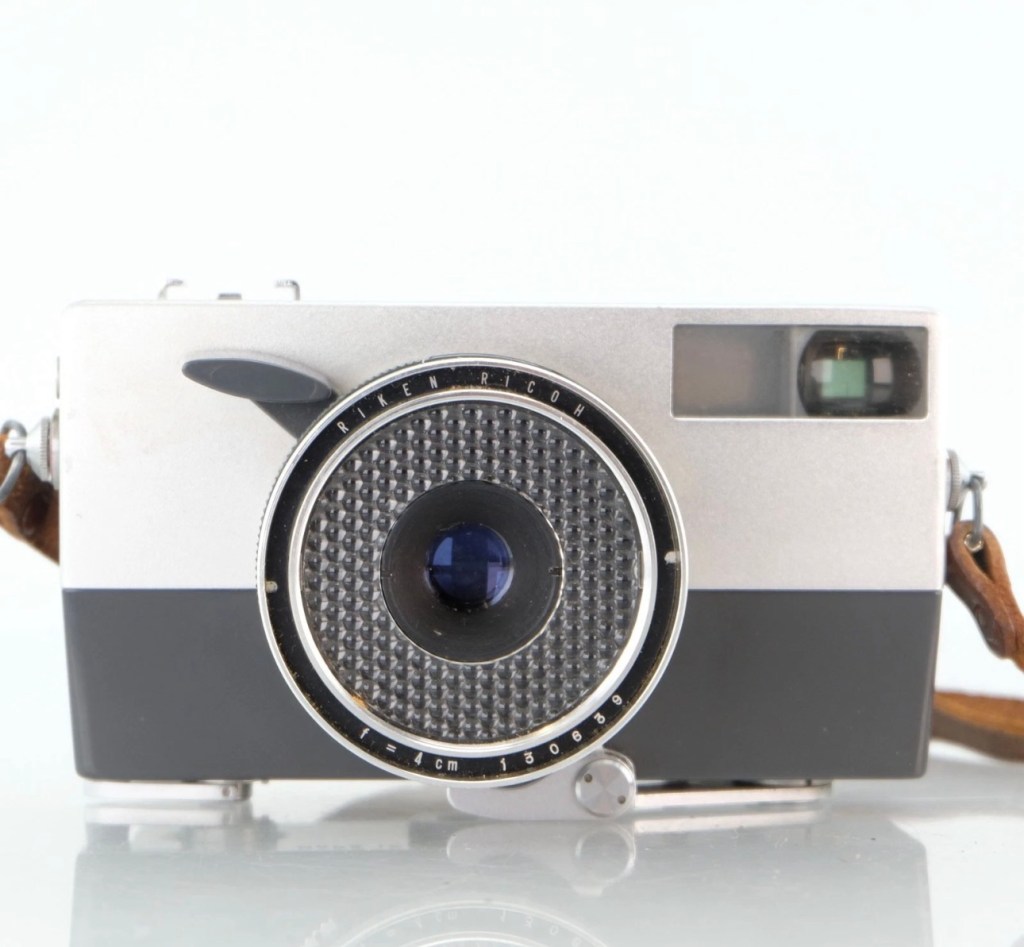
The older camera, the Ricoh, dates from 1960 and just by looking at it, you can see its light sensing system is built around the face of the lens barrel, it’s that glass honeycomb concoction that is so typical of a number of cameras and light meters of this period. Here is a post I previously made regarding Selenium light meters – (Sangamo Weston Master V light meter) The meters were known as selenium meters, there was no electrical components such as batteries, it was a little bit of scientific magic, here we go with a little explanation….
How the Selenium Cell Works in This Camera:
A selenium light cell operates on the photovoltaic effect (similar principle to modern solar panels):
The cell contains a thin layer of selenium coated onto a metal base. A very thin transparent conductive layer (often gold or another metal) is placed on top. When light hits the selenium, it generates a small electrical current. That current directly drives a tiny moving-coil meter needle.
The honeycomb ring is the selenium cell, light hitting it generates a small electrical current of approximately 0.5v. That current directly moves a needle inside the camera, the needle mechanically links to the exposure system. On the Auto 35, the meter is coupled to the shutter/aperture system, meaning that in “Auto” mode, it helps set exposure automatically. In manual mode, you match the indicator.
No battery is used — it is entirely self-powered by light.
Expected life span:
The Ricoh’s selenium cell is now about 60+ years old, so condition varies.
Typical selenium lifespan:
Originally: ~20–30 years
Many survive 40+ years
After 60 years: often weak or dead, this one probably is
Common Conditions Today:
✅ Still accurate (rare but possible)
⚠️ Works but underexposes 1–2 stops
❌ Needle barely moves or is dead
They usually fade gradually rather than fail suddenly.
So that gives an idea of how 1960s light metering works, and to be quite honest it probably means that as this camera is now over 60 years old the metering cell is long dead. It does not mean the camera is useless though, it can be used manually using a third party light meter or you can always use the “Sunny 16” rule.
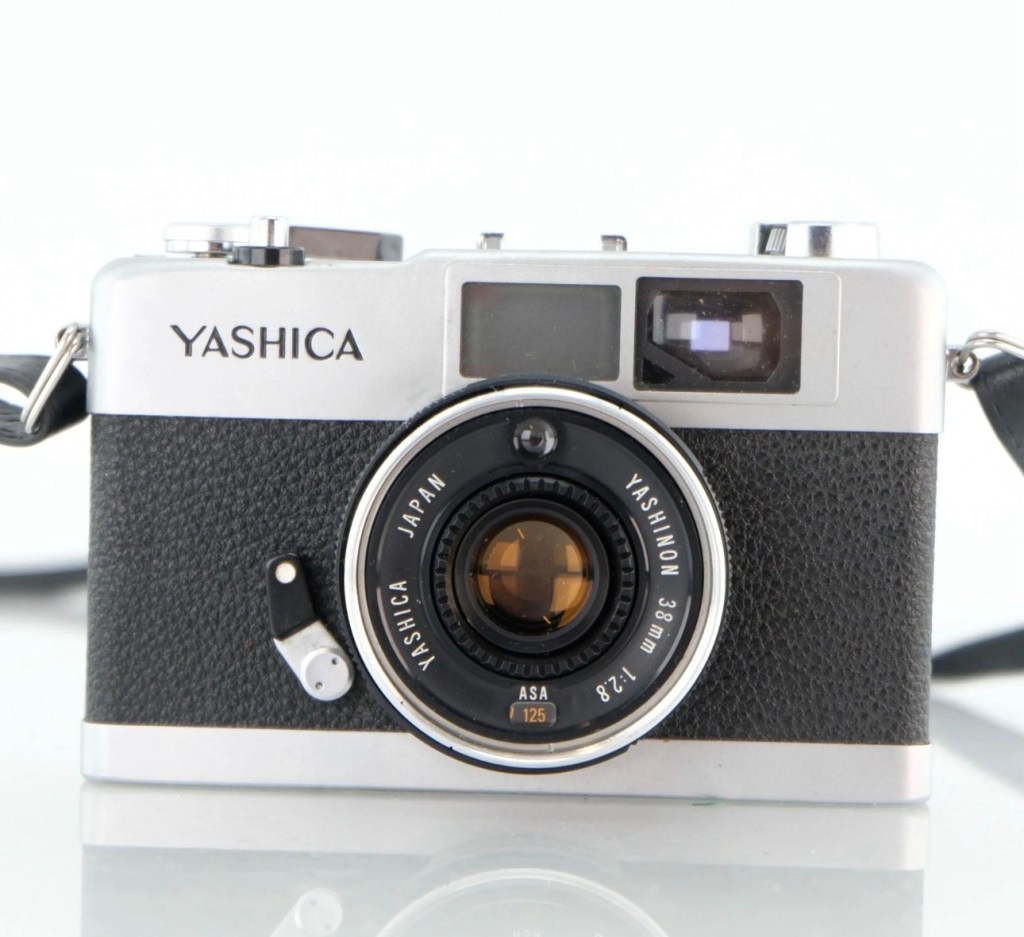
Now moving on 12 years to 1972 and the selenium meters have now gone only to be replaced by the CdS system- Cadmium Sulfide sensor, otherwise known as an electrical photocell. The sensor can be seen at the top of the lens ring, a little glass bubble. The downside with these sensors are that they contained Cadmium which is a toxin, replacements are no longer available so modern cameras use photo diodes instead. Here’s the explanation of CdS technology:
Unlike selenium (which generates electricity), CdS works by changing resistance:
In bright light → resistance drops
In dim light → resistance rises
The camera contains:
A CdS photoresistor, A battery, A small electronic circuit, A meter or automatic exposure mechanism
The battery sends current through the CdS cell.
Light changes the resistance, which changes the current.
That signal controls the exposure system, and a 1.3v battery cell is required to power the meter.
Why CdS Was an Improvement:
Compared to selenium cells, the CdS photocell was much better in low light, it was smaller, more accurate and required a battery that could be replaced to extend life whereas the selenium cell in time would naturally just die away.
CdS cells generally last a very long time — often decades — and usually outlast selenium meters.
Hopefully this gives an explanation regarding the two types of metering sensors that were present between the 60s and 70s. It is always worth considering when purchasing such cameras that the light meters may not, and will probably never work again, the camera itself is probably fine, you’ll just have to find other ways to ensure your lighting conditions are sufficient, and that really is no big issue, it’s easy and second nature to most camera users. As stated earlier just use the “Sunny 16” rule. Just enjoy your photography, experimentation is half the fun.
Reviews on these cameras will be following soon.
Thank you for passing by, it’s always appreciated.
 Foxes Den
You must be logged in to post a comment.