I have tonight added a new gallery to complete the Halina A1 Reflex renovation I completed in August of 2023. The gallery can be found by using the links in the margin or by clicking HERE.
Negatives on light tableNegatives on light table
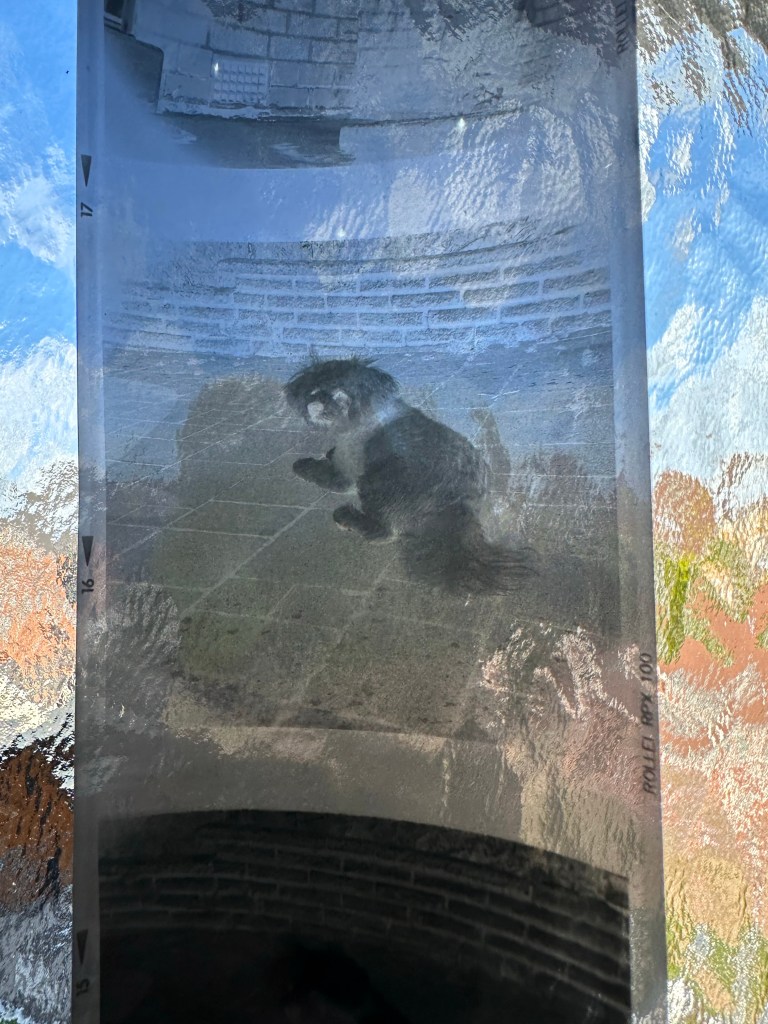
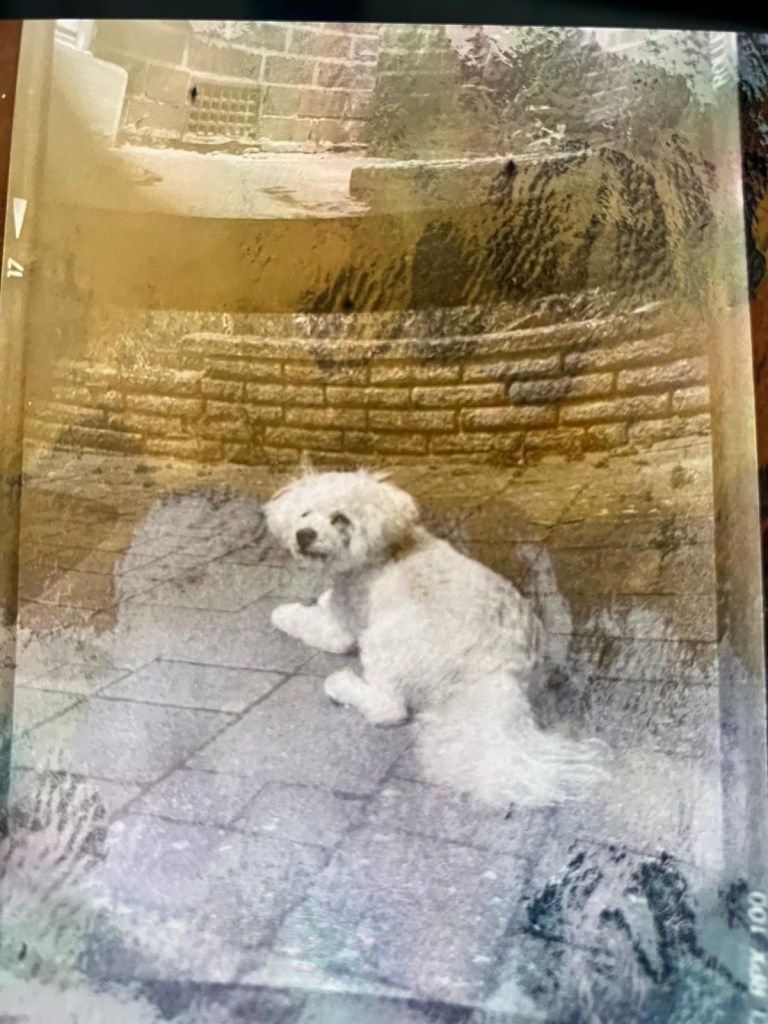
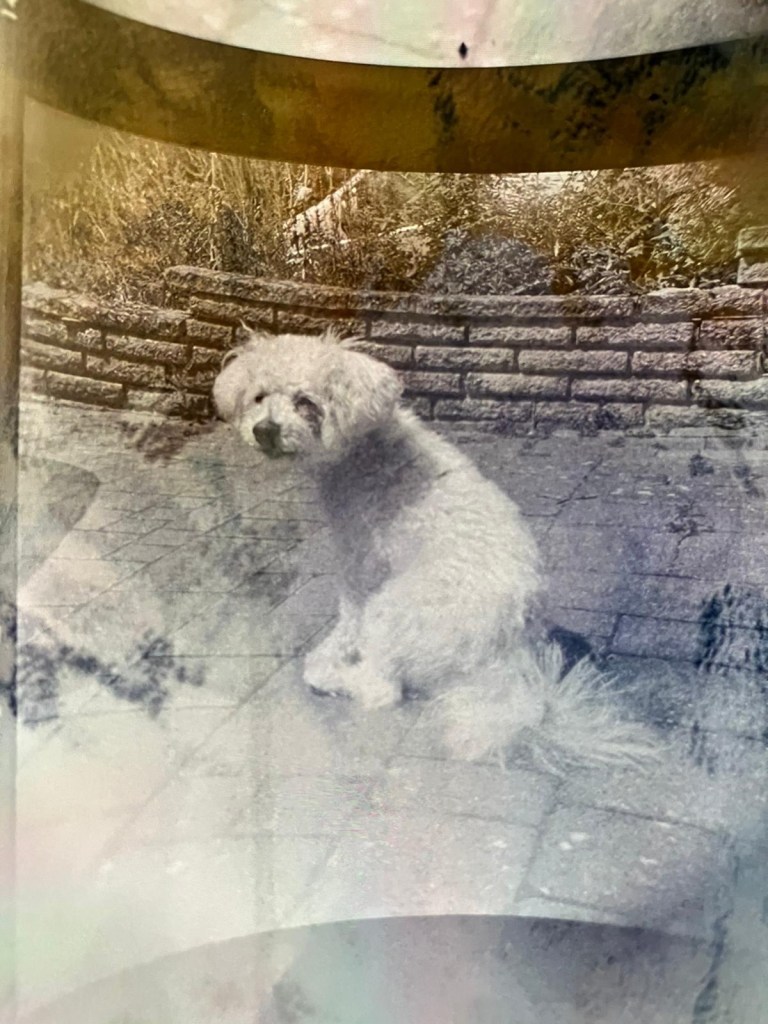
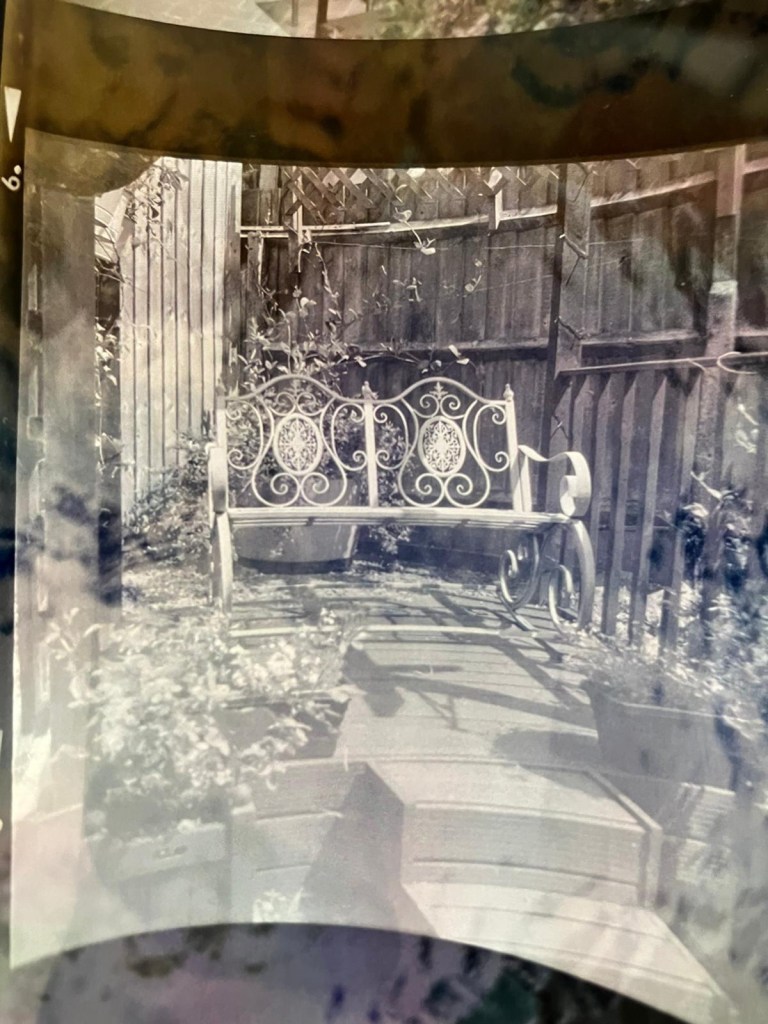
As I don’t have the correct mask for my scanner I have had to go about getting the photos on the site in a peculiar way. Firstly I take pictures on my phone and then invert them to get a positive image, an action that I discussed in a previous article that was posted HERE.
Please don’t expect anything too fantastic, it was a test roll and mistakes were made, but a lot of enjoyment was had getting the results.
Following on from yesterdays post regarding fogging on negatives. If you remember I’ve lost the mask for my scanner so I’m currently unable to utilise this service.
The Negatives waiting to be scanned
However I had some time and took to the internet to find out if there was a way to view in the short term until I found the mask for the scanner. It appears the phone you have in your hand can more than likely do the deed without having to down load any apps.
Now I have an iPhone, however the same is also available on Android but I’ll stick to the iPhone route. It’s all about inverting colours
Firstly venture to settings, Accessibility, Accessibility shortcut and then choose classic invert. A tick will appear by your choice and then just come back out to the Home Screen. Now every time you triple click on the side home button the screen colours will invert.
StandardInverted
Now if off you triple click again the colours go back to standard. Well I’ve tried this on the same negatives above from yesterday and it gives you a good idea of what you are going to get. These pictures are direct inverts of the negatives at the top of this post with no cropping or adjustments, I just wanted you to see the possibilities you have available to you in your hand. If you use a light box and some glass I’m sure you’d get quite acceptable results.
Negatives all inverted
Great little tool for those old negatives you have laying around that you were thinking of getting printed but weren’t quite sure.
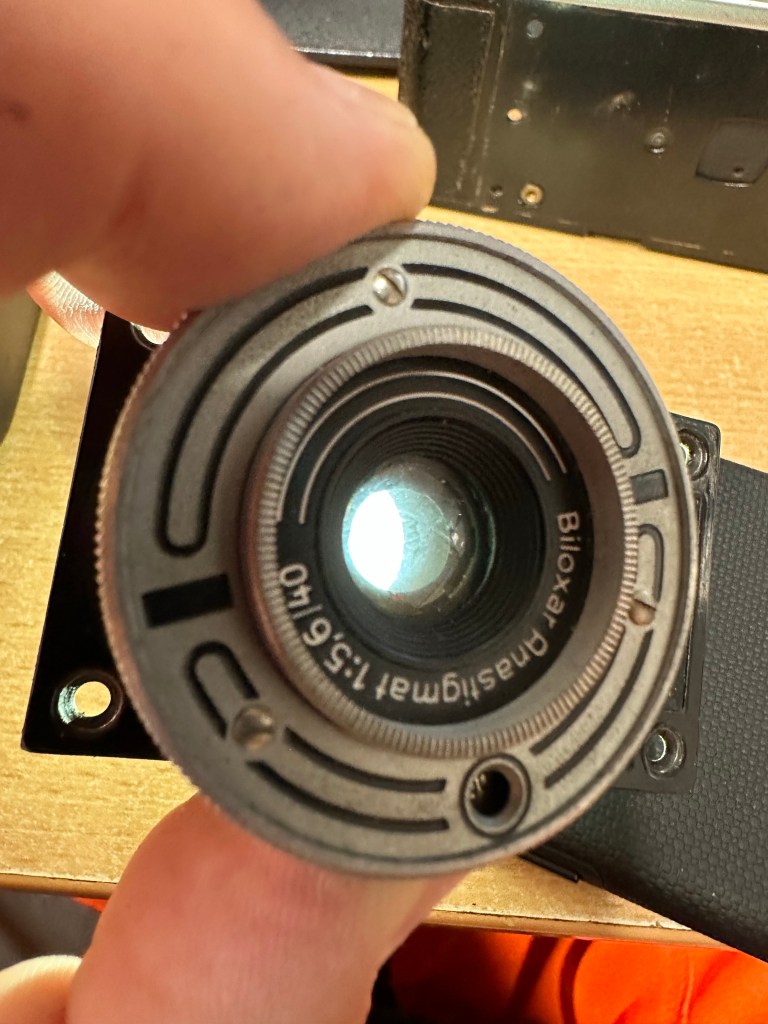
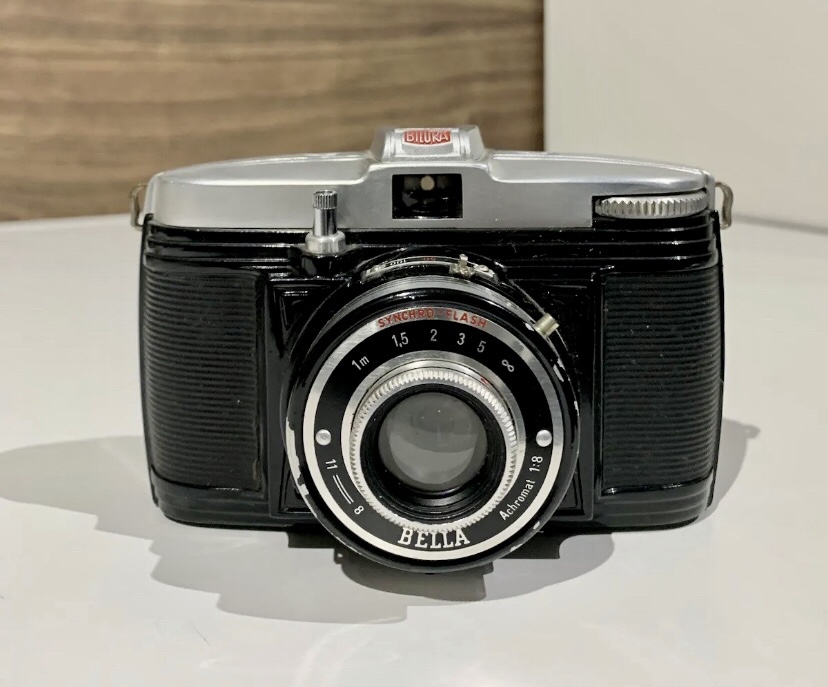
The Bilora Radix 56 camera circa 1950 has arrived today and the condition is for once very close to the original description that I read on line prior to purchase. Makes a pleasant change to be honest. No big surprises this time.
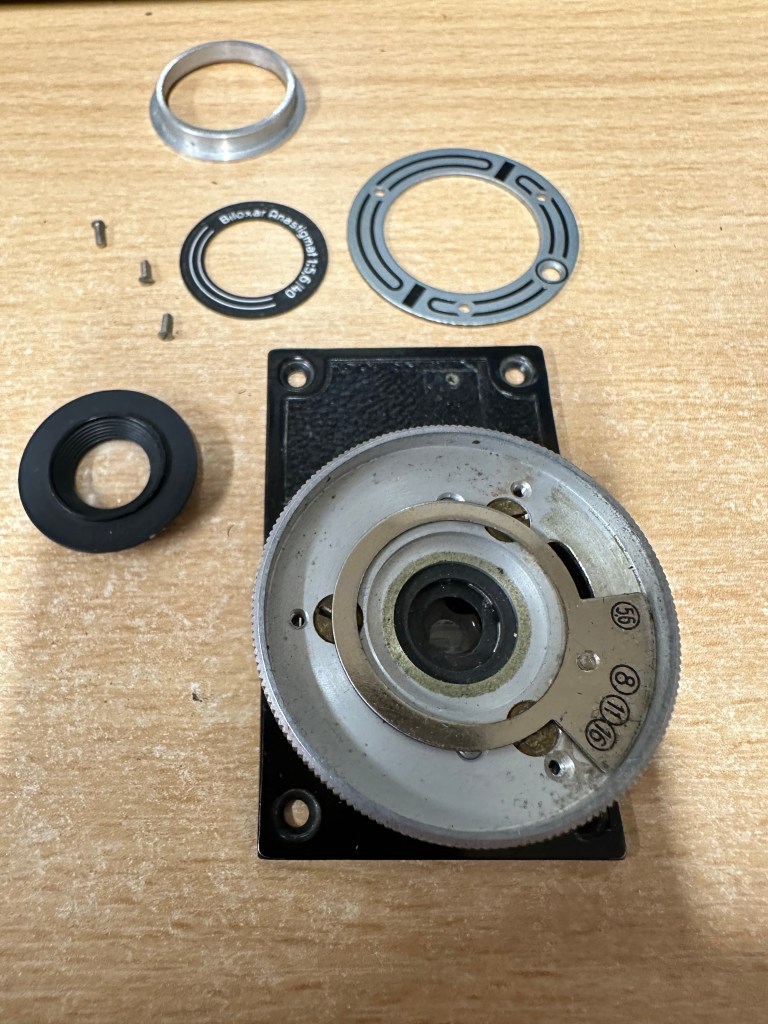
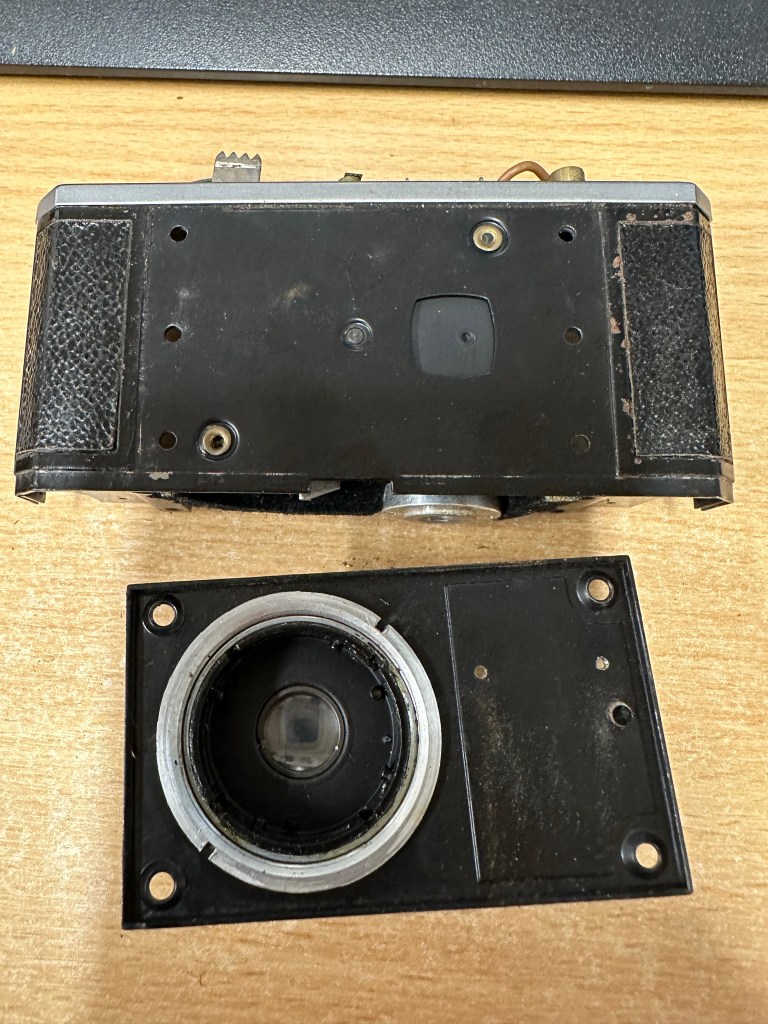
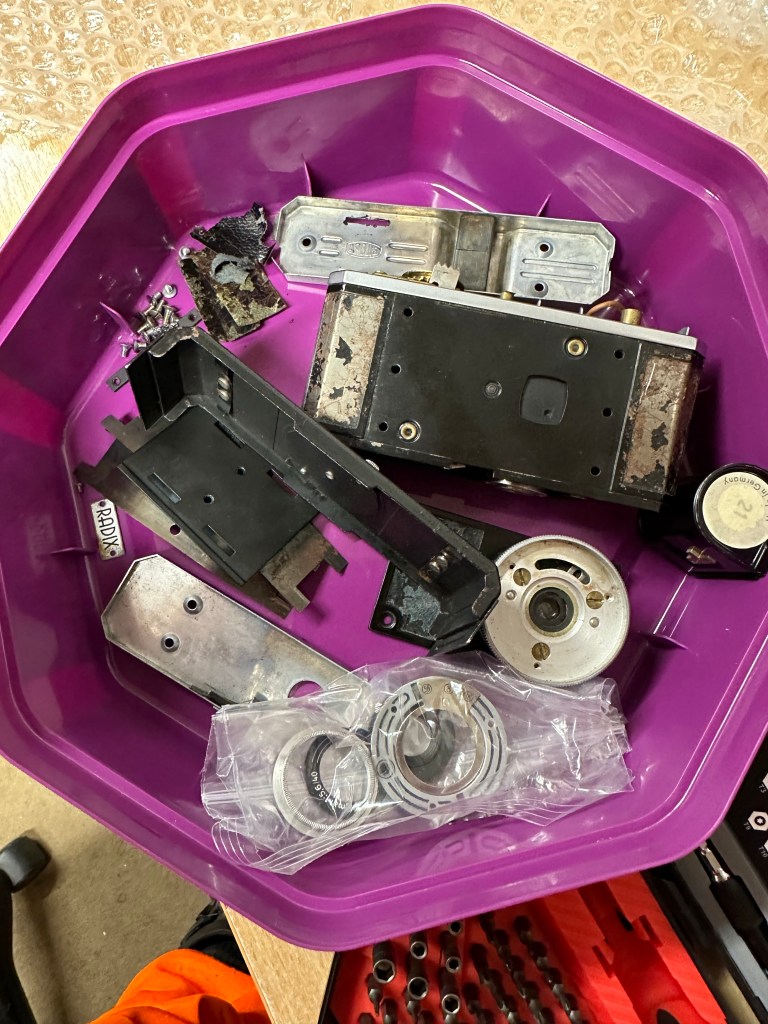
I’ve broken the whole camera down to its smallest parts, I love to do this as it gives a good insight into how the camera was originally put together. It’s lovely to see some good old mechanics instead of a plethora of electronic components. Only one piece of wire on this camera and that’s to the flash synch on the side of the body.
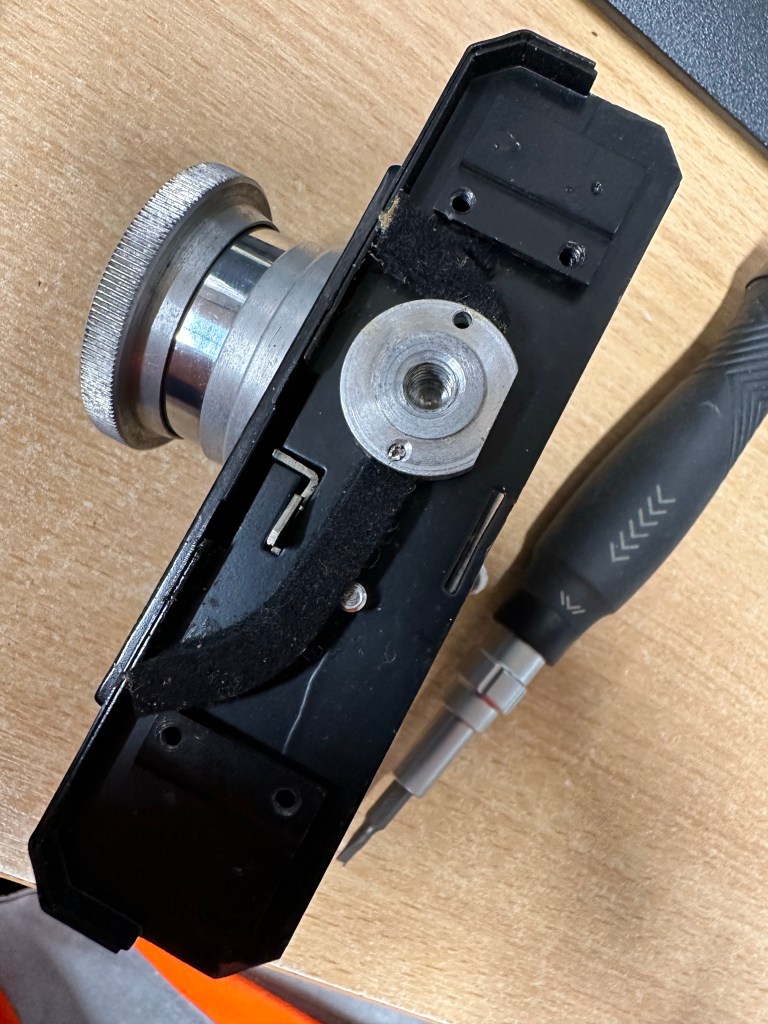
I’m going to clean the winding mechanism, get rid of the old oil deposits and re lubricate. I’ll also do this with the workings on the base of the camera that allow only one of two available exposure settings. That’s a “B” exposure or an auto exposure of 1/50-1/60 of a second. Not much use with the faster films that are available today. Focal length of the lens is 38mm 5.6 – 16.
The shutter works fine, I’ll probably maintain that with some graphite when I’m in there, the lens seems free of fungus but I will dismantle this anyway to clean the optics within.
Radix 56 base workingsRadix 56 lens removal Radix 56 lens faceplateRadix 56 broken down in a sweet box
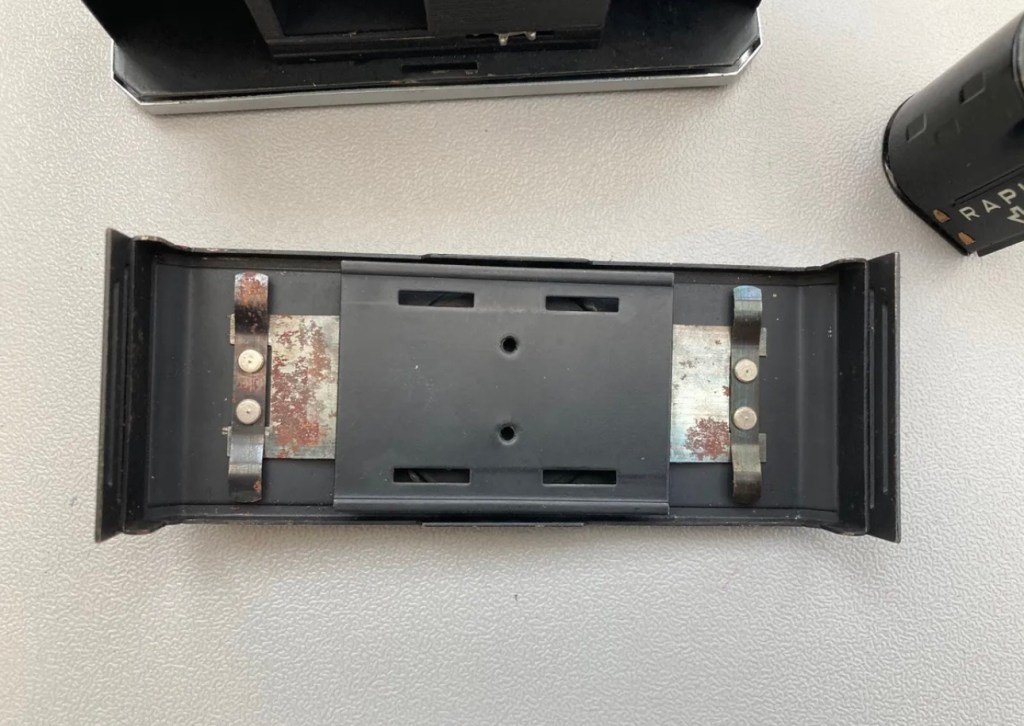
There is rust on the backplate, and this will need removing, I’m planning on sanding this down priming and repainting and a new skin will be put on the body. There are only 4 small pieces on this camera so this shouldn’t be an issue. Some lubrication, spotting and a good Polish will then hopefully complete this refurbishment.
I’m considering purchasing a second Karat cassette so I can sell this on as a complete camera. I may even try it out myself someday with a small length of black and white film.
Pop on back to see a post for each stage of the refurbishment.
Thanks for visiting, you know it is much appreciated. Thank you.
In my search for the unusual have come across this fine specimen that I have purchased for less than the price of a fish and chip dinner.
Remember the battle between manufacturers back in the days of Betamax and VHS? Well this is the film makers battle between Agfa and Kodak, with Kodaks 35mm winning out. The Agfa cassette (known as Karat) was 35mm without the spool and you needed two cassettes to use these cameras. I have one here and hope to be able to use it at sometime.
I like this example as the metal is not too pitted. There is rust but I can work on this, the covers are damaged but this can be replaced. I might go for a totally over the top refurbishment or may keep it as close to original as possible. I’ll make that decision once I can check the optics and shutter.
You can find out more about these cameras at the following link: Camera wiki .org
Phew, the donor camera arrived costing me the grand total of £3 sterling. It was badly damaged and I was doubtful that it would be any use due to its state.
Donor camera board
However the pcb area and the lcd screen looked ok and after much cursing and burning of the fingers whilst de soldering and re soldering I put the battery in and there it appeared as if by magic…all clicked and clunked as it should and the battery indicator appeared on the screen.
New pcb and screen Repaired Minolta Dynax 5000i
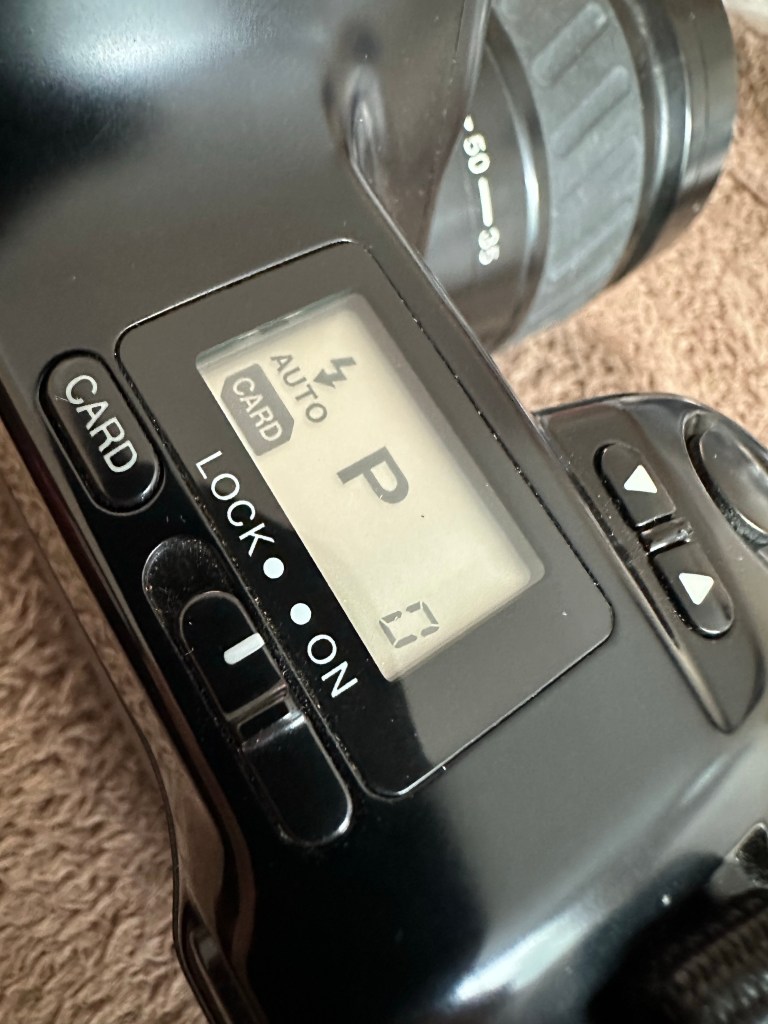
I put the case back together and secured all the buttons to the frame and then connected the lens. Turned it all back on and hey presto all working fine. Focus’s well, flash works as it should, all counters and indicators doing what they should.
I’m happy with this camera now, just going to give it a wipe over and I now have a super little SLR for my collection. Will run a film through it when I get the time.
I can now say this camera is complete and in perfect working order.
Job done👍
(As an aside to this repair, the original owner was so surprised I got it working that he has asked if he can buy it back? That would be rather cheeky of me so I’ve just asked him to refund the cost of the battery and the damaged donor camera. He wants to get back into analogue photography, everyone’s a winner here, and a camera destined for the bin gets a new lease of life.) I’m happy 😃 👍
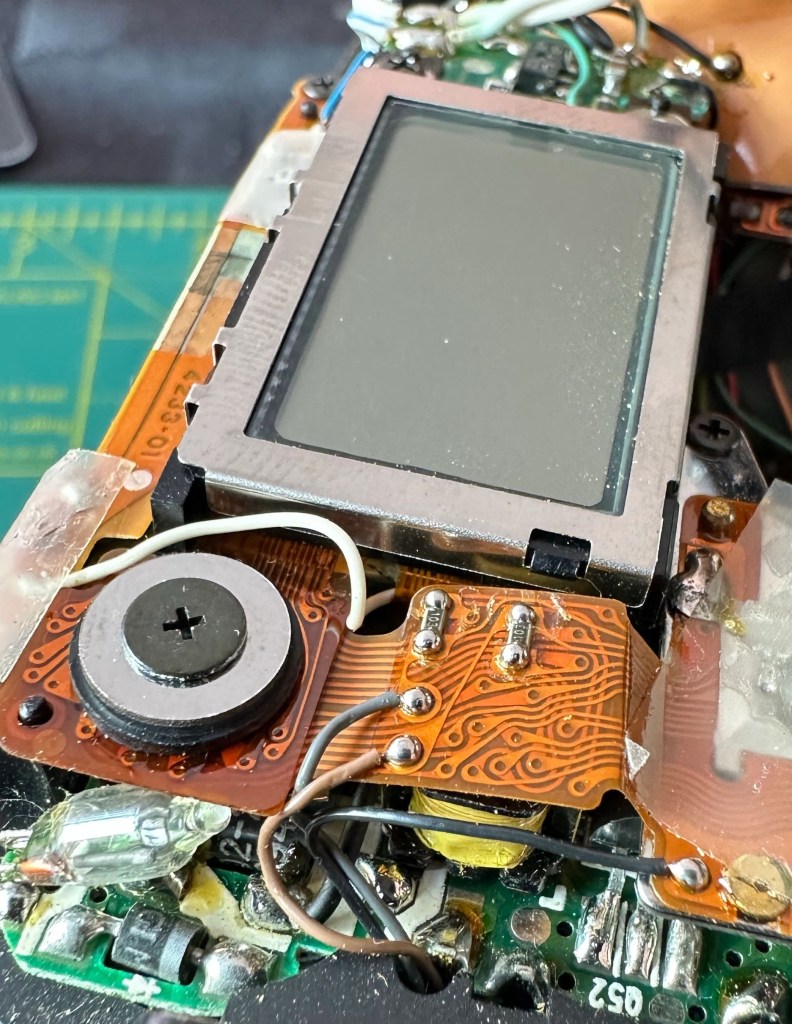
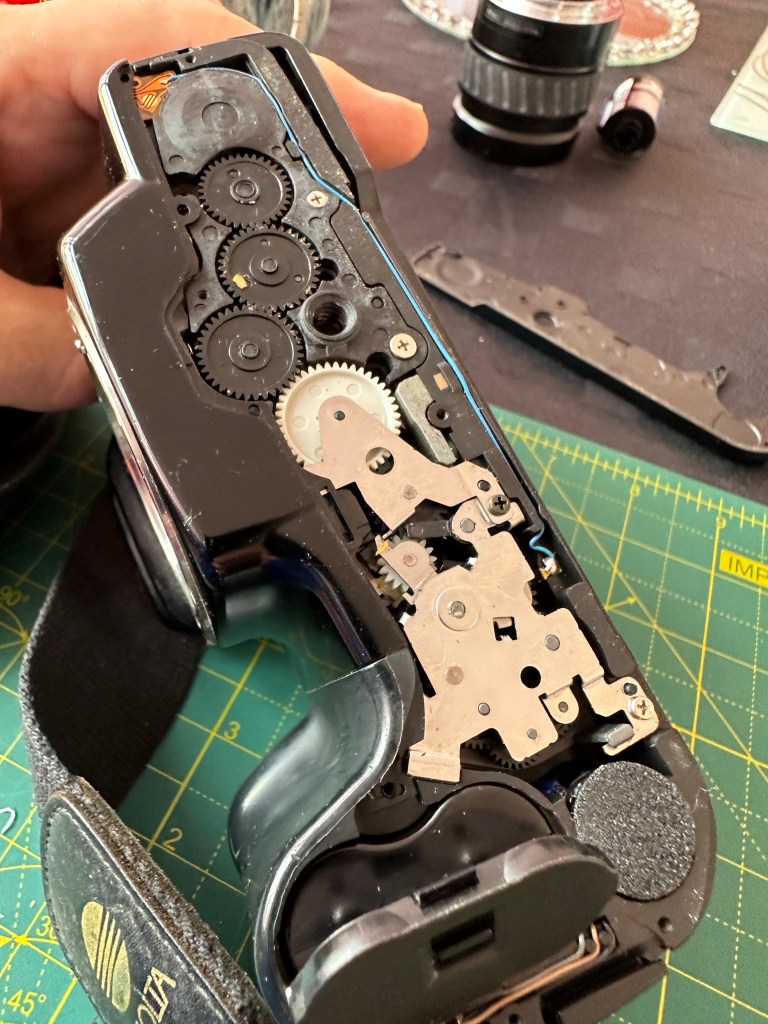
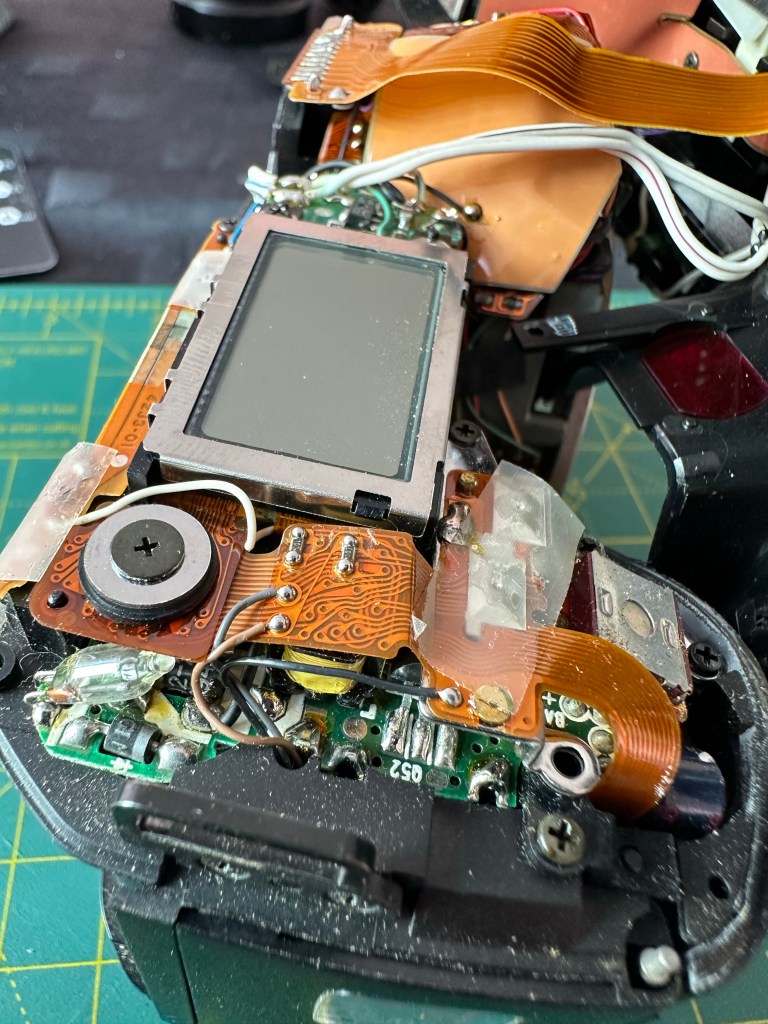
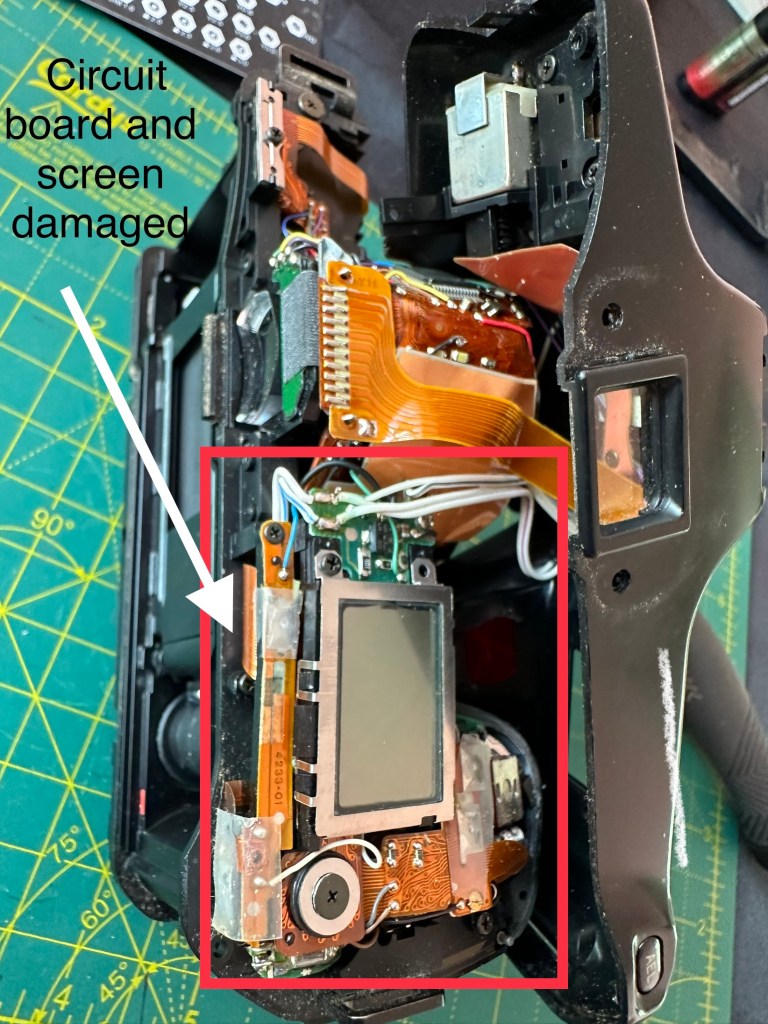
Well that’s annoying. I’ve stripped down the Dynax 5000i and found a terminal diagnosis for the power PCB and display screen.
There is a short circuit, severe corrosion from an old battery as well as the display screen being damaged where some of the fine contacts are destroyed rendering the unit useless at this stage.
Strip downStrip downFaulty board
Ok. I can strip down to individual parts, gain another 150 or so new screws and some parts that I may be able to use or sell on – or I can be a total numpty. I’ve decided to head down the numpty route and purchase a donor camera to repair this one. I’ll still get a load of spare screws following this route.
Faulty board and screen
I’ve purchased a unit, it has cost me next to nothing and fingers crossed I can get one of them working and gain some spare parts for future use. I didn’t really want to pay out more but I take issues like this as a challenge and I’m committed to get this up and running.
My wife calls me gullible, what would she know bless her 😂
I’ll let you know exactly what arrives when the postman pays a visit.
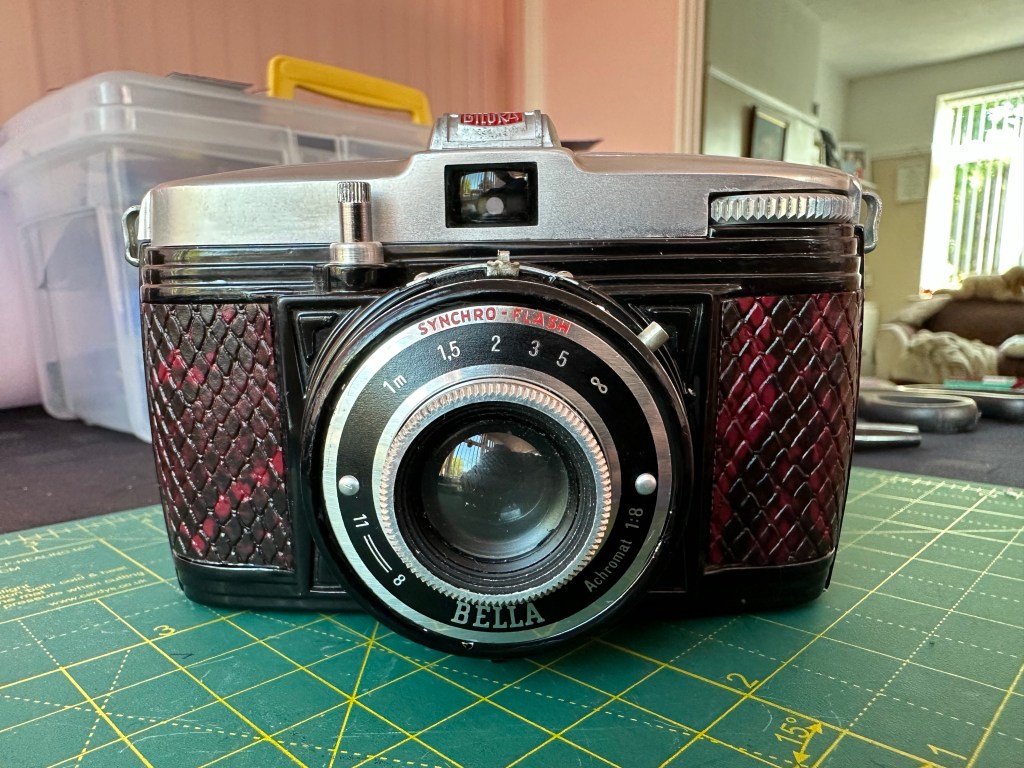
I have been waiting for some leatherette to complete this camera. I had some left over from my last project so why not use it here?
BeforeAfter
This is a lovely looking camera that I fell instantly in love with, great design made of tin pot metal basically and uses old 127 film.
It has been completely stripped down and rebuilt and is a lovely specimen in my eyes.
Bilora Bella templates for leatherette
I have today made templates for the new skin and these have gone on lovely.
Bilora Bella complete Bilora Bella complete front and rear view
So for now I’ve done all I can do on this little beauty, it will now be vacuum packed with silica gel and put into my collection for use at a later date maybe when I get a roll of 127 film. Been a pleasure working on this camera, she’s taught me plenty and I am already putting that to use. Knowledge is king 👑
Now I’ve reached a point that I can now say, time to wrap this job up and put it to bed.
If you remember back a couple of weeks I had this camera given to me by a family member. Not used in about 20 yrs still had a film in it as far as they were aware there were no issues with it.
I beg to differ…..
In lay man’s terms I think the term that should have been used is that it’s knackered (not working, kaputt a non existent camera)
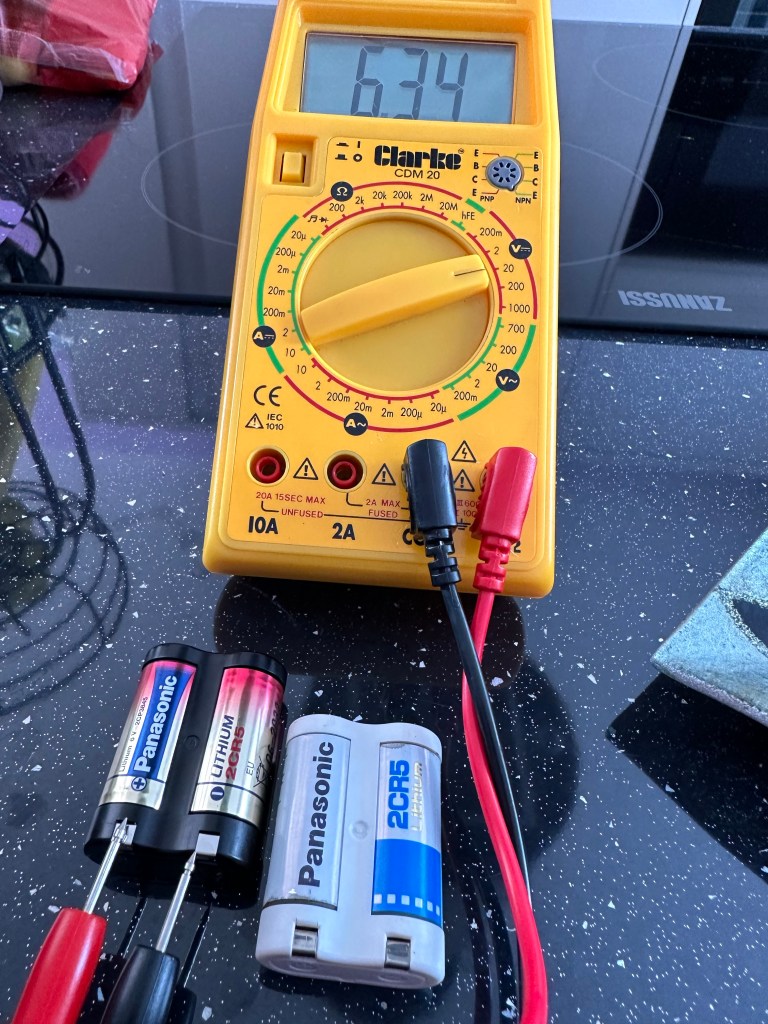
Battery deadBattery very much aliveTesting old and new batteries
I purchased a new 2CR5 6v Lithium battery from a well known supplier named after a rain forest. Motor buzzed, but no display or any other operation was available, first thought was to test the battery was not a dud, using the multimeter I proved this was not the case compared to the old battery.
So. What to do?
General census of opinion is to ditch this as mass produced tat and get another one on eBay for a couple of quid, the electronics are a known issue for many models of cameras from the 80s.
However, this site is not about just dump and run, I’m going to dig in and look to see if I can remedy the problem. I like a good electronic problem and hopefully I can sort this. If not, I’ll recycle the parts I’m definitely not throwing it away.
It’s a learning opportunity, and knowledge is king.
Thanks for passing by. You know it’s always appreciated 👍
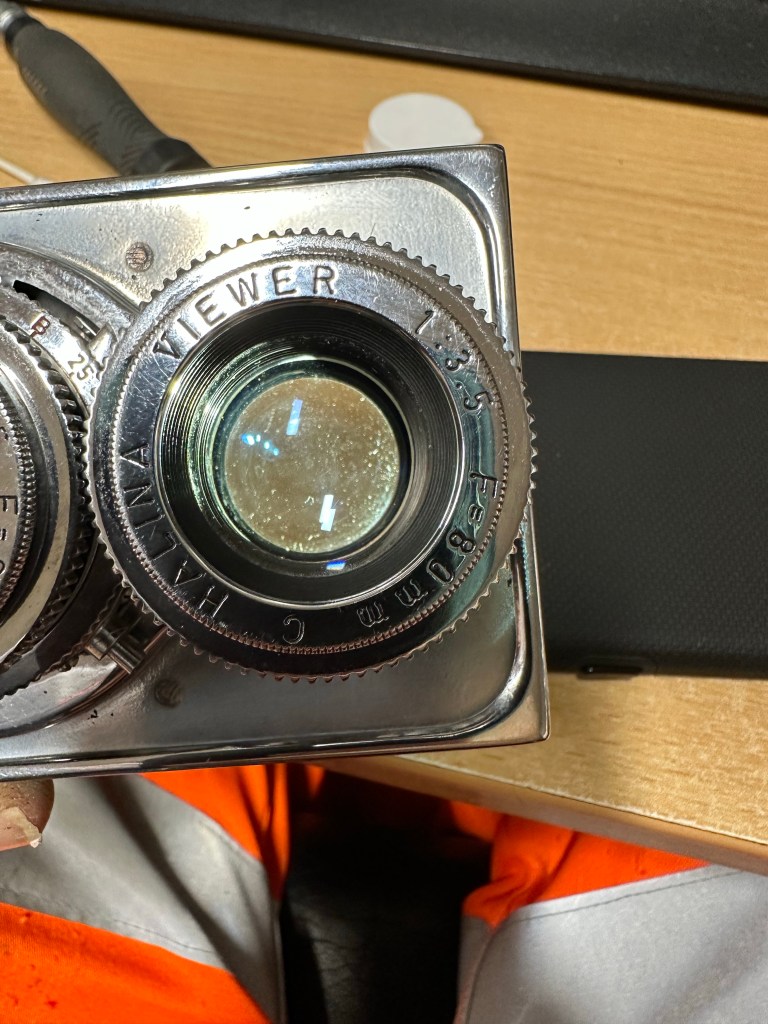
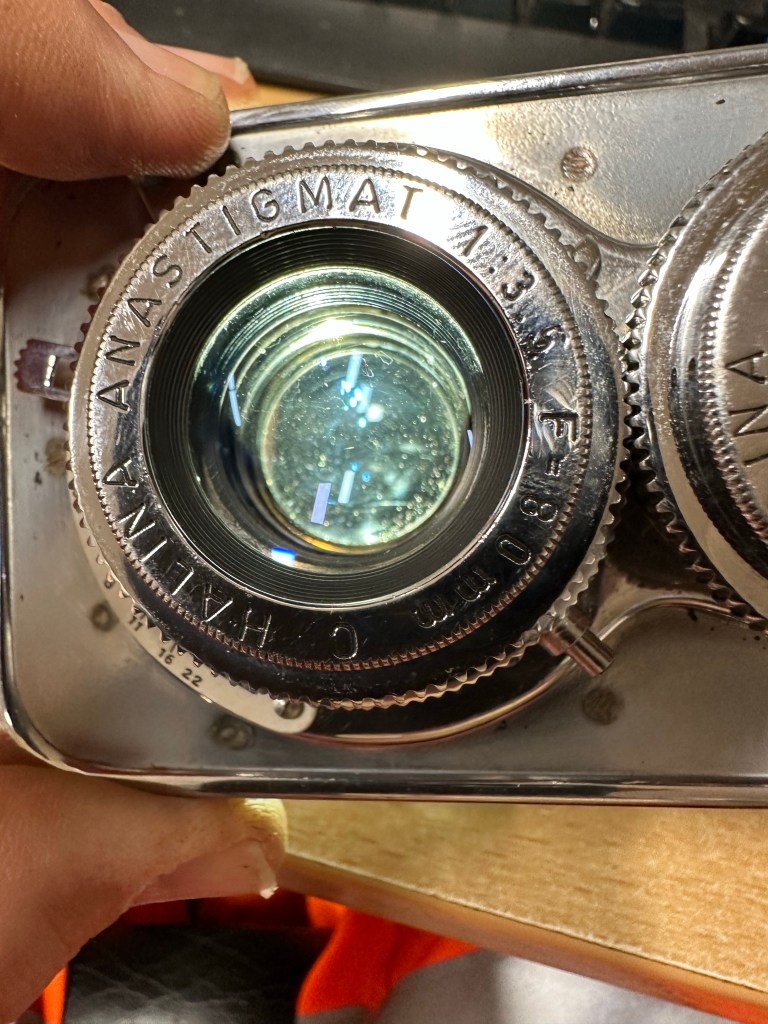
So tonight I have brought my smallest set of screwdrivers and other tools in to work to continue work on the old Halina project I have been immersed in. Tonight between jobs I intend to deal with the fungus issue on the taking lens.
Fungus removed with peroxide Halina A1 Reflex viewing lens
I have previously removed the camera faceplate and the two lenses are connected to this. On the rear of the faceplate is a brass connector that when removed allows you into the back of the taking lens into the shutter curtain and aperture curtain.
This allowed me to dry clean as such both curtains and I used a little graphite dust (tiny tiny proportion) to lubricate both curtains and finally after many years allowing the shutter to work as it should. A good blow with some compressed air dealt with any remaining dust.
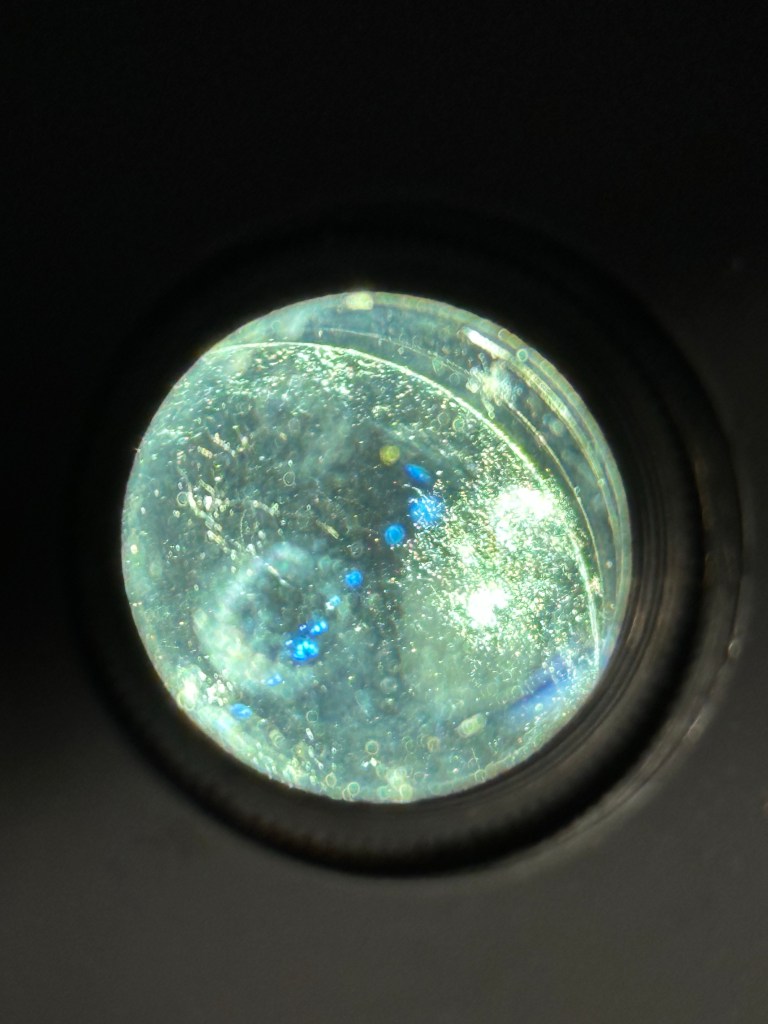
With the setting on “B” I was able to access the lens element in front of the curtain, this was cleaned with a 50/50 mix of peroxide and distilled water to remove the offending fungus. I allowed this to dry and lightly polished the element with a cotton bud when dried. Again compressed air was used to finish.
Halina A1 Reflex Lens fungusHalina A1 Reflex taking lens minus fungusBefore and after
I repeated the above for the other two elements of the lens (this is a three element lens) and then did the same with the viewing lens.
When reassembling it’s important to ensure the elements are fully dry. The elements were all wiped over before reassembly and given a last blow prior to being resealed and checked with a bright light.
Fungus removed from Halina A1 Reflex
This was the job I was most concerned with but thankfully it went well and I am pleased with the outcome. The fungus issue has now been eradicated and hopefully it will stay away. Just a couple of little jobs to do now prior to reassembly of the camera and we can then put the new leatherette on the body.
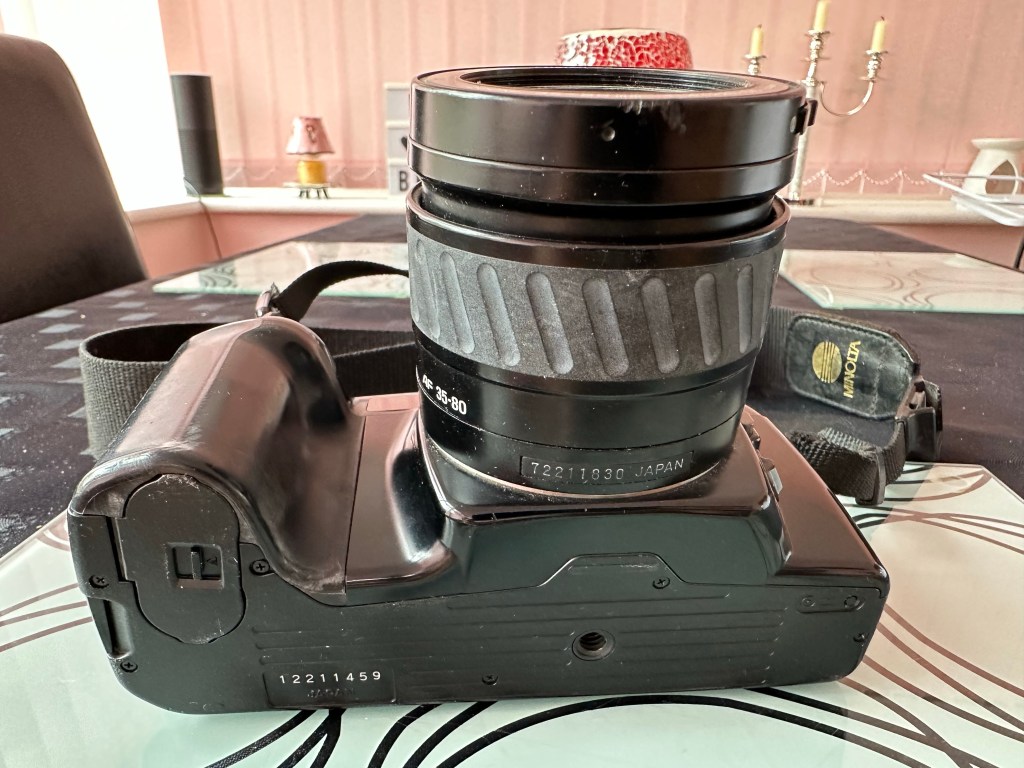
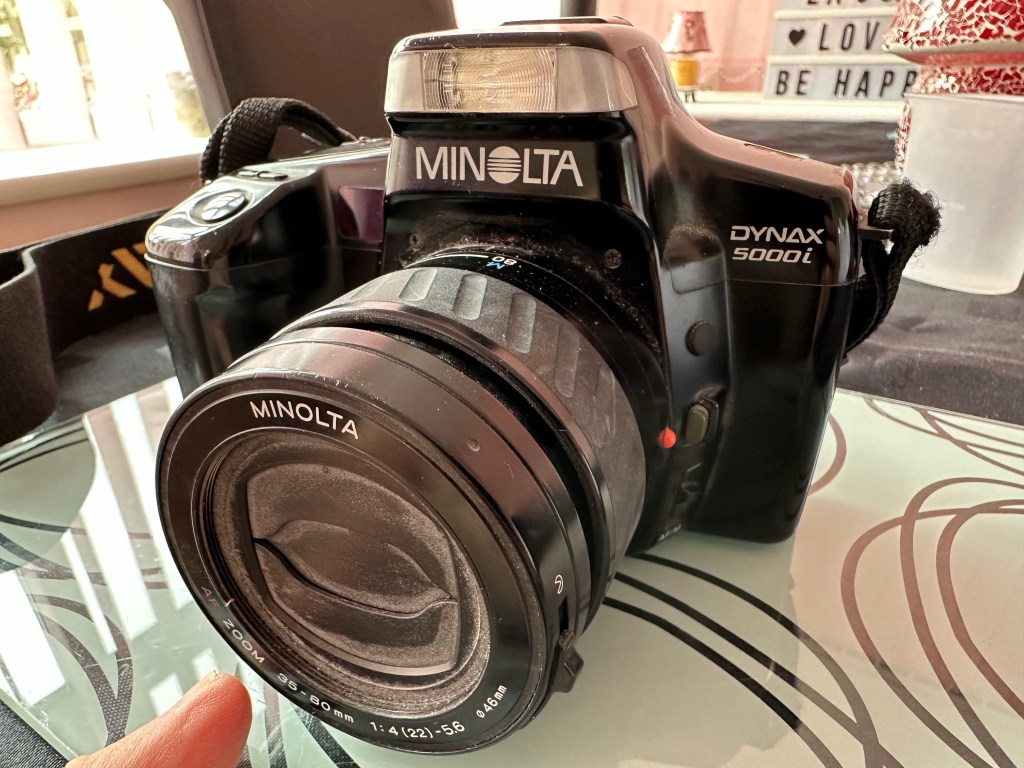
Found this on my doorstep when I arrived home from work today. After making some enquiries it transpires that a family member donated it to me as they haven’t used it in about 20 yrs. Knowing that I mess with cameras at the cheaper end of the spectrum he thought that I may find a use for it. I have gratefully accepted this gift.
After speaking with the donor he doesn’t remember there being any issues with it, he wasn’t aware there is already a film in it so I will process this for him and see what if anything comes of it.
This camera was circa 1989 and was a strange beast in that the programmable modes we take for granted on SLR cameras today, had to be purchased as individual plug in cards for this camera. I guess was kind of like VHS versus Betamax back in the day and as things developed in the market I guess Minolta put this idea back to bed as a non starter.
This camera looks in great condition apart from wear and tear dust/dirt and initial checks of the lens show no evidence of fungal damage, the camera does not have that musty smell associated with age so I can only presume it has been stored correctly.
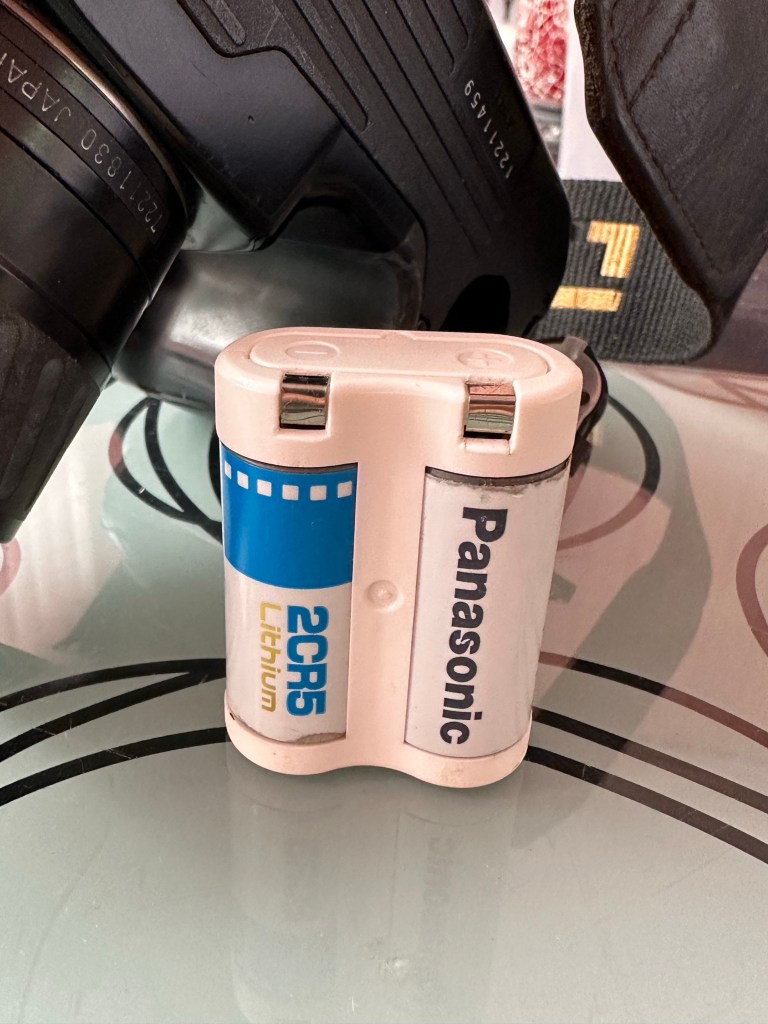
These cameras also work off a 6v lithium battery the 2CR5. Still available it retails for around £6-8 gbp. Again Minolta could have used a rechargeable but this was probably just at the beginning of that technology becoming widely available.
2CR5 6v Lithium battery
Information regarding this camera can be found here Minolta Dynax 5000i courtesy of Camerawiki.org
So, apparently these cameras are popular in the Lomography world. I’m going to give it a good clean/overhaul get a new battery and run a film through it to test. Not a lot to do so hopefully I’ll fit it in somewhere along the line soon. Keep checking back to see how things progress.






















You must be logged in to post a comment.