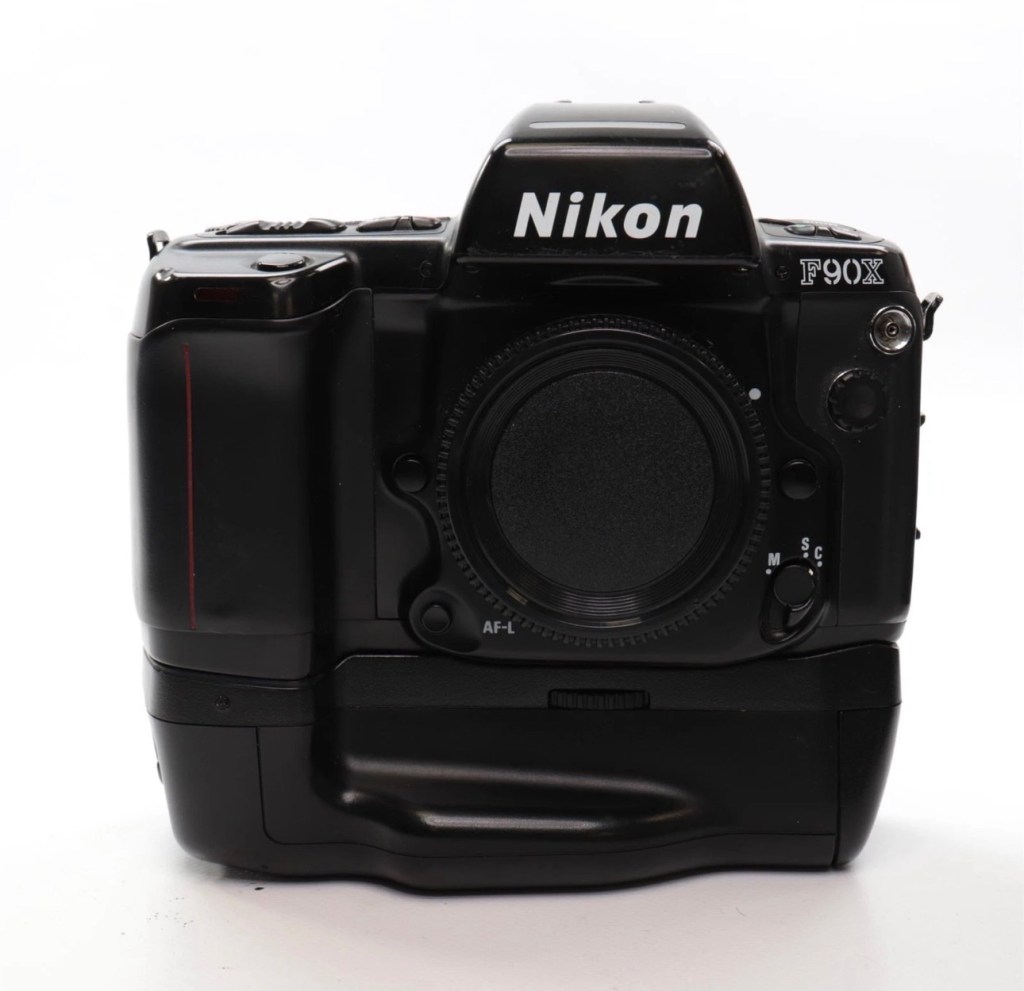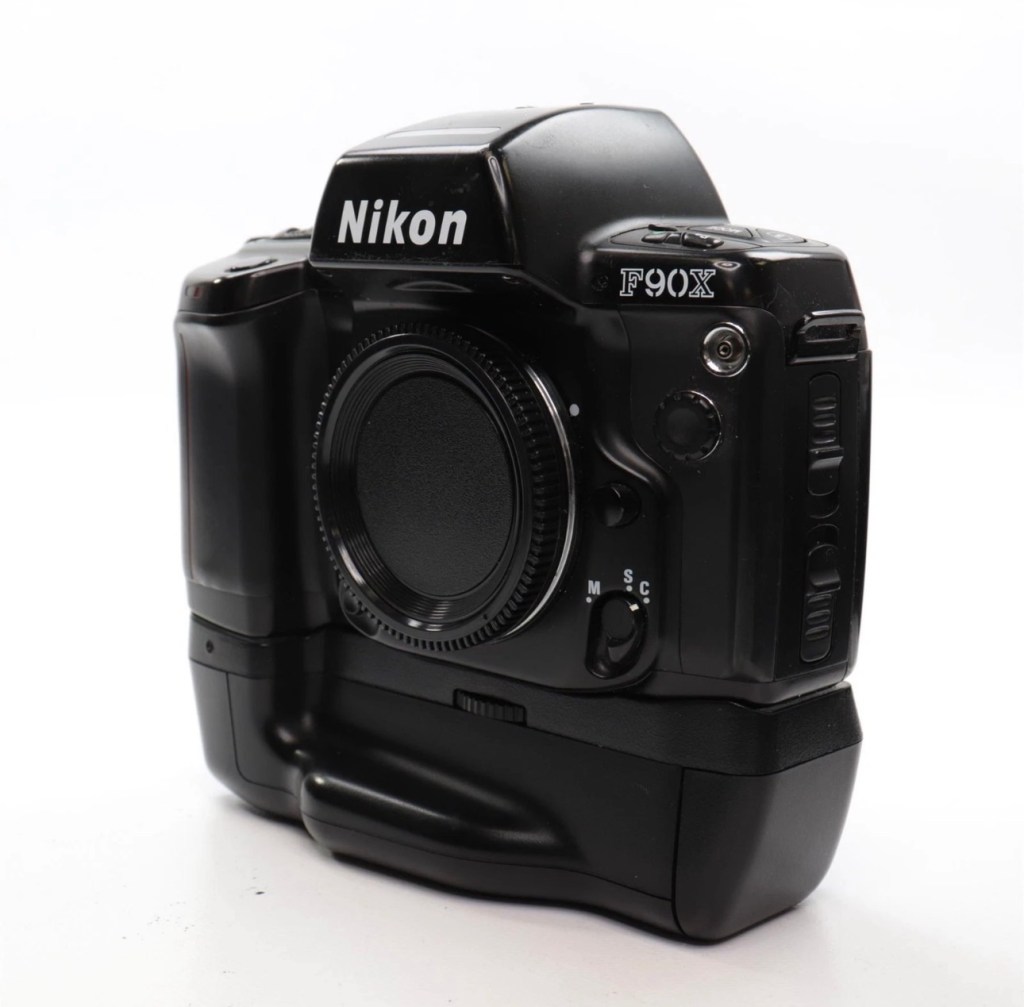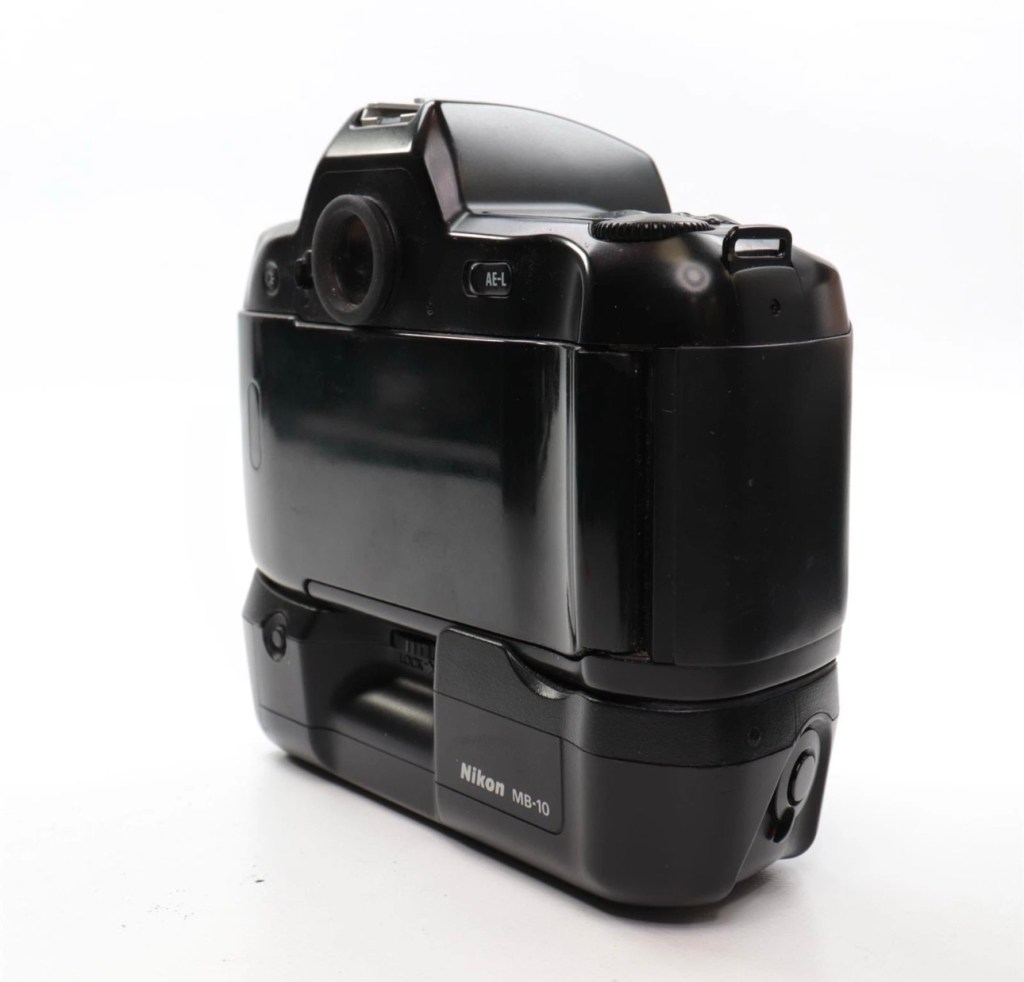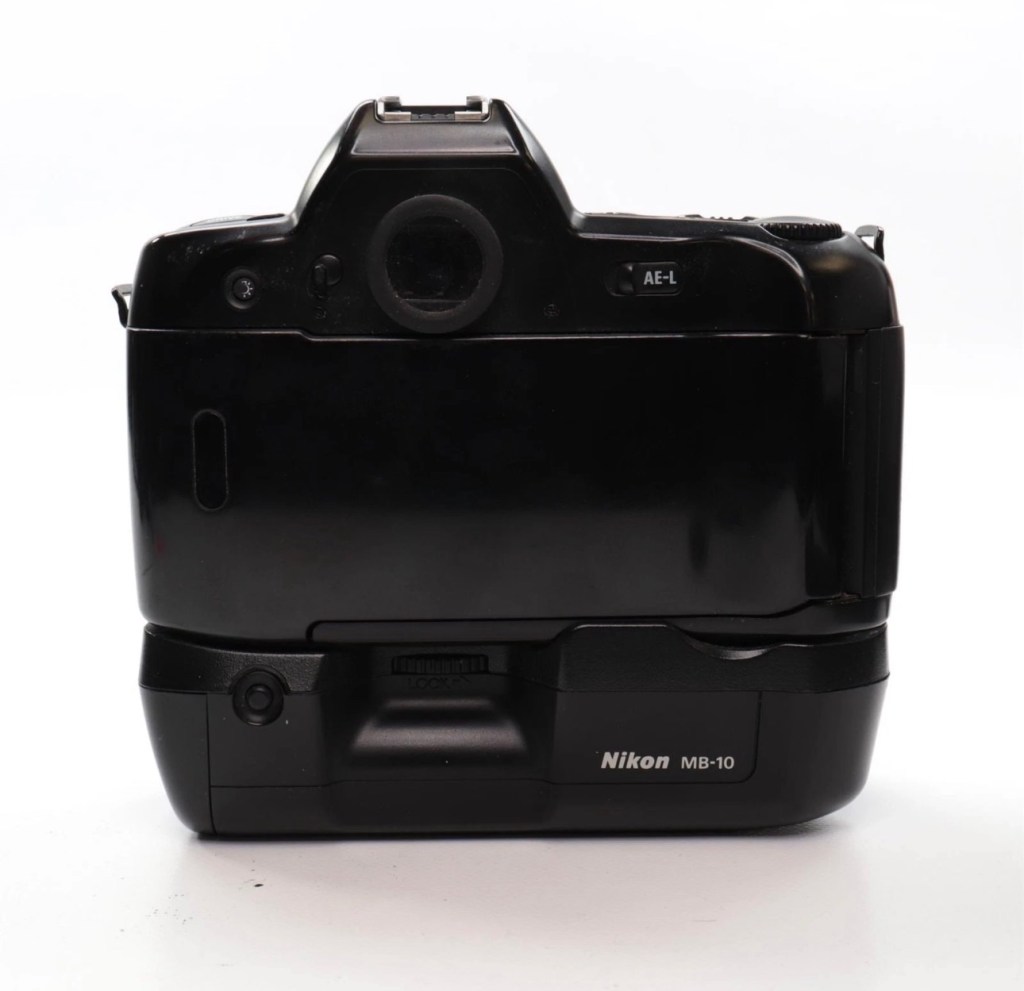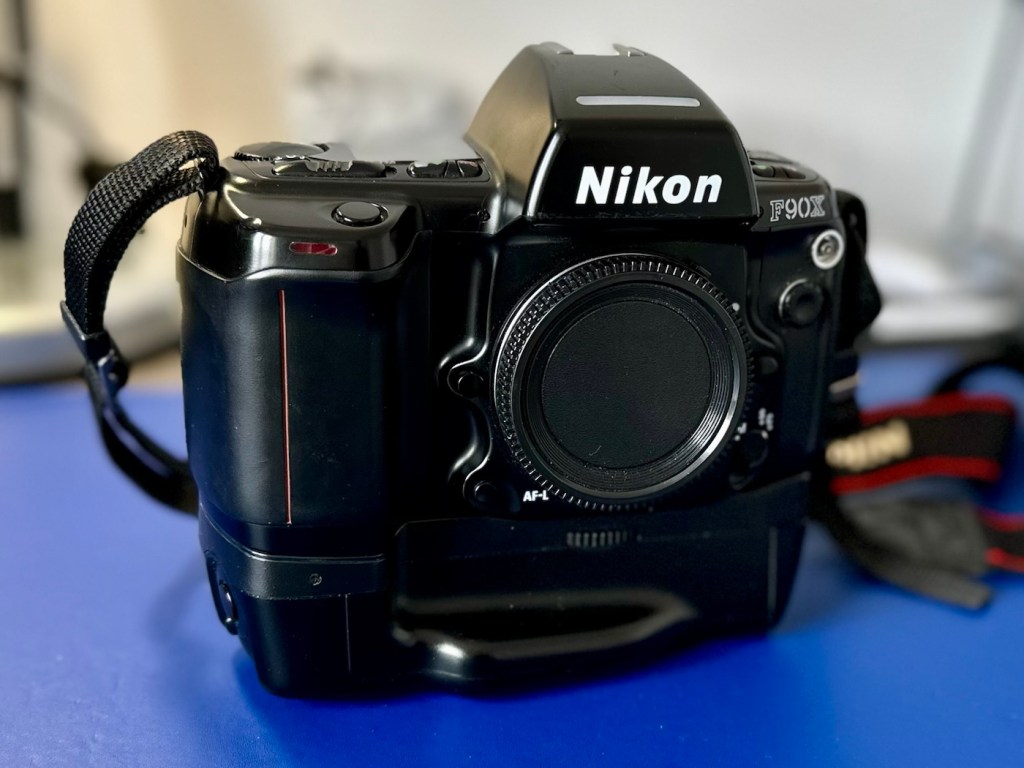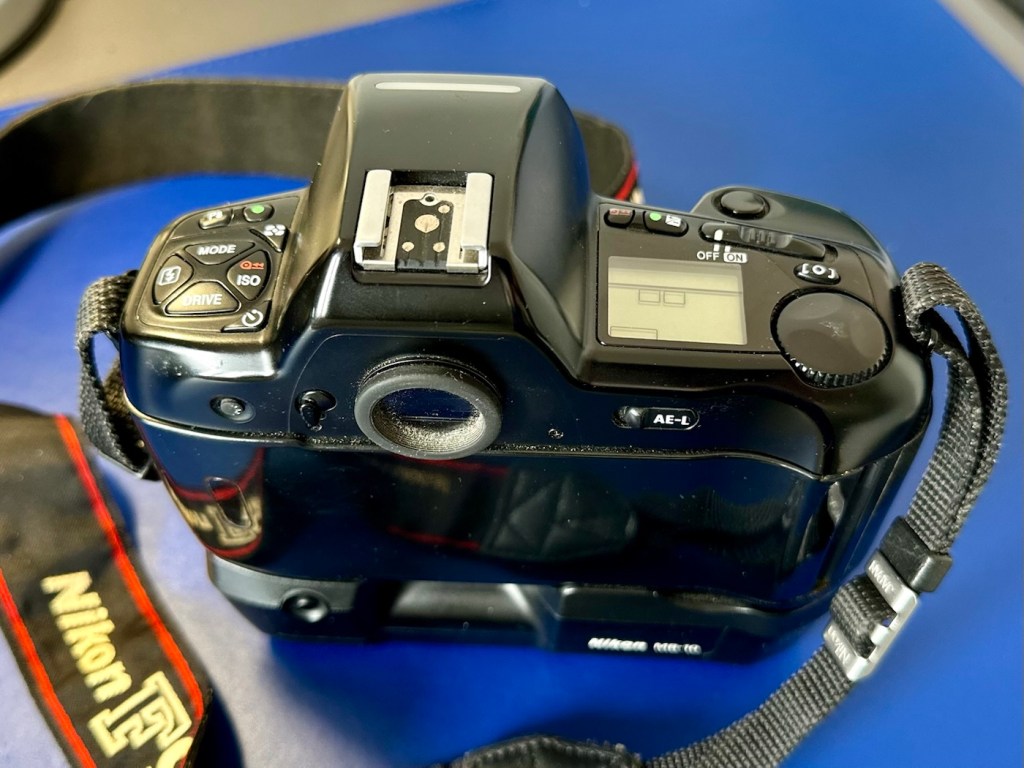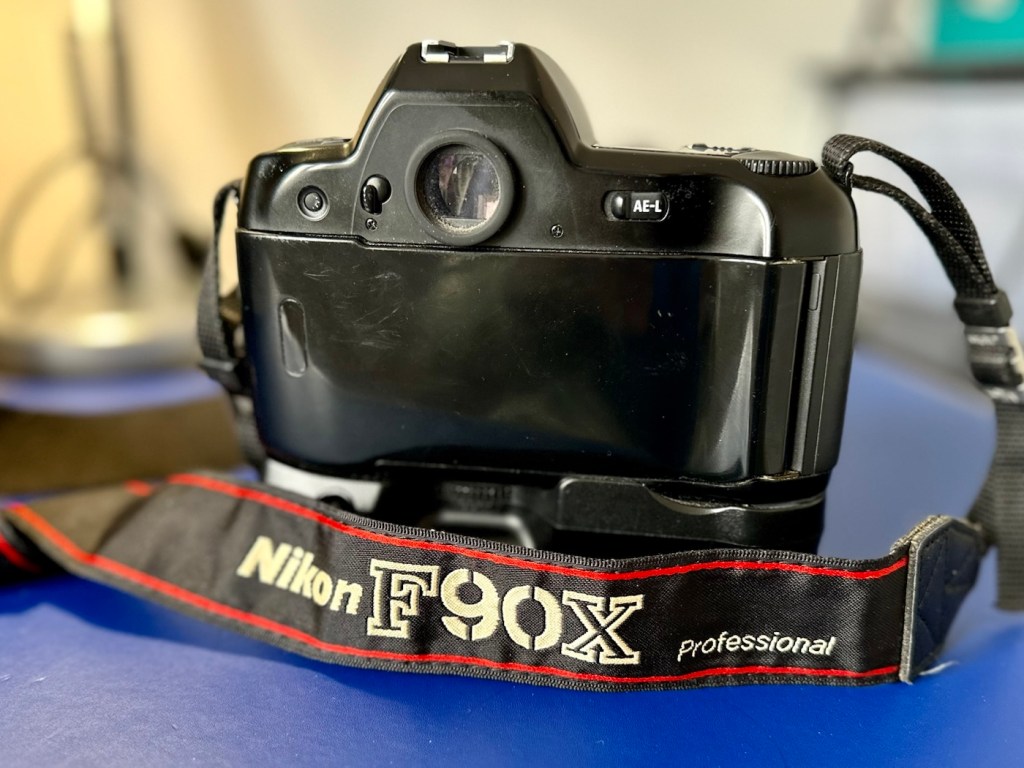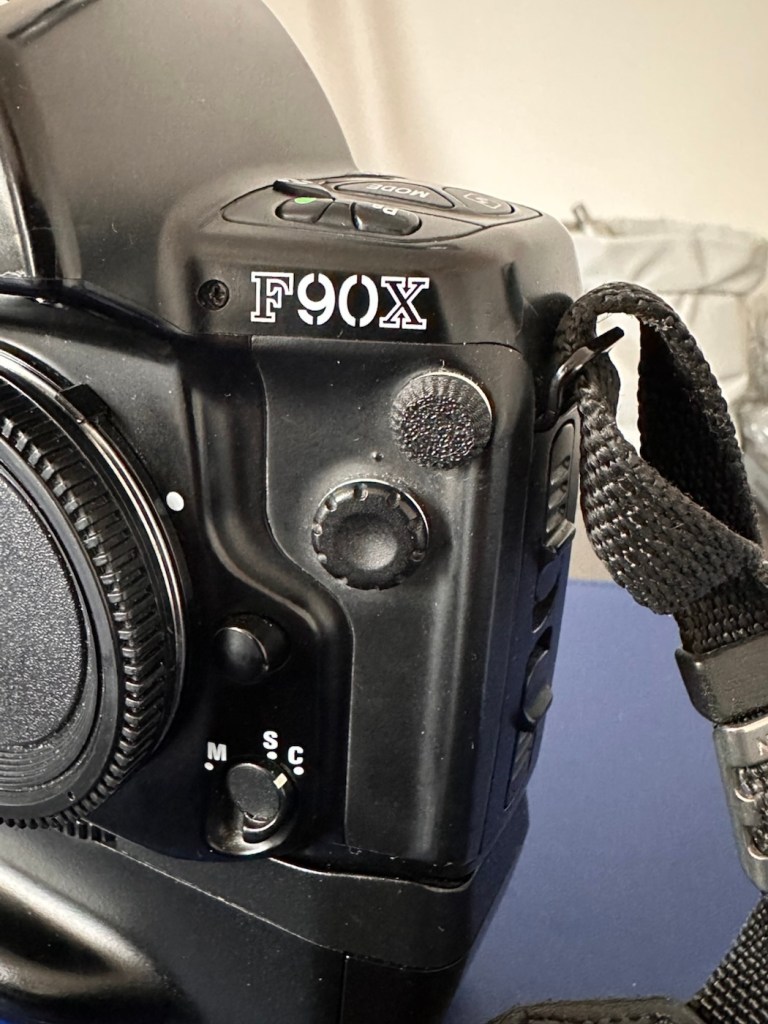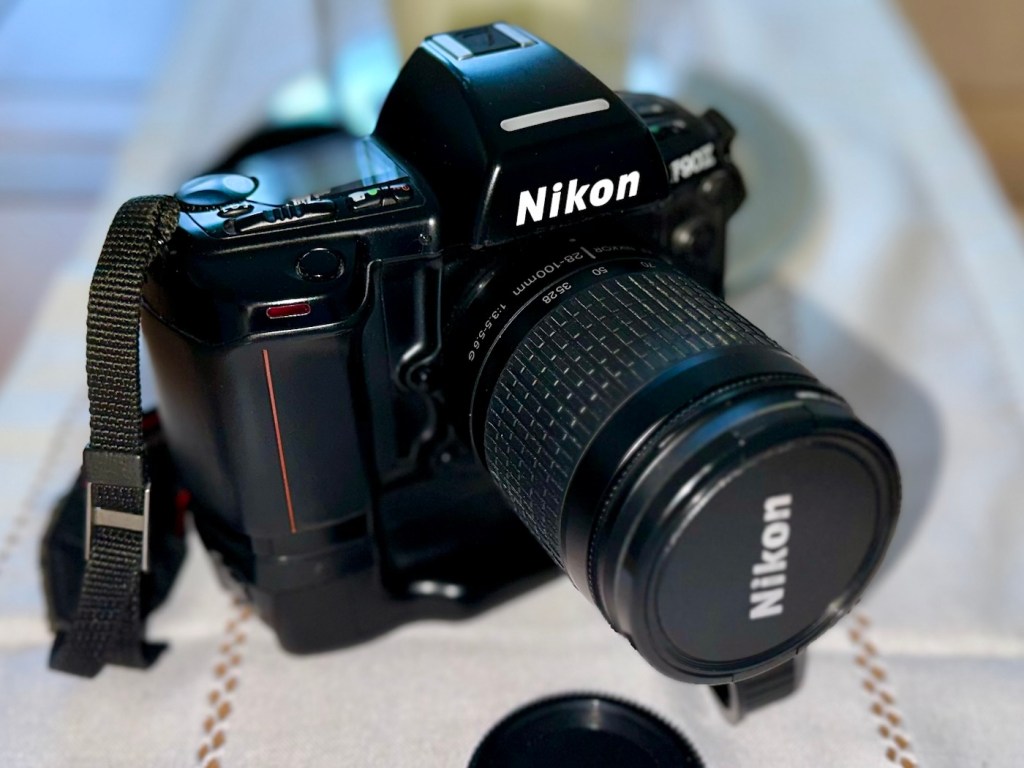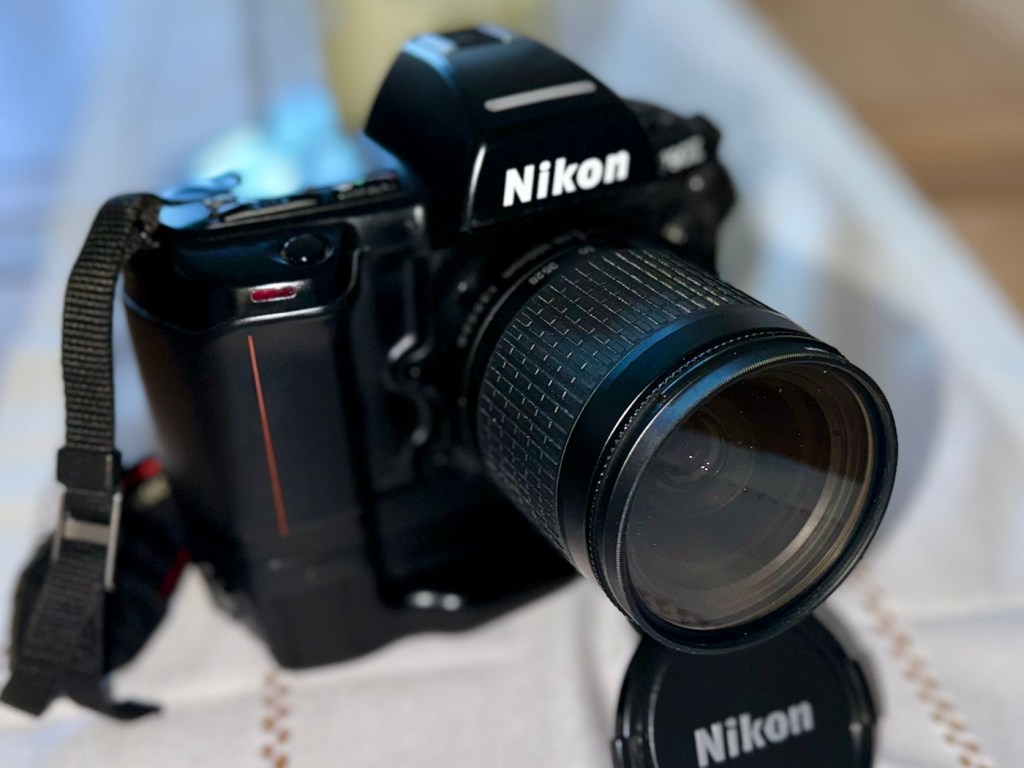

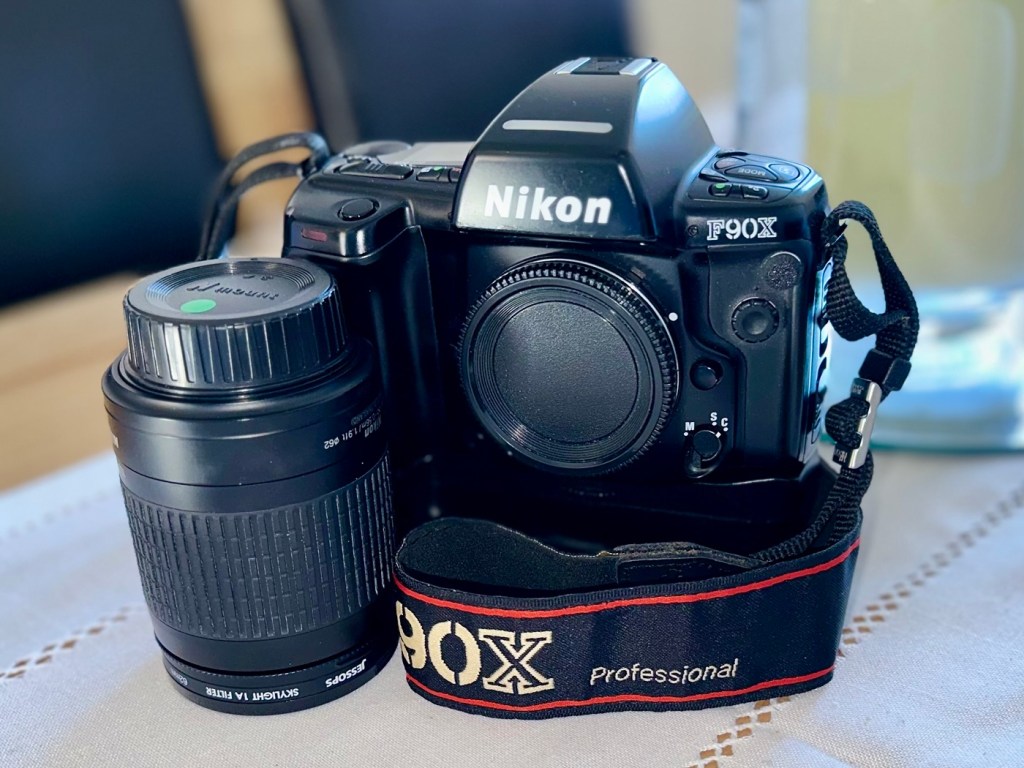
Nikon F90x 35mm SLR Film Camera and MB10 battery grip

This camera influenced the partnership between NIkon and Kodak to produce one of the most expensive prosumer cameras of the 1990s. However this one is a lot less expensive but with some issues. Let’s have a look at it:

What the listing stated:

THIS UNIT IS FAULTY
SUTIBLE FOR SPARES / REPAIRS ONLY
SOLD AS SEEN

FAULTS INCLUDE BUT ARE NOT LIMITED TO,
MIRROR STICKS


COMES WITH EVERYTHING SEEN IN IMAGES

NO WARRANTY PROVIDED

EBay

Just couldn’t let this one go. Whilst browsing the sites for my next challenge last evening, this little bundle of joy just popped from one of my preferred sellers for a quick sale, it was about 11pm and was just posted at a sale price of £30:00GBP, however with a voucher I had, I was able to secure it at £27:00GBP. Considering this is a good quality camera of the mid 90s it also comes with the added bonus of an MB10 battery grip, superb value in my eyes. A lot of camera for a very low price.

Here’s a little bit about this camera:

The Nikon F90x is a 35mm autofocus SLR using Nikon’s F lens mount. It was targeted toward the advanced amateur or prosumer; its feature set is comparable to that of Nikon’s current D100/200/300 SLRs. The name N90s was used for marketing in the United States; everywhere else, the camera was called the F90x. This camera was also used as the base for the Kodak DCS 400 series of digital SLRs.

The N90s/F90x was introduced in 1994 and discontinued in 2001. The camera’s predecessor, the N90/F90, was introduced in 1992 and discontinued in 1994. The successor to the N90s, the F100, was introduced in 1998.

Features & Specifications

Nikon N90s global naming N90S adapted into Kodak’s DCS460, a 6 Mp Digital SLR

  • Bright viewfinder with 92% coverage, .78x magnification
    • Current settings are displayed at the bottom of the finder; information area is automatically backlit in dark conditions
  • Top LCD displays current settings and facilitates changes
    • Backlit for use in dark conditions; the backlight switch is near the left die of the viewfinder
  • Cross-Type Wide Area AF System
    • Choice of wide-area or spot AF
    • One CAM246 AF sensor
    • Continuous AF mode with release priority in addition to standard AF with focus priority
  • 4.1FPS capable with continuous AF; 4.3FPS with standard AF
    • 2FPS mode available
  • 3D Matrix Meter when used with a D or G-type Nikkor lens
    • Center-weighted and spot metering are also available and usuable with AI lenses
  • 3D Multi-Sensor Balanced Fill-Flash capability (with Nikon Speedlights SB-800/80DX/28DX/28/27)
  • Seven Vari-Programs: Portrait, Portrait with Red-Eye Reduction, Hyperfocal, Landscape, Silhouette, Sports, Closeup
    • Explained in detail in the instruction manual
  • Four exposure modes: Program, Shutter-priority, Aperture-priority, Manual
  • Shutter speeds of 1/8000 – 30 seconds + Bulb
  • Flash sync speed of 1/250
    • Flash sync modes: normal, slow, rear, red-eye, FP high-speed
  • Self-timer: 2-30 seconds
  • ISO/ASA Range 6-6400
  • DX-enabled (automatically reads speed information from film canisters)
  • Eyepiece shutter stops excess light from entering the viewfinder and interfering with metering
  • Overall strong build throughout (comparable to Nikon’s current D100/200/300SLRs)
    • Stainless steel lens mount
  • Requires 4 AA Batteries
  • Extensive system compatibility & accessories; see below

Accessories & Compatibility

F90X with MB-10 grip

The N90s/F90x is compatible with nearly all Nikkor F-mount lenses as well as all Nikon SB series speedlights.

Additional, camera-specific accessories available are:

  • MF-26 Multi-Control Back
    • Long Exposures to 100 hours
    • Freeze Focus: triggers the shutter as soon as a subject comes into focus
    • Custom Reset: customizes which settings are affected by the green-button reset
    • Date Imprinting: can also imprint shutter speed and aperture information
    • World Clock
    • Flash exposure compensation
    • Interval timer: up to 100 hours between pictures for 99 frames
    • Limit frame count in continuous shooting mode
    • Multiple exposures
    • Customize which settings are affected by AE-L and AF-L (auto-exposure lock and autofocus lock)
  • MF-25 Data Imprint Back
  • MB-10 Vertical Grip
    • Takes 4AA batteries or, with the MS-11 battery holder, two CR123 lithium batteries
  • Interchangeable focusing screens
    • E screen provides grid lines in the viewfinder

with 28-80mm, 20mm and 80-200mm

Lens Compatibility

  • All functions, including autofocus, work properly with Nikkor AF, AF-I, AF-D, and AF-S lenses.
  • AI and AI-S lenses are usable, with the loss of these functions:
    • Autofocus
    • Shutter-priority exposure mode
    • Programmed exposure mode
    • Vari-program exposure modes
    • 3D Matrix metering (though center-weighted and spot metering remain functional)
  • The camera does not use VR with any lens.
  • G-type lenses (lenses without aperture rings) can be used with the loss of some functionality: only the lens’ smallest aperture can be used in manual or aperture-priority exposure modes.

Camera-wiki.org

Now my experience with this seller is that unless it is absolutely perfect he will not even entertain it. He doesn’t take the time to check and fettle, if it isn’t working from the start he will just get rid of. This attitude of his has meant I’ve had some right bargains in the past with very little wrong with them. I refer you to a recent purchase Canon EOS D60 that had very little wrong with it, but was also a lot of camera for a very low price.

Now I’ve always wanted a Kodak DCS 400 series camera, especially a 460 version as it takes me back to my days when I was working at Kodak in Harrow, I remember when the DCS 400 series came out and back then they were introducing such a new technology that they were commanding a huge price of around $35,000 at the time. These cameras were basically digital versions of the film camera I have purchased above. So whilst I’m on the lookout for a reasonably priced DCS 400 series camera, I guess I will just have to do with the camera that started it all off. And for £27:00GBP I’m not complaining.

I think I may know why this mirror is sticking, and if it is what I believe it to be it could be quite an easy fix. (Famous last words)

So let’s stop all the reminiscing, and wish list writing and get on with this camera’s assessment.

Assessment:

It’s arrived, and as expected it’s a beautiful looking item in an extremely good condition.
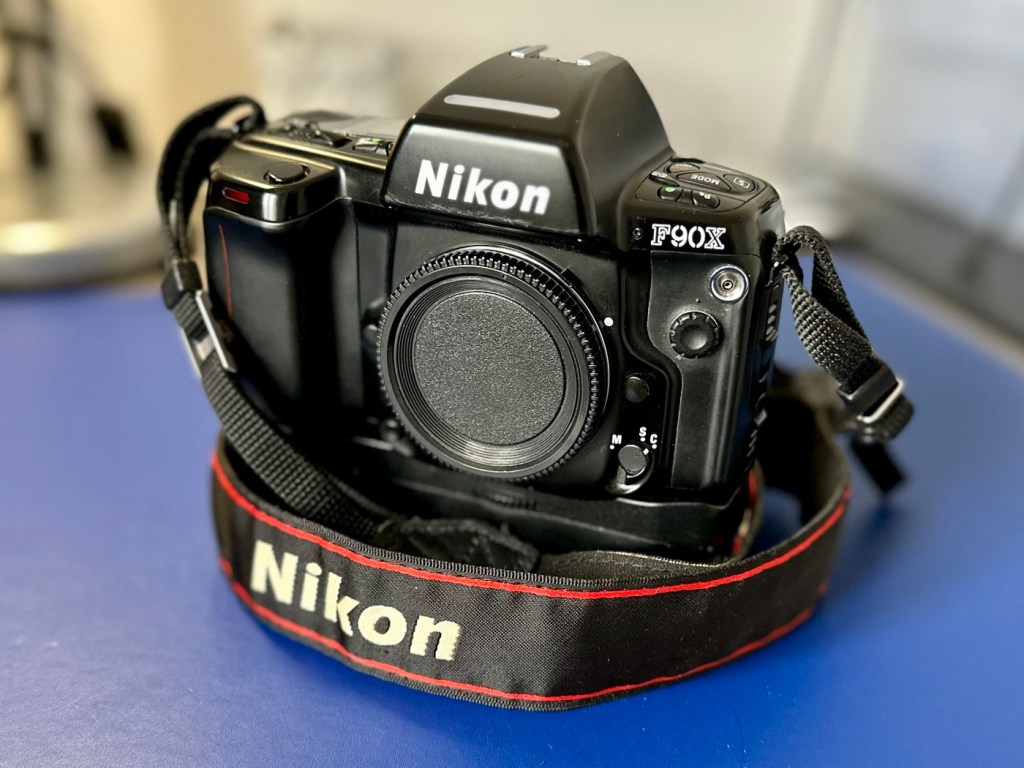
The mirror appears to be in a semi raised position, the battery pack is clean with no signs of contamination and battery leakage, so now seems a good time to put in four AA batteries and slide the battery pack into place and secure it.
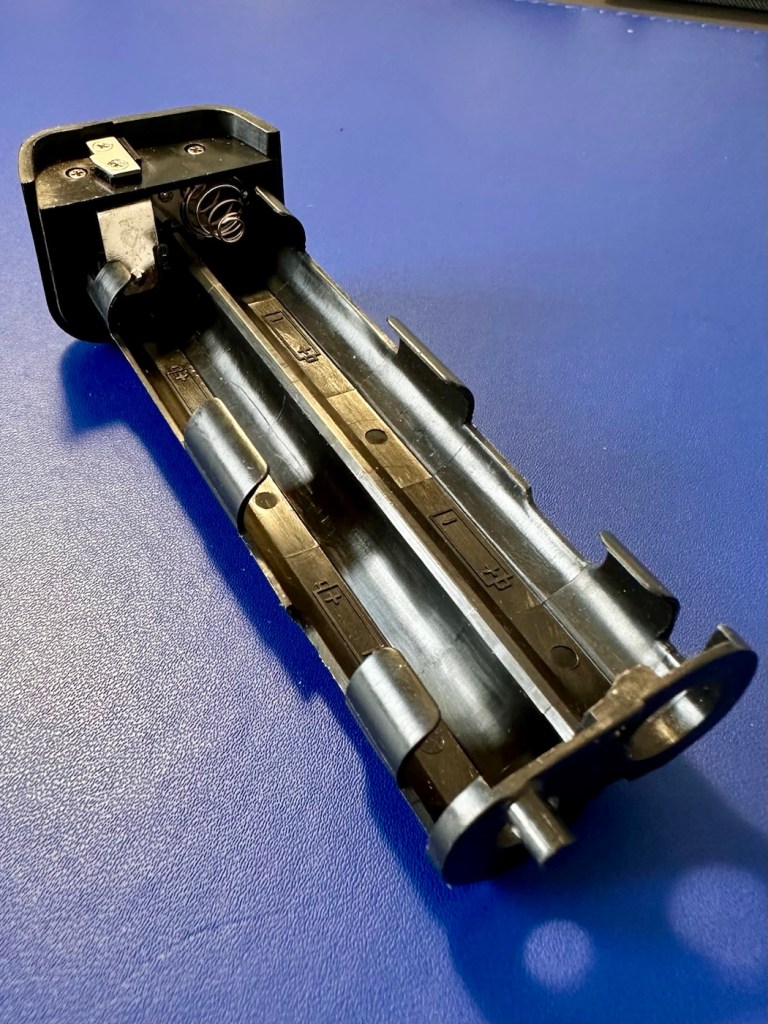
Battery pack clean and contamination free

Turn the battery on and the mirror clicks back into its closed position. And here I am, probably 40 or 50 actuations later and I can’t recreate the sellers fault of a sticking mirror. The mode the camera is set in, is indicating long exposure times, maybe this has given the impression of the mirror sticking when in fact it’s just doing what it should relative to the light it is seeing. I need to check in clear daylight, but I’m sure this is part of the issue….if there is one.
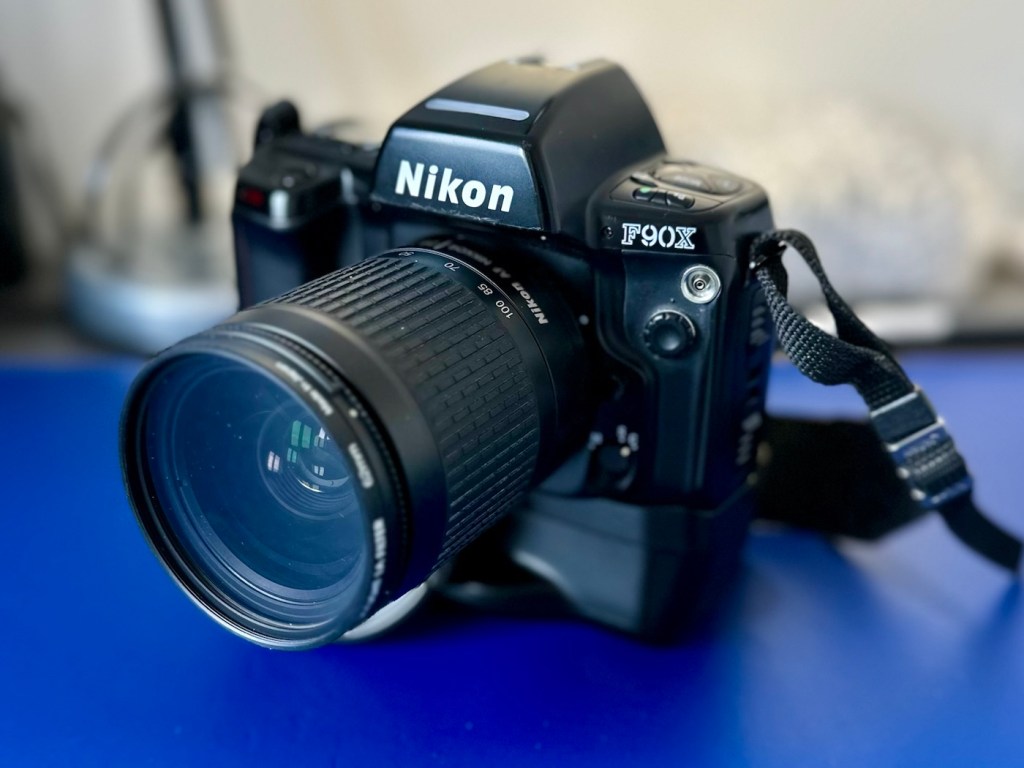
With a 28-100 lens added

I have a 28-100 lens mounted that I use for testing, the autofocus is working really well and all seems good.

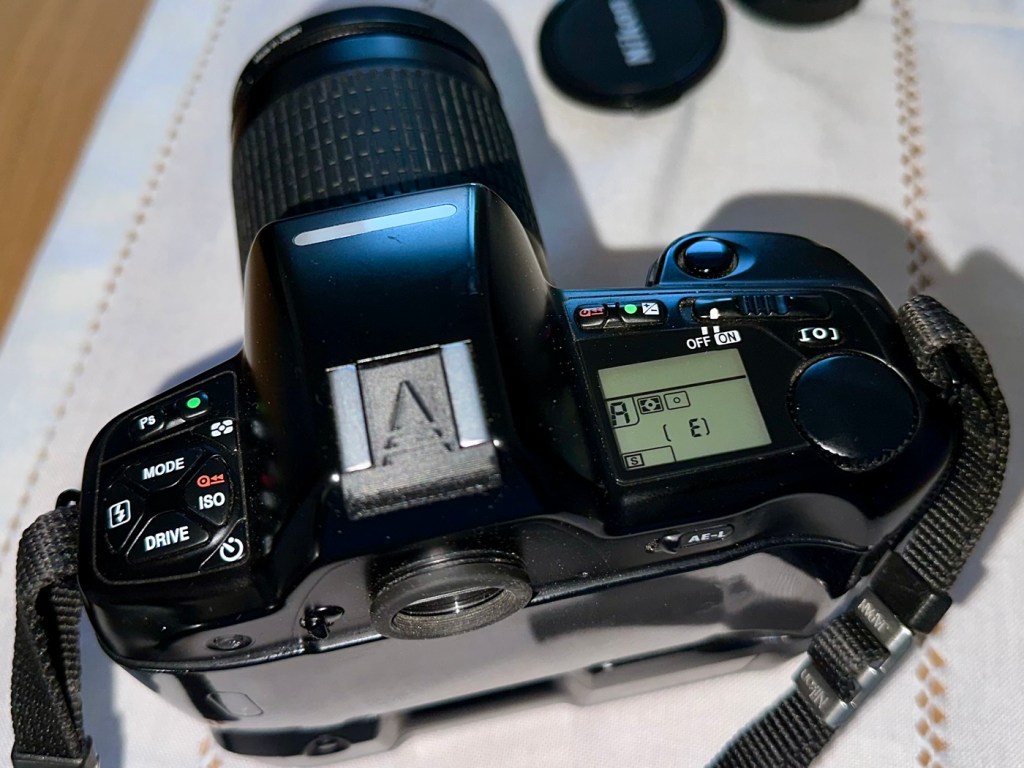
However, take a look at the picture below. It contains two photos of the LCD screen on the top of the camera. What do you see in the top photo that would make you think there is an error?
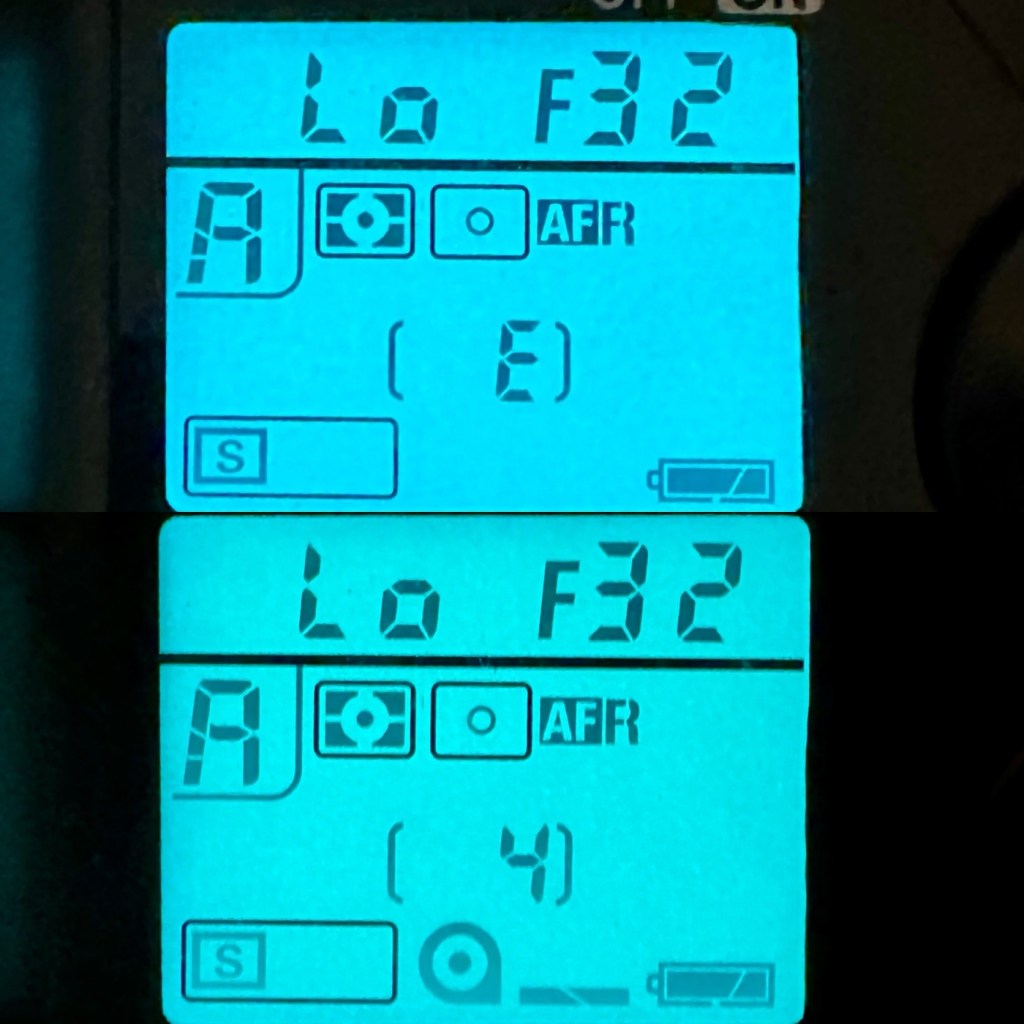
Is that an error?

For the un-informed, those who are not familiar with this camera or its operation, you will instantly see the letter “E” that is commonly known as an error indicator, in later models it is shown as “ERR”. I do believe the seller has possibly mistaken this for an error code, but if you refer to the bottom photo where I have now installed a test film, it becomes clear that the “E” on this camera represents the word “empty”. No film installed, a simple and easy to make mistake. The bottom picture indicates a film is installed and that 4 exposures have been taken.

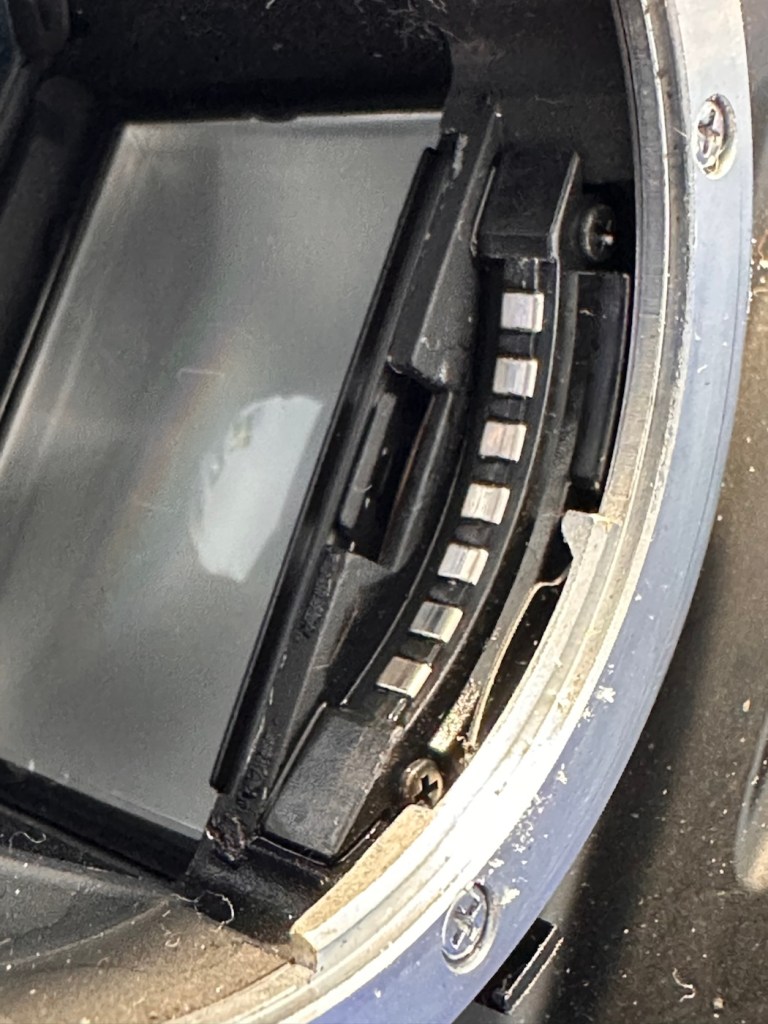
As these cameras have in the past been known to have a mirror sticking issue, I will replace the mirror bumper felt. It is well known that when the felt has deteriorated to such a level, the felt becomes sticky, and the mirror just sticks to the felt when it opens. It’s an age related issue that is easy to repair. Even though I have not experienced it with this unit, I will replace it as it will probably fail at some point. I will also check the light seals and replace them if I deem this necessary.

Repair:

The light seals do not need replacing. In fact there are only two small spots of light seals on this camera and both are in good condition.
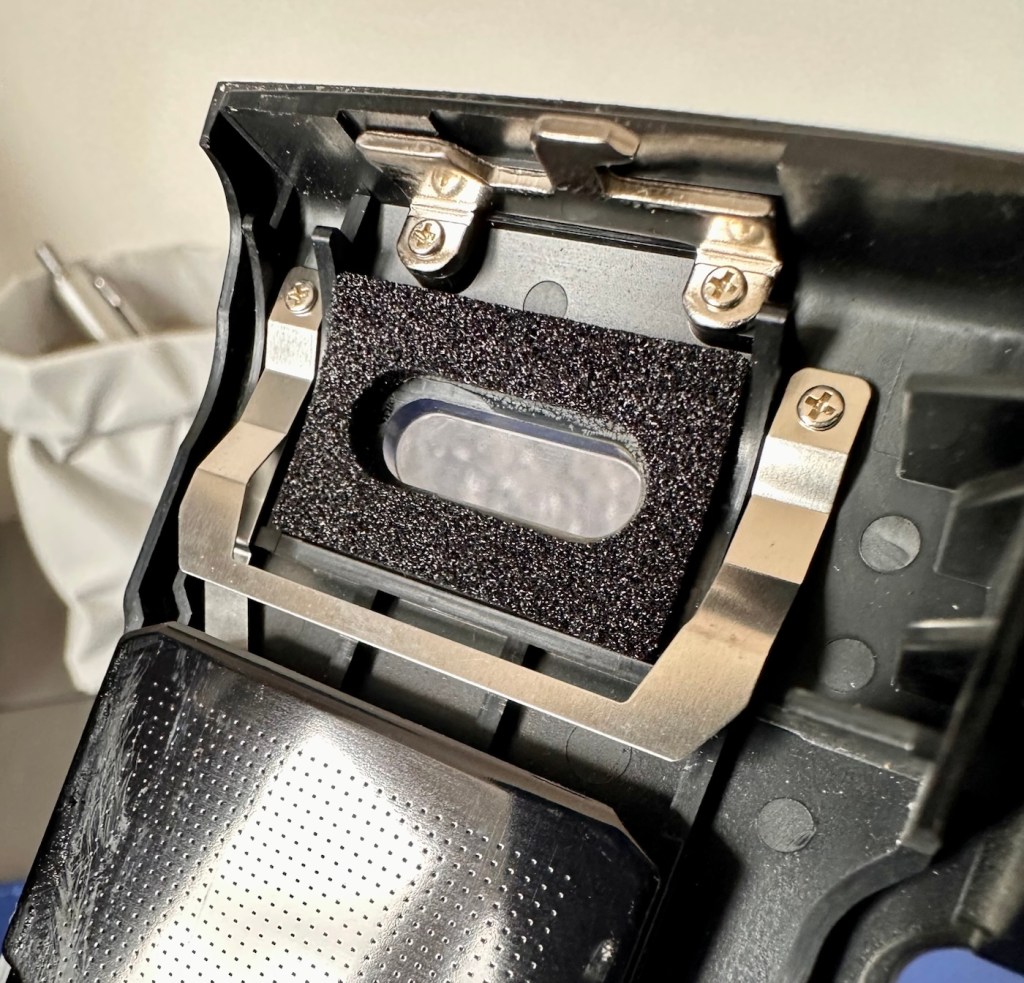
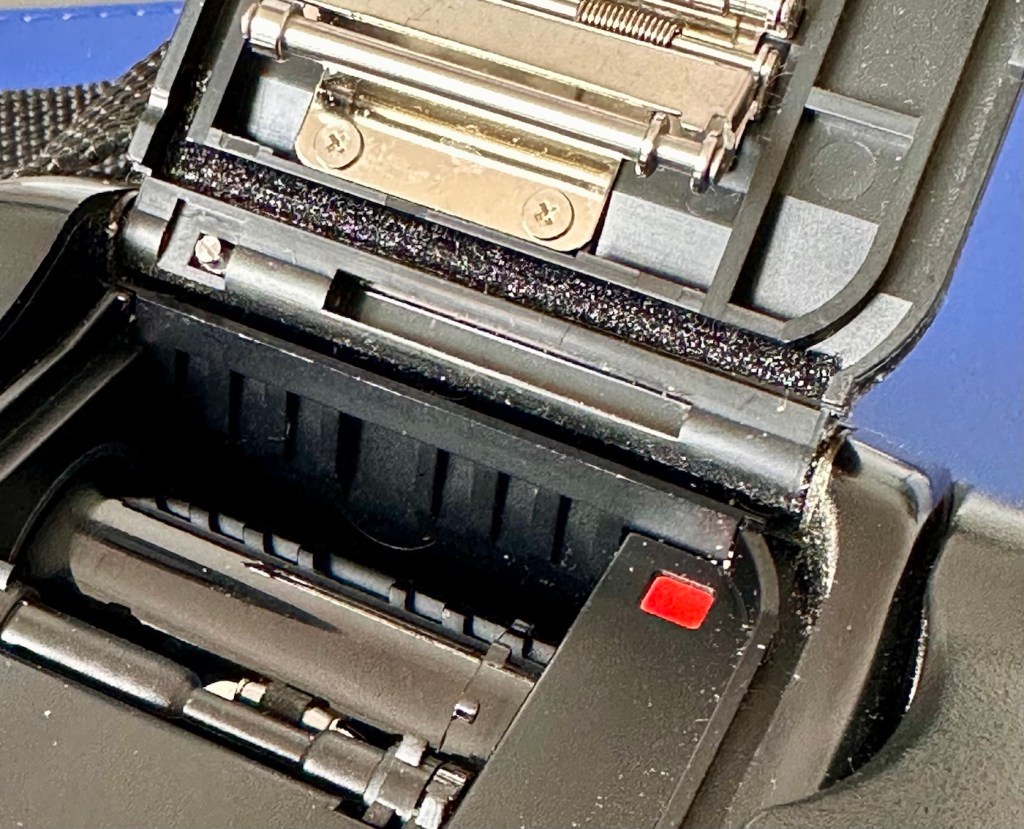
However the bumper seal was showing signs of degradation, so this has been replaced.
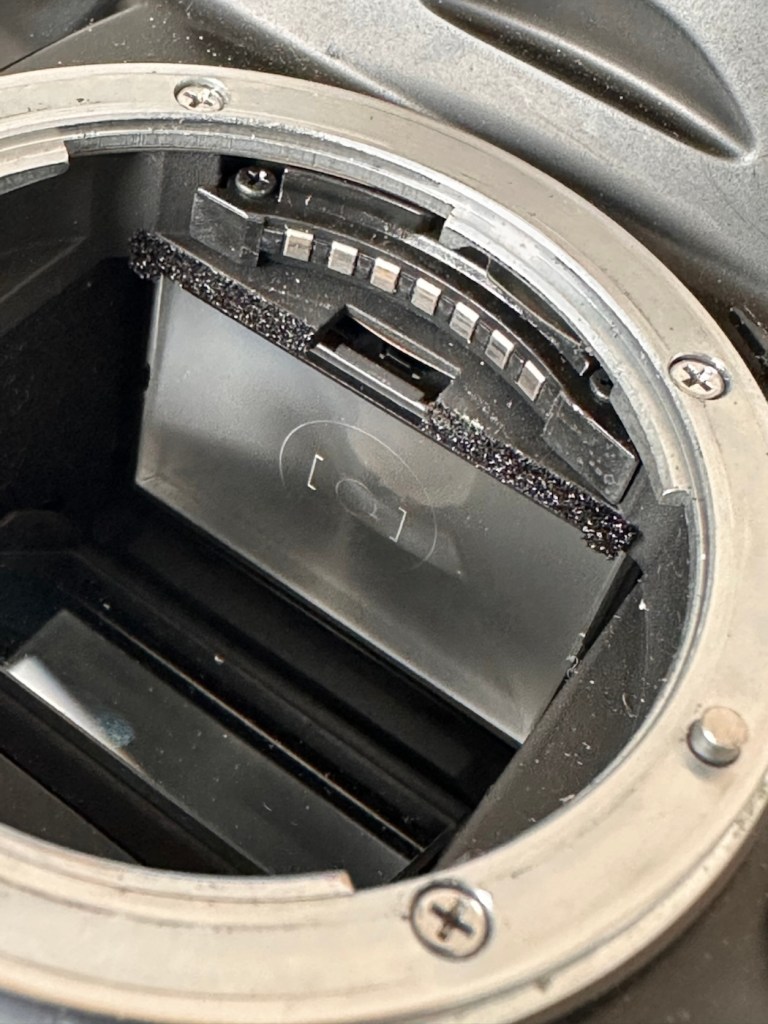
The old seal peels out but leaves a sticky residue behind, this has to be removed with some IPA prior to cutting new foam to size and reinstalling. Whilst I was in the lens are I also removed the focussing screen to clean it and remove the old ingrained dust and dirt.
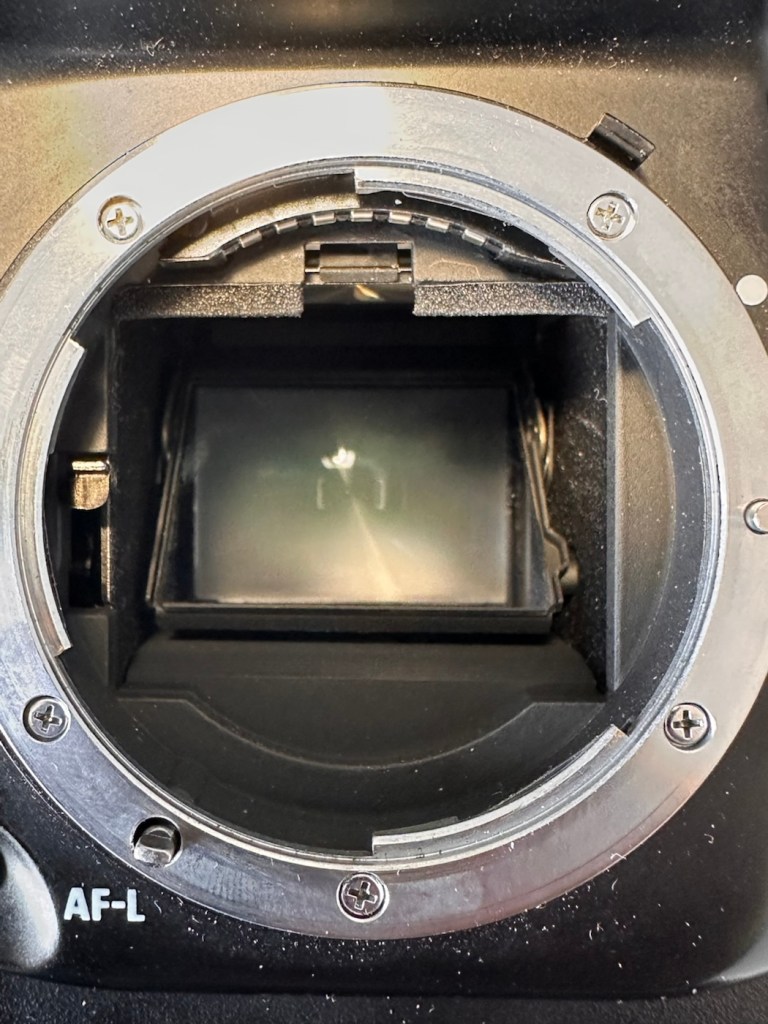
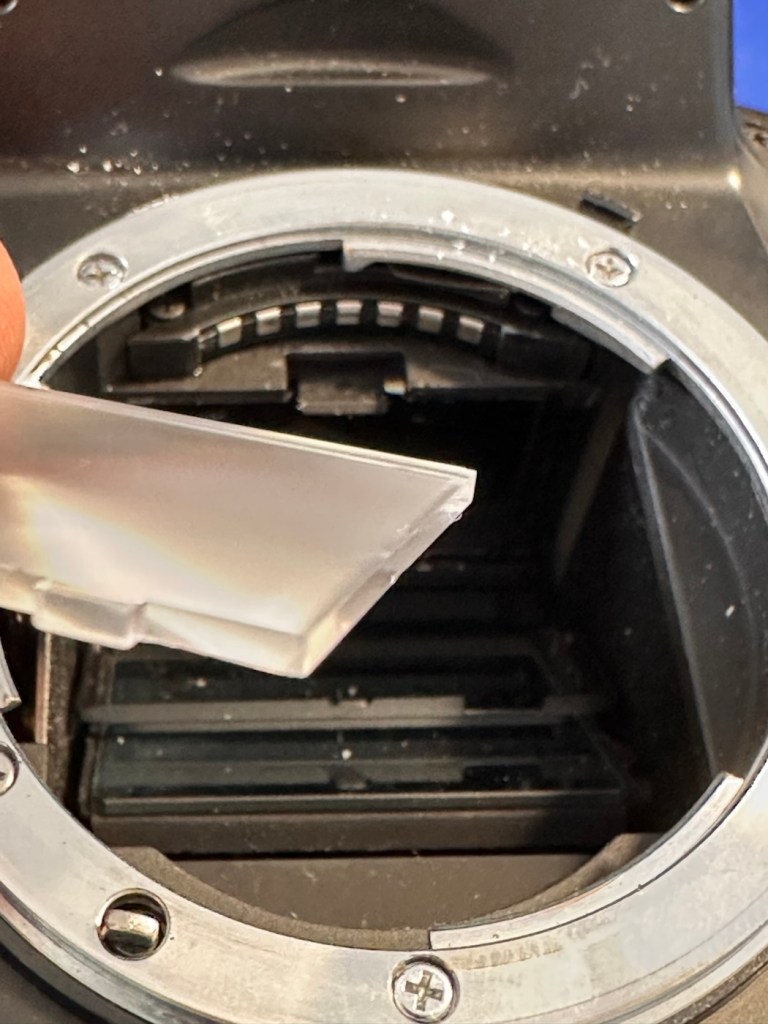
The area within the mirror area is now clean and dust free after I have used a small air blower to get the last of the debris out of the barrel area. Mirrors have been cleaned and polished and the body cap has been put back on the front of the camera to ensure no further dirt or contamination gets in there whilst I work on the outside.

I’ve printed a hot shoe flash cover purely for aesthetic reasons, I’ve also printed a sync cable cover, for similar reasons, but generally just to ensure any open and exposed areas are covered up. It does make it look a lot nicer.
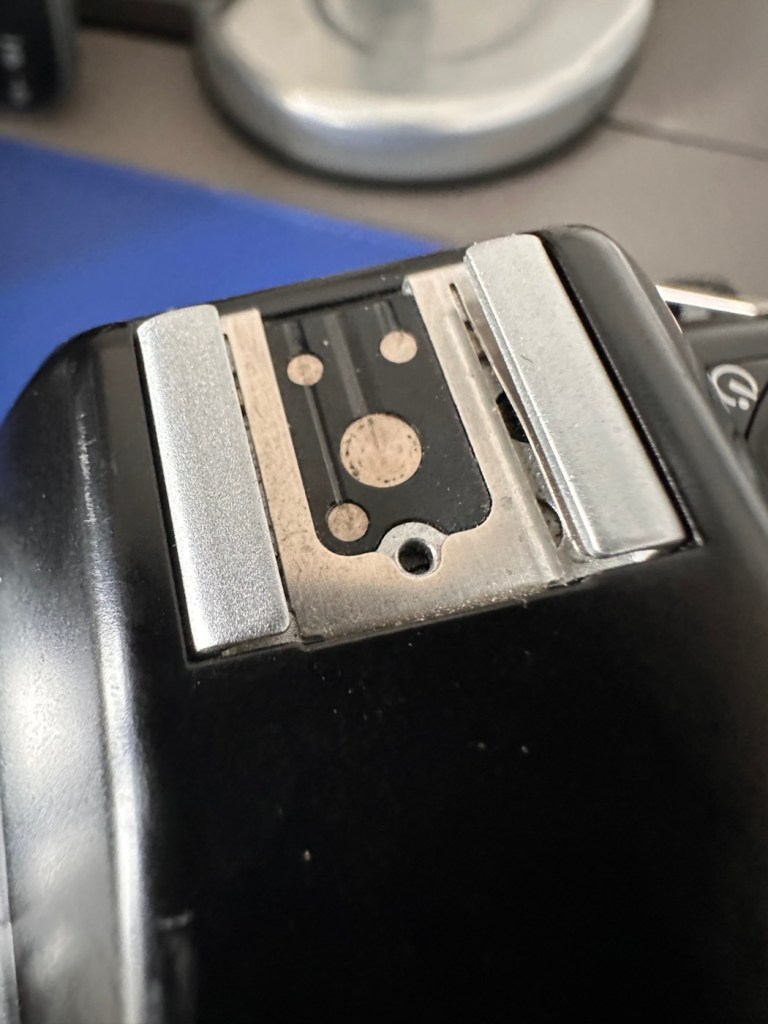
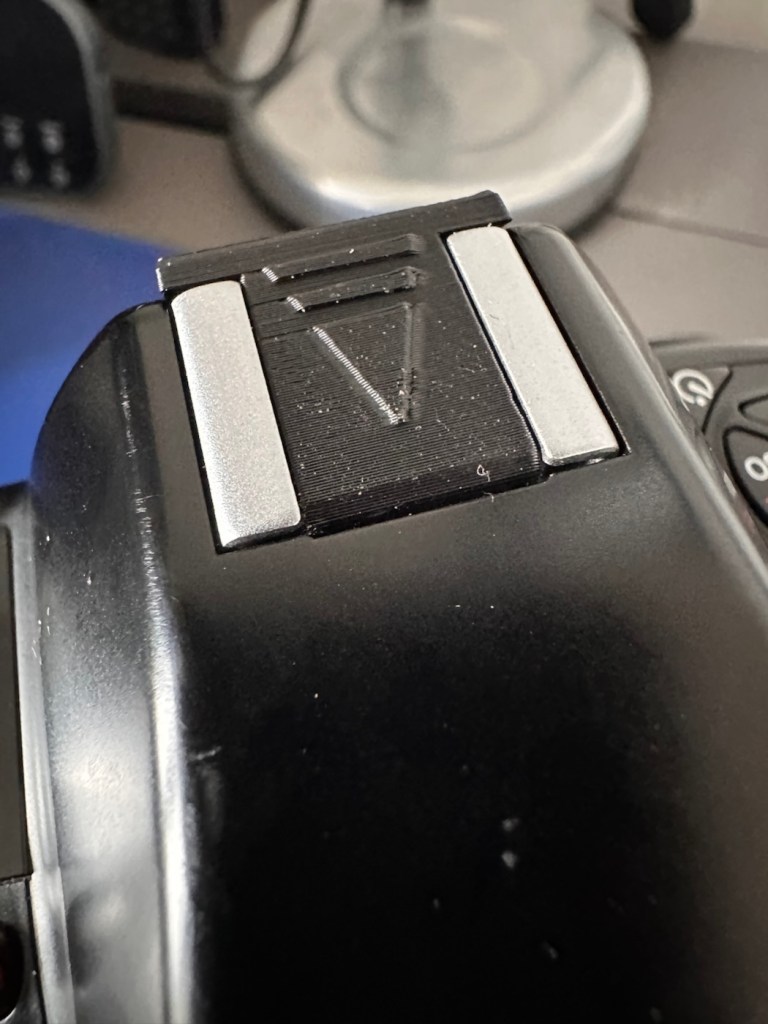
The sync cable cover also helps keep the exterior tidy as well as protecting the connector.
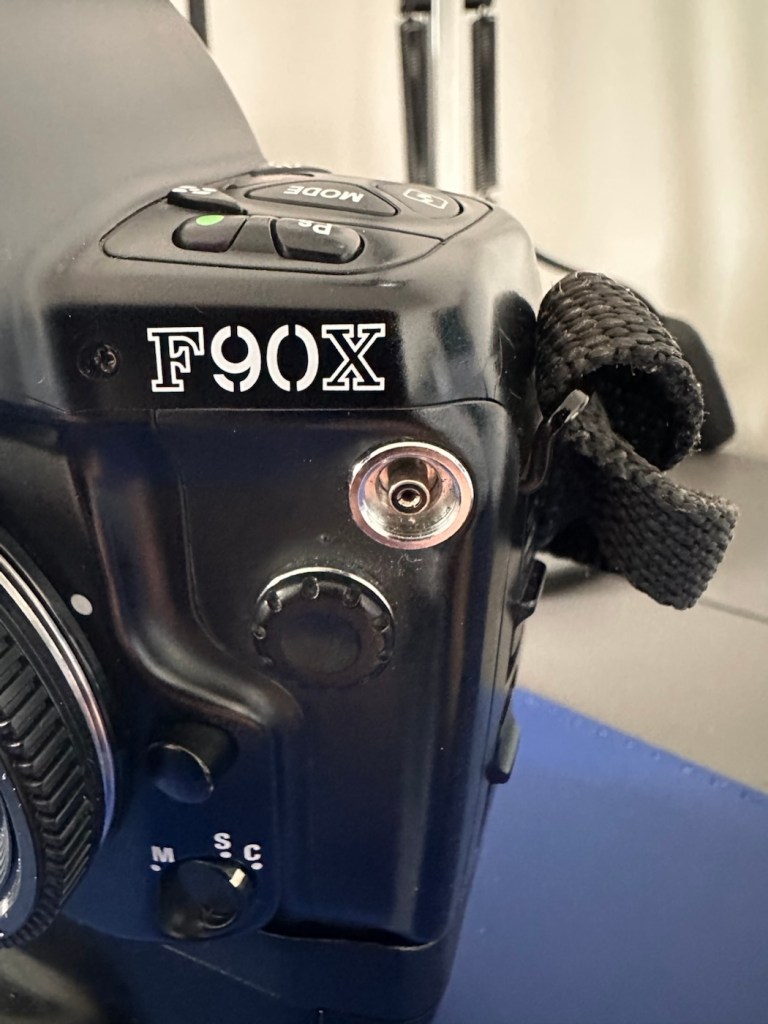
All I need to do now is clean the exterior of the camera where there is some light dust and dirt. When this is done I will use my usual car cockpit polish to finish the camera off.

When that’s done I will do a quick fly through of all the settings to check if they are all functioning as they should.

Result:

The camera has cleaned up very well and looks glorious. All settings are functioning as expected, and there have been no issues with a sticky mirror or any other issues. The camera is just working well and doing exactly what it should be doing.
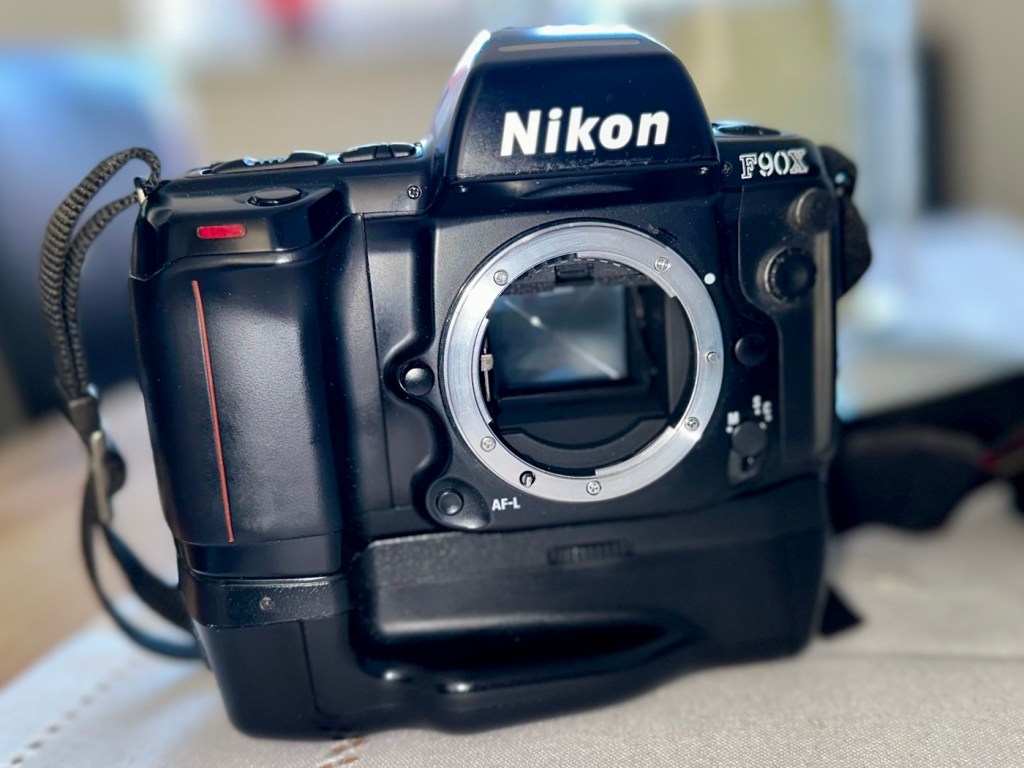
I’m using a G type lens so I’m restricted on the type of photography I can do, it stays on its lowest aperture (F:32) but that’s perfectly fine In bright sunlight conditions. I need to purchase myself another lens for testing to allow me the use of the full spectrum of apertures on this unit. That said, my lens has performed perfectly on this unit.

As I’ve stated before, this seller is one of my favourite suppliers as his cameras are always in a good condition, he doesn’t like anything unless it’s absolutely A1 perfect, so this is where i benefit as every unit I have purchased from him is perfect in my eyes, and in many cases need very little doing to them to bring them back into a working condition. This is one such unit.

So, I have yet another lovely piece of 90s “Big” tech restored and working perfectly. The next thing I need to do is to put some film through it. I’ll let you all know when I’ve done that.

Thank you for passing by, have a wonderful weekend, I really appreciate your being here.

Take care.
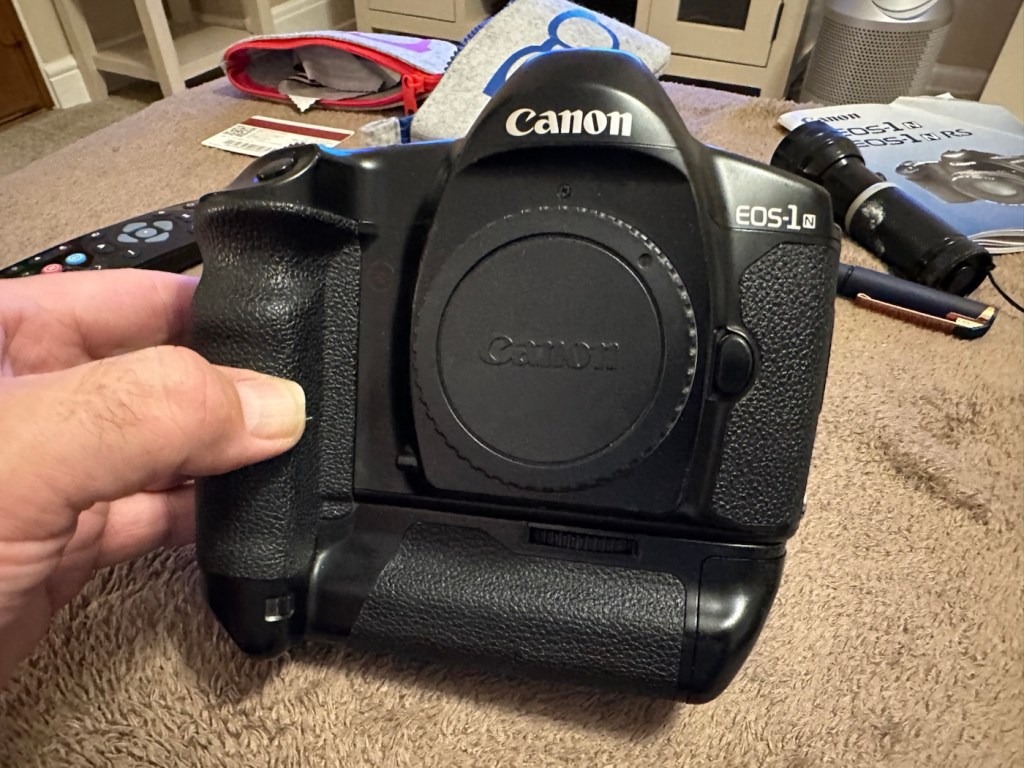
Canon EOS1 N HS

The EOS1 N with the well documented BC fault. Can I repair it?

The EOS1 N was a professional 35mm camera from 1994, it is currently 31 years old. This model is basically the EOS1 N with the E1 drive booster/winder earning it the HS suffix.

Canon EOS1 N HS

These are beautiful analogue cameras and over the years I’ve had a fair few of these pass through my hands, I have not however owned one with the E1 booster/winder before. I’ve recently had a number of cameras passed on to me by a good friend and that post can be found here: Cameras…i need more!

This is one of those cameras that he passed onto me and it carries the well known BC fault. We’ll come on to that later, in the meantime here is a little history lesson, of the evolution of this camera.

The EOS-1N is a 35mm single lens reflex (SLR) camera body produced by Canon. It was announced by Canon in 1994, and was the professional model in the range, superseding the original Canon EOS-1.The camera was itself superseded by the EOS-1V in 2000.

The original EOS-1 had been launched in 1989, two years after the company had introduced their new EOS autofocus system. It was the company’s first professional-level EOS camera and was aimed at the same photographers who had used Canon’s highly regarded, manual focus professional FD mount SLRs, such as the Canon New F-1 and the Canon T90. On a physical level the EOS-1 resembled the T90, which had been designed for Canon by Luigi Colani. The EOS-1N was a revision of the EOS-1, with five autofocus points spread across the frame rather than a single centrally mounted autofocus point, plus more effective weather sealing, a wider exposure range, and numerous other improvements. In common with the EOS-1, the 1N used Canon’s A-TTL automatic flash system, and does not support the more modern E-TTL.

Assessment:

Right, let’s get on to the problem. The BC fault is a blanket fault, covering a multitude of issues, predominantly electrical, even addressed in the accompanying instruction manual as a potential battery issue. However the issue that it is more associated with the fault is the failing shutter mirror magnets. See the video below.

BC error repair

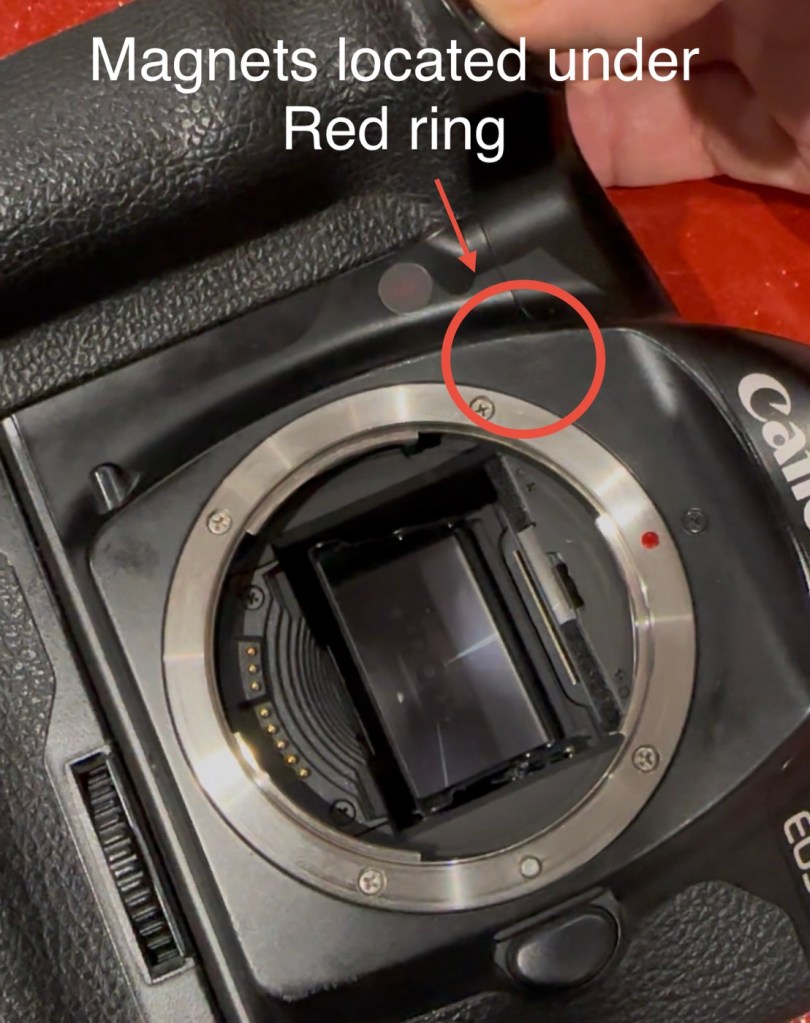
The video above gives a very good insight to the issues, and what to look for and how to get the shutter operational again. It’s not a permanent fix, sometimes the magnets haven’t been used for such a long time that they just seize up. They can be de magnetised, they can just be dirty, either way it’s worth having a look at, to try and restore what is in all aspects a very good camera. It seems to be an issue that an open or close signal is sent, however the magnets for some reason do not react, dirt can be a contributing factor. Below I have put together a very short video of my own camera, the early part shows me trying to get it working and showing the BC indication, the second part shows the mirror “sort of” working after I have tapped in the area just above the top screw on the left side of the lens mount under which the magnets are situated.

My own EOS1 N showing the BC fault

It still doesn’t work properly though and is extremely intermittent, but it’s a start, it proves the fault. I have also used a strong magnet to fool the internal magnets, this works for a couple of firings but that’s it. This also adds credibility to confirm the magnet issue.

I haven’t yet taken the fascia off to access the magnets, I’ve just tapped in their general area, or probed with a strong magnet, this was enough to allow the shutter to intermittently fire, and it is now quite apparent that this is the issue I have with this unit.

You can see exactly where the magnets are located under the fascia

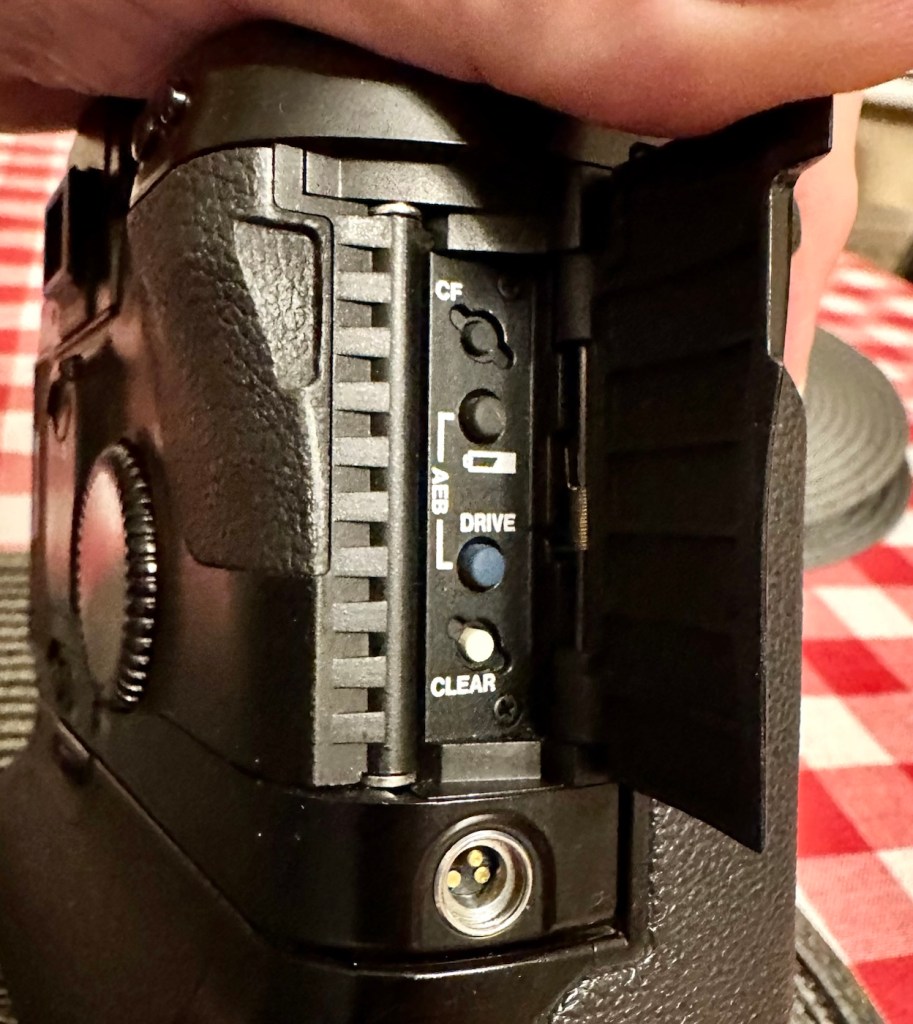
I’ve done some further checks to confirm the fault. If you turn the camera on and open the small door to the right on the rear of the camera, there are a number of buttons inside that allow you to check battery levels and to do resets, and so forth.

The battery check button

By pushing both the clear button and the battery check button together, you can get a fault code to appear on the screen on the top of the camera.

Battery full and Fault code 6

Here as you can see, I have fault code number 6. If you look at the chart below supplied by Canon you will see it refers to a mirror fault, more specifically the mirror is up, but didn’t switch back to on from off, as I mentioned in the above paragraph.

Fault codes

As you can also see above, fault codes 6,7 & 9 refer to the mirror operation issue.

I’ve done all I can really on the outside of the unit, and I think I have conclusively proved the area of the fault. Before we look at replacement of the part, I am going to give it a good clean to see if that will clear the issue. I’ll worry about spare parts later if required. Let’s get the fascia off and have a closer look.

Repair:

I’ve been a right stubborn sod with this one. I really didn’t want to dismantle this camera at all. Something inside was telling me it was unnecessary so I decided to persist with what I had been doing earlier. If only I could get the magnets to fire for a few exposures at a time, it would be just like a coughing car engine clearing out its system and kicking in to life, once it bites you can accelerate it a little more until it starts ticking over. Old motors and cameras are a strange but similar comparison, the longer they are left unused the more inclined they become to not partake in doing what they were made to do, whether powering a car or taking photos. Stop using them and they do just that. Stop.

Well, that’s what I think anyway, My world is as simple as that. And I think it might just work.

So I have persisted….

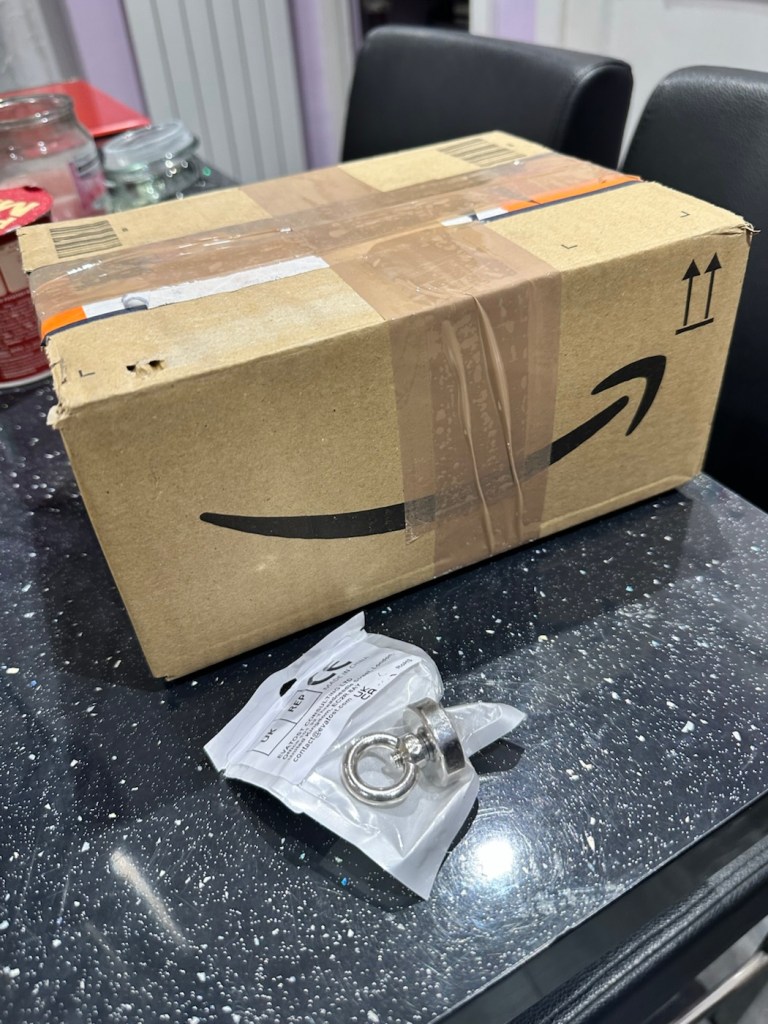
And purchased a much stronger magnet a “Rare earth” one to be precise. These are the sort of magnets they use for magnet fishing, however this one is small and despite having credentials behind it saying it has 19kg of pulling power I’d suggest that is a lie. Probably a maximum of 3kg if you’re lucky, but either way more than sufficient for me wanting to kick start a tiny electro magnet in a camera.

The most surprising issue around this magnet is the absolute ridiculous size of the packaging that it came in.

This tiny magnet, came in this massive box. Good old Amazon

So I persisted with the magnet, around the lens ring. I reset again and again. Nothing. I used my knuckle to tap the area near the magnet, a single cough, good. More resets, single coughs, more taps two coughs….this is good. I set the camera to high speed wind, kept the exposure button depressed and continued tapping, five or six coughs then stop. It’s an improvement. The magnet is starting to pick up. More tapping then I’m getting about 20 coughs with an obvious delay on one or two activations… we are now getting somewhere.

I put the rare earth magnets near the camera magnet and then switch off and reset. I turn back on again and then get a good 15 seconds or so of rapid fire, the internal magnets are clearing. I remove the rare earth magnet, reset again and the old girl fires into life for about 30 seconds continuously with only the occasional “misfire” the internal magnets are sparking back into life.

You get the idea.

Once you get these magnets operational, the best thing you can do is continually fire them, until they fire smoothly. This camera has not fired up for years, and these components inside are made to be used, and just like someone trying to keep fit, similar to a muscle, if you don’t use it you’ll lose it, it’s the same with these cameras, they need to be used on a fairly regular basis.

I did a 3 minute firing and I’m pleased to say she is now chugging away beautifully with no coughs and splutters. I’m sure glad I persisted with my hunch. I was right. And believe it or not. The battery levels are still good.

I’ve put together a little video here showing it working before and after.

My EOS 1N shutter magnet issue

Well what more can I say. It appears to be working.

Result:

To say I’m chuffed with this repair is an understatement. Sometimes you don’t have to dive in and start dismantling to get results. Do your research and make your own plan of attack with the information you have at your disposal. You will find equal amounts of good and bad advice out there, you’ll soon become aware of the differences, just follow your feelings and do what you think is right, if it’s wrong, well you’ve learned a lesson.

She’s ready to go – what a beauty

I am so looking forward to getting a day out with this camera and really letting her loose. I just love the sound of these clunking old machines, I don’t understand why anyone dislikes them. I loved visiting air shows when you had the big old really noisy aircraft that shook your soul from head to toe, they then sanitised that with super quiet aircraft…so boring. They’ve done that to cameras as well that nowadays make no noise. I love these old cameras, every click, clunk and whir brings back superb memories to me. I just love old cameras. I like to think I’m helping a few last just a little bit longer.

Many thanks for passing by, it’s always very much appreciated.

Peace to all.

No. It’s not just a mirror

There’s a little story that has developed here. Spring cleaning the house today and a mirror appears out of a cupboard and my wife has said,” You don’t need that, that can go.”

The mirror

At this statement I jumped up and unusually for me I gave the wife a firm reply of, “No” and told her it’s not going anywhere, there is a story behind that mirror and I then poured it out to her. Just as I am about to do so now to you all.

The mirror was a purchase from a Sunday magazine sometime in the mid 80s, nothing overly expensive but it always made me smile.

I’d just left home as my father’s abusive behaviour had taken a more violent turn. I was ashamed of myself for deserting my sister and mother, but I was just so fed up of being attacked both physically and mentally that I just snapped and left home.

I was about 18, I sofa surfed for a while, occasionally I sneaked into my workplace at night and slept there, I was all over the place and then found a spare room for rent in a property close by to where I’d originally lived. I had some stability in my life at last and was learning very quickly about moving on in life and the new responsibilities I’d now taken on. I then purchased this mirror, and would smile when I looked into it, it gave me some much needed fun and laughter in my life. Something that had been in very short supply for a while.

Then one night I broke when my sister appeared at the door, to tell me my father was attacking my mother, I grabbed the nearest thing to me that just happened to be a metal pole from an old photographic enlarger and I ran like the wind to their house. I charged up the stairs to their bedroom and stood over my father telling him just how I felt, and what a B***ard he was. I was about to bring that pole down on him when I realised he was in such a drunken stupor, he didn’t even know I was there, but beside him my Mum was reaching out to me weeping and calling my name. What she told me whilst we were embracing there is highly private and will always remain so, the crux of it was that she never wanted me to leave and begged me to come home.

I was back in that house before he’d even sobered up the following day. And that mirror I’d brought was on my bedroom wall where it stayed for a good few years.

I told my wife the story, and that the cheap worthless mirror was a subtle reminder of the time I started to turn my life around. I’d overcome fear of a tyrant and become the protector of the two most important people in my life at that time, my mum and younger sister. And I stayed with them until they both stepped away from this horrific existence.

A cheap mirror it maybe. But it still makes me smile. The wife has now said it must stay and be prominent in the house.

This picture was taken today, look, I’m smiling as I’m deciding where to put it up.

May it see many more smiles.