
I’ve been into amateur radio for many years, I received my licence about 27 years ago, M0ESB. However, before you wander off thinking the following task is just for amateur radio converts, you are wrong. Anyone can do the following with the most basic of equipment, and to prove that point I’m going to use my cheapest most basic equipment to do just that.
I’ve posted about this method of receiving pictures from space before, it’s called SSTV (Slow scan television) and there are a number of agencies that partake in this process, however the mainstay of the broadcasting agencies is ARISS – Amateur radio on the International space station, a cluster of space agencies working together to encourage involvement in space related education.
Here is the original post I made regarding this hobby: Slow scan television on an iPhone
Upcoming SSTV events
2026-11-05 Expedition 75 Series 35 “Space Memories”
Begins Monday, November 9, 2026 17:45 UTC
Concludes Monday, November 16, 2026 8:15 UTC
Images will be transmitted at 437.550 MHz (+/- Doppler shift) using Robot 36 SSTV mode for 36 seconds transmission, two minutes off.
Submit your original decoded images to the SSTV gallery for event certificate.ARISS website
The event above is the latest one broadcasting from the ISS that lasts for seven days. During this period there will be a series of photographs shared and many people try to receive all pictures in that series if they are within range and able to connect to the signal from the ISS. Each broadcast lasts 36 seconds and then there is a two minute gap prior to the next transmission. Again, you may be fortunate to pick up a couple of full transmissions, however more often than not you may only pick up partial transmissions dependant on where exactly the ISS is in the night sky.
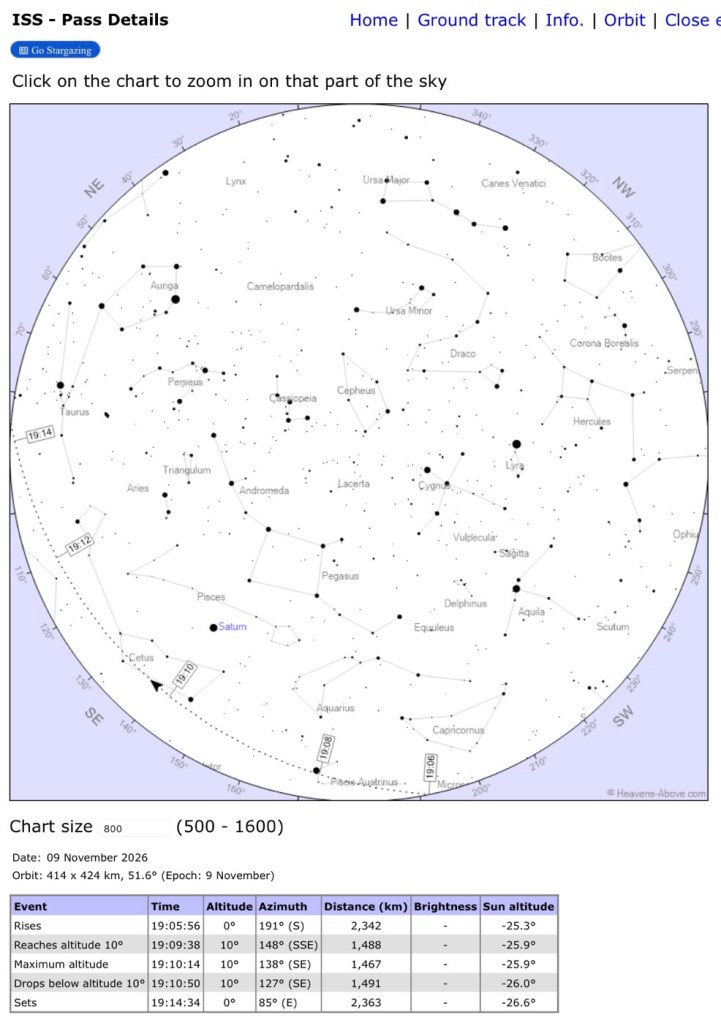
Today the 9th of November 2026 is its first day of transmission for this expedition 75 series 35 event. I have 3 passes coming over my part of the world tonight the first is at 19:05 and this pass is very low in the southeast so I may not get anything from this pass. The pass is visible in the low sky for approximately 9 minutes.
*I can confirm that the first pass was a none event, I heard the initial wake up call and that was it – nothing.
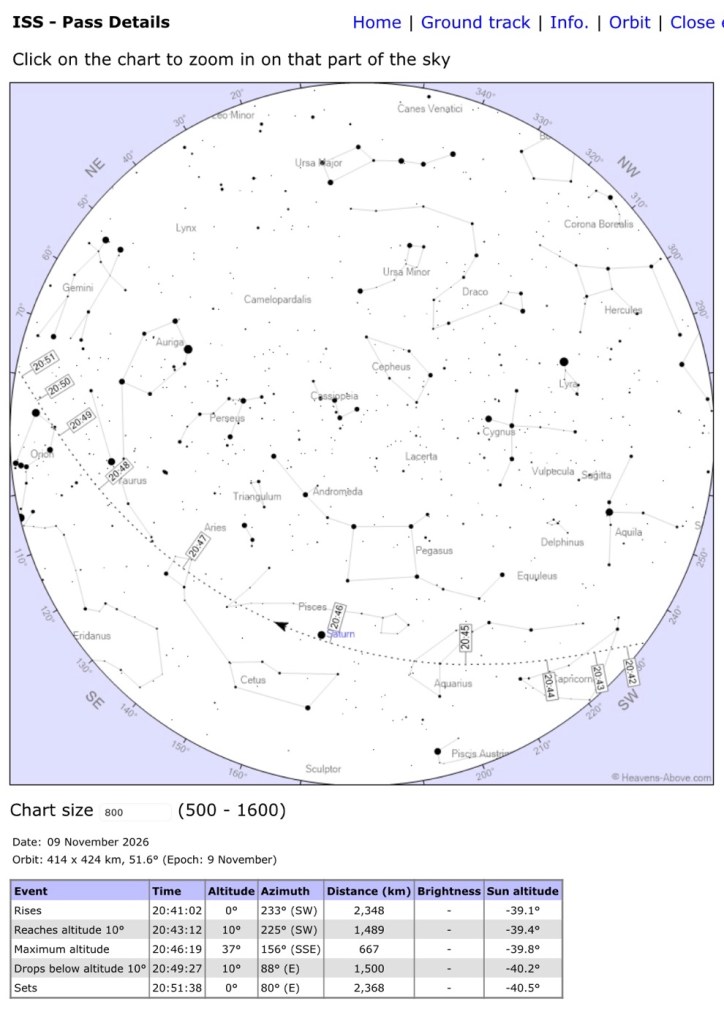
The second pass is more promising, in that it is in a higher angle in the sky and the entire pass lasts approximately 10 Minutes. This will probably be a lot more productive than the earlier pass.
*I can confirm that nothing, not even the wake up call was heard on this pass. Quite disappointing.
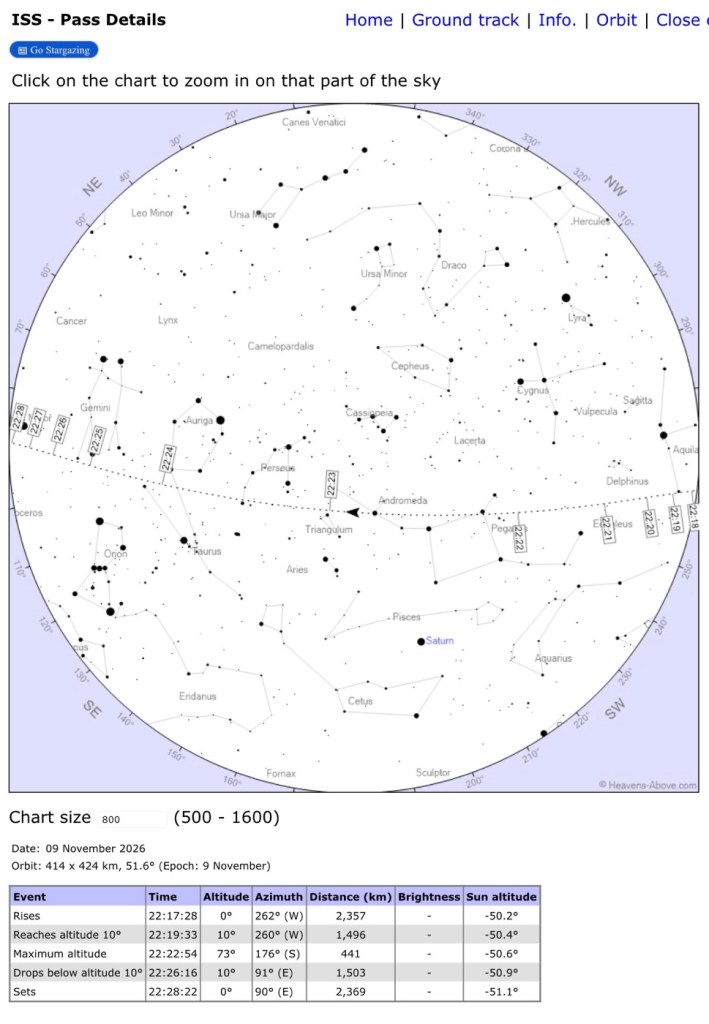
However the third pass looks to be potentially the best opportunity of hearing anything, it’s pretty much an overhead pass and will last approximately 11 minutes. There are other passes occurring throughout the night but I hope to be safely tucked up in bed shortly after this pass.
*Again a disappointing pass with nothing heard of note. I thought I could pick out a signal through the noise but it was overwhelmed with static. Nothing was picked up by the decoder, I’ll try again during daylight. Tonight has been a non event. With hobbies such as this you do have to be prepared to be disappointed at times. I’ll get a signal don’t you worry, but it will just have to be another day. Let’s see what tomorrow brings.
The information regarding when the ISS passes over your location can be found easily on line at a number of sites or with various apps. I always use Heavens above for my tracking data.
So to the equipment I will be using. I have quite a bit of high end gear but I will not be using that today. For the purpose of this post I want to show just how easy and low prices this hobby can be. It’s nice to have expensive equipment, but sometimes it’s just not really necessary. For this task I will be using a radio and my personal phone.
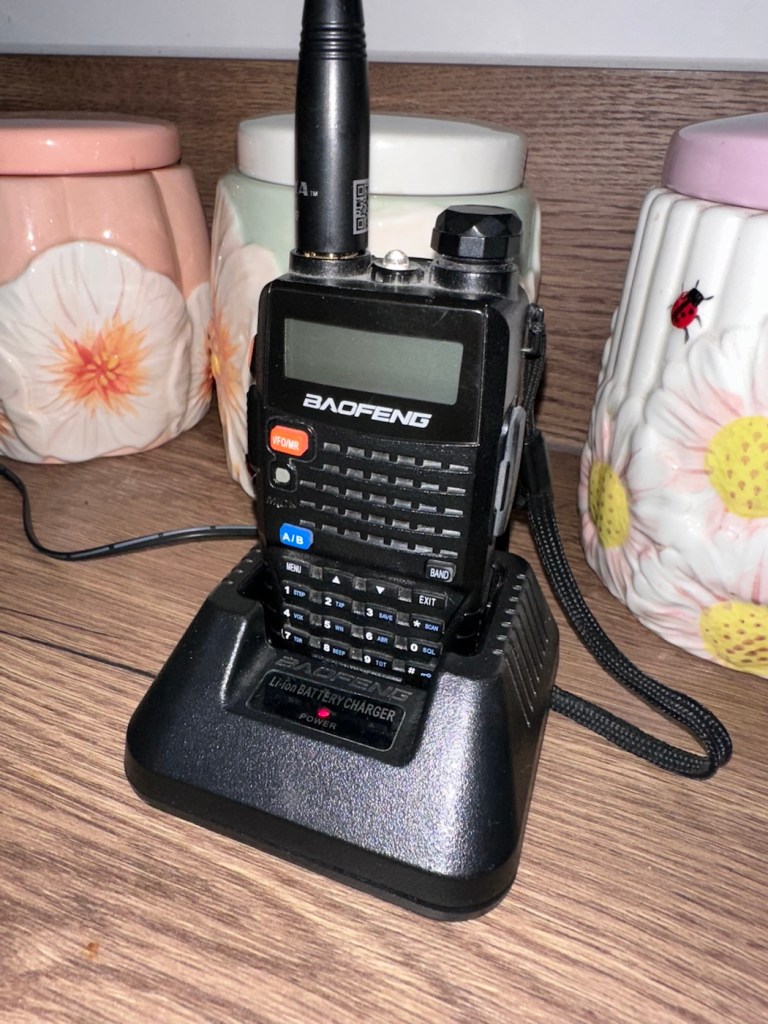
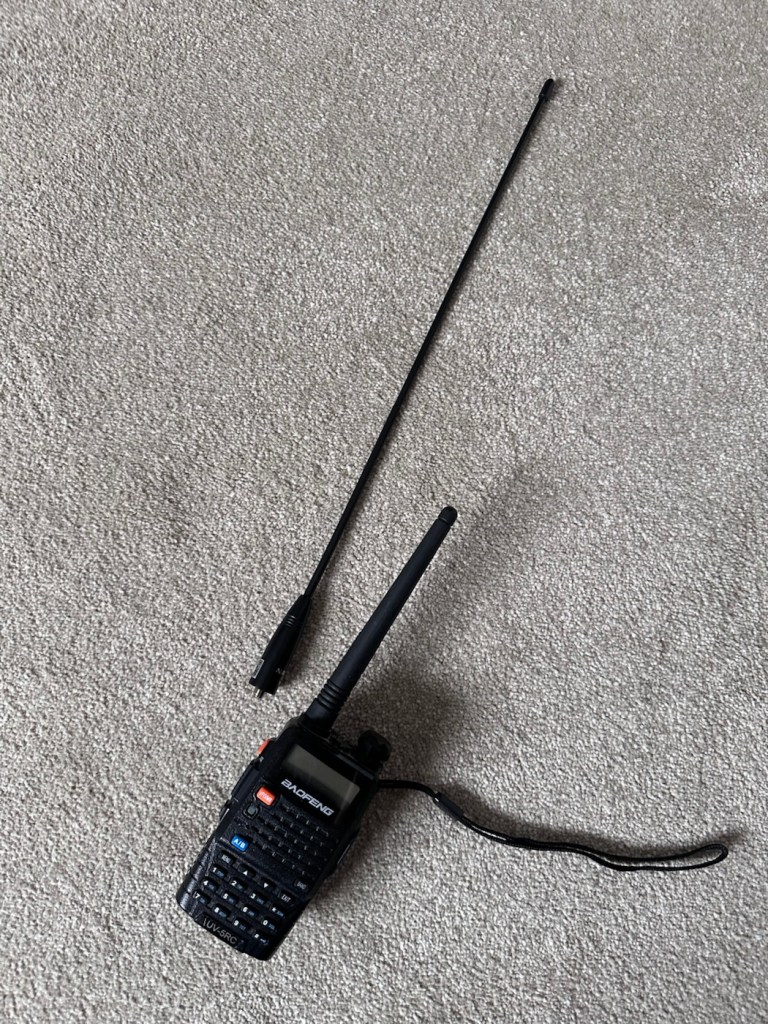
The radio is an ultra basic Baofeng UV5RC, that currently can be purchased online for around £25:00GBP new or even cheaper as a second hand purchase. This radio comes with a stock antenna that would be perfectly fine if you have a pass going directly overhead, however as I have a couple of low passes taking place tonight I’ve decided to opt for a better quality hand held antenna the Nagoya 771. This antenna alone costs approximately £25:00GBP but it is well worth it as it pulls in a lot more signal and cuts out a lot of the noise. But, it’s an option only, if you have just the stock antenna then no problem, just use it and see what you can obtain.
The next thing you need is a way to decode the signal that is acquired, and to do this head straight for your phones App Store. If you type in SSTV, you will have a number of options shown to you. There are many good options, but to keep costs down have a look at the free options available. For tonight’s pass I am using an app called CQ SSTV, this is a paid version that I have used for many years. It’s quite easy to use and easy to setup. The only caveat with anything free, if you go down that route, is that it usually means you probably will have to pay for something further down the line. The choice is yours entirely.
The signal you receive sounds like a warbling hissing signal normally prefixed with a couple of wake up beeps when it is starting. Make sure you have your phone ready with the app open, as soon as you hear the signal then hit the start button on the app. As the satellite passes, the signal occasionally drifts and this is known as Doppler shift, you may have to notch the frequency up or down slightly to maintain a good signal, but if you are lucky with an overhead pass then you may just be able to get by with no further adjustments.
A downlink frequency of 437.550 MHz will be used. Doppler compensation will probably be necessary except near the time of closest approach.
- Rising near the horizon: 437.560
- Half way to maximum: 437.555
- Near maximum: 437.550
- Descending half way down: 437.545
- When approaching the horizon: 437.540
ARISS website
As the pass goes over you will notice a picture forming in the app as it is being decoded, if you have been lucky and the conditions were on your side.
So the first nights attempt at getting a signal was a let down to say the least. I could at times hear very faint signals and only once heard a stronger wake up signal, however overall conditions were poor and no signal was strong enough to decode. The satellite is approximately 250 miles above us and the UHF signal is on a line of site basis and that signal is only 10-25 watts, but tonight there was a whole lot of static and noise. Weather conditions for the last few days in my area have been very overcast and foggy, this may well be a reason for impacting the signal as I have experienced this evening. This current program continues until the 16th of this month, so I do have another 6 days to try and get some examples downloaded.
Further attempts:
To be quite honest, it’s the very last day of this event, apart from two days when work has restricted me, I have been able to set up most evenings for a couple of passes but conditions with this set up have been very poor to say the least.
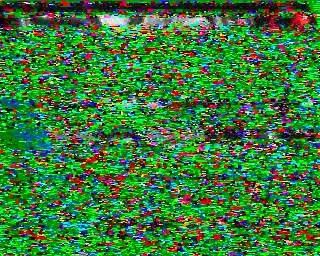
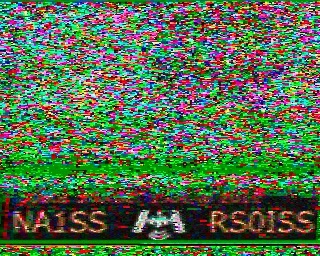
Most attempts have resulted in nothing more than bad static noise, on a couple of passes I could hear the wake up signal and on others I could just hear the end of a transmission, see some examples below.
I’m not confident that I’m going to receive anything substantial with this setup, however, I will persist with the basic setup for the purpose of this post. I know that if I had my arrow antenna attached to my Yaesu handheld, or indeed to my SDR setup, that i would get a good signal. But I want to show that this can be done on a very limited setup, so at least for this event that’s how it will remain. Sorry about that!
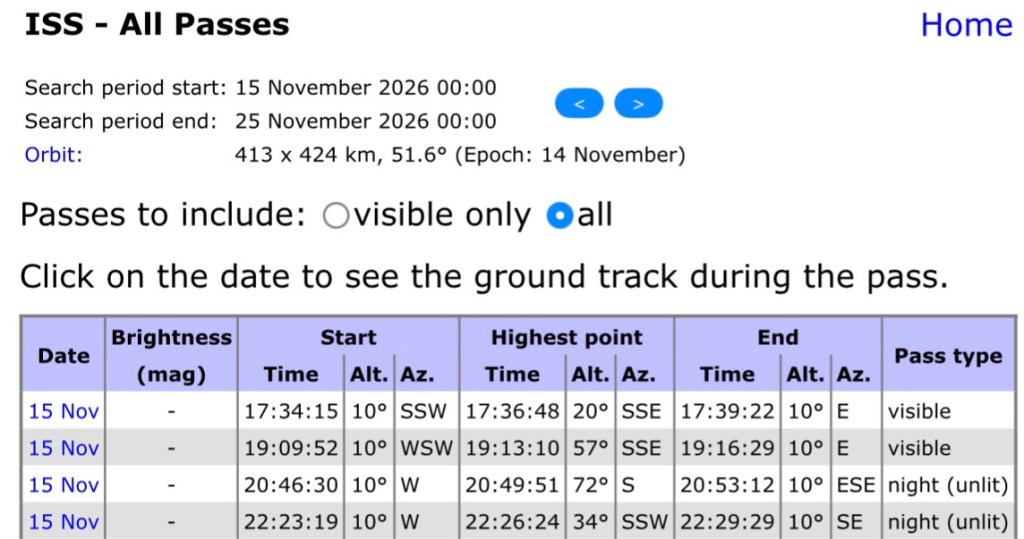
These are the ISS passes i am working on tonight. To be honest there are probably only two of them that I’d realistically have any chance with tonight, and that would be the middle two passes.
And at about 19:11 this evening I managed to receive and decode this signal
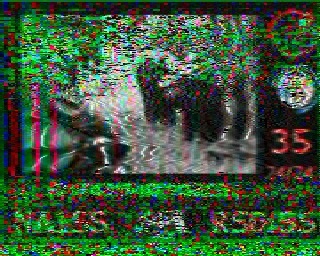
Pleased with that, I can see that it’s picture 24 of 24, I can see the series number 35, and can make out the two call signs at the base. However it was still very noisy. The next pass 90 minutes later was a lot higher in the sky and came through with a lovely loud signal, and this was the result of that decode.
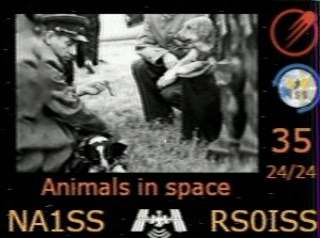
And what would you know, it was the same picture broadcast as the previous pass, strange that, as there are 24 pictures in the series and you’d just think the chances of getting the same picture in the series that you received on the last pass would be relatively slim. I’m not bothered though as this has proved a point for me.
So. It can be done, persistence does pay off in the end but it is very hit and miss. My advice if you want to take this hobby seriously is simple. Invest a little in some better equipment and you will naturally progress, learn and become more experienced and confident in what you do.
But you have to start somewhere. And with equipment as cheap and available as this, why not give it a go.
Have a great day.


